
Japanese Standard Time Travel
Location: Osaka, Japan
Date Played: October 9, 2025
Team Size: 2-4; we recommend 2-3
Duration: 60 minutes
Price: 4600-4950 yen (~$30-32 USD) per player depending on team size
Ticketing: Private
Accessibility Consideration: None
Emergency Exit Rating: [A+] No Lock
Physical Restraints: [A+] No Physical Restraints

“Shadow Zen was a love letter to Japanese history and culture. With a staggering level of narrative-puzzle cohesion and attention to detail, Studio Escape established a compellingly idiosyncratic approach to escape room storytelling.”
REA Reaction
As an interactive narrative with a distinctive cinematic flair, Shadow Zen was an outlier within Japan’s more puzzle-focused escape room culture. Yet, even in more narrative-centric escape room markets, this experience would still strongly stand out for embodying unusually high level of polish and cohesion throughout every layer of its design.
Building on the style and strengths of Studio Escape’s previous creations, Shadow Zen used light puzzles to directly drive forward the story. Each element and interaction was thoroughly justified. This approach frequently felt like a point-and-click adventure game, where one overarching objective cascaded into multiple smaller sub-quests, each of which led players to engage with the world in a new way.
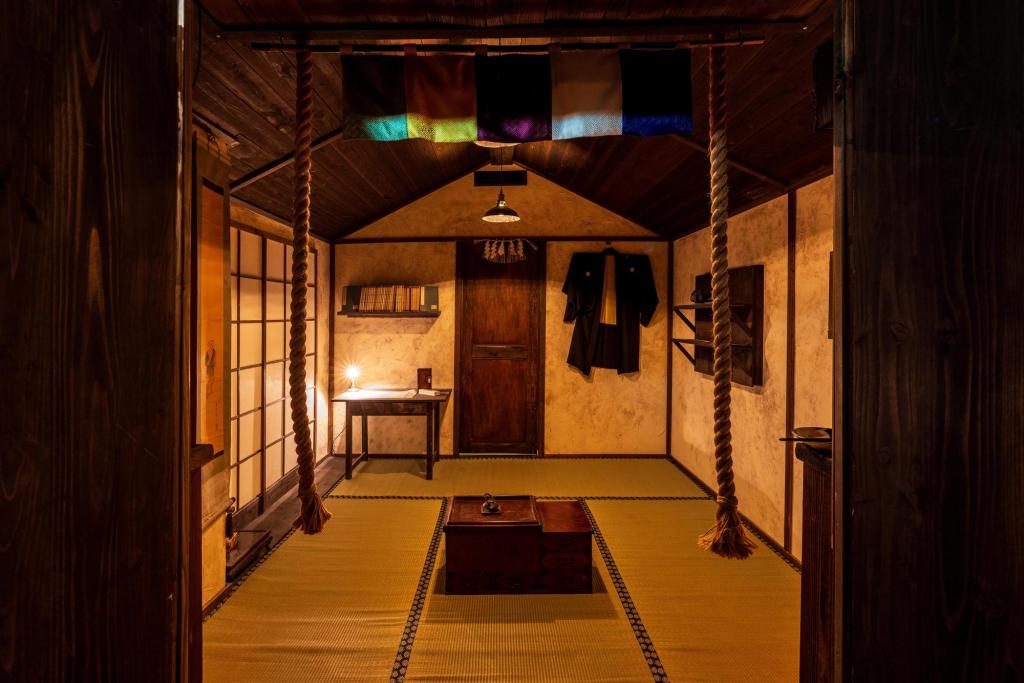
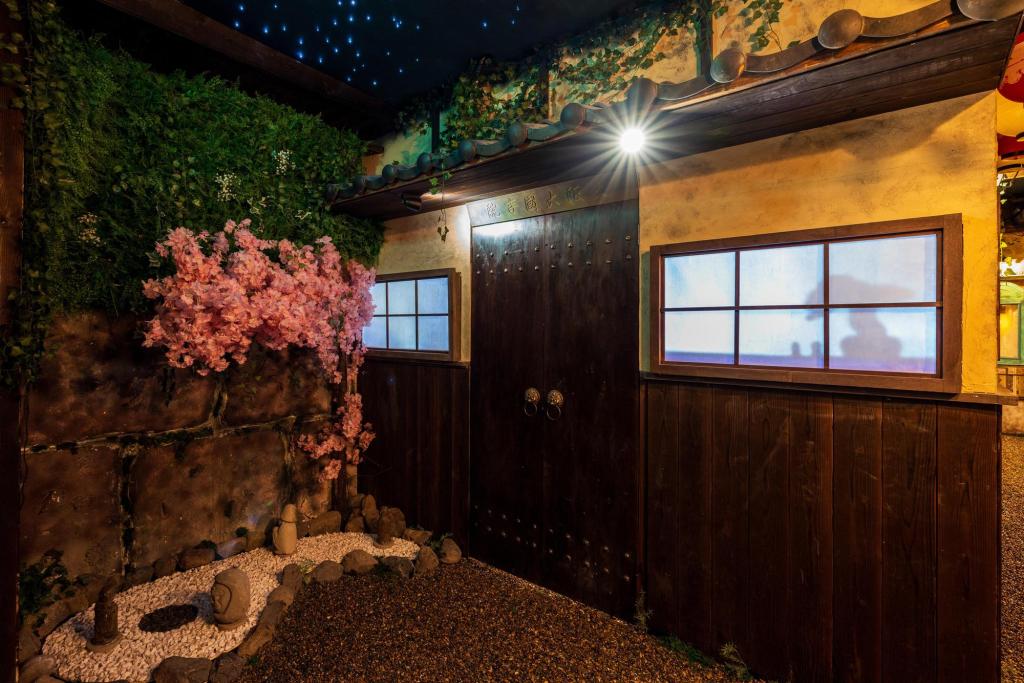
Shadow Zen played with effective contrasts in time and texture as it transported us back to a beautiful temple in 1920s Osaka. The gameplay transformed history and ritual into respectful, playful, and well-researched puzzles. The set design was exquisite, and every tiny detail was thoughtfully considered to be appropriate for its time period. This extended to the building’s outer facade and lobby, which smoothly transitioned us from outside world into game world. Tying it all together, the lighting and sound design brought the world to life and organically guided us through it.
Shadow Zen was the first East Asian game to receive a TERPECA (2024), and while it is well deserving of all the attention and accolades, the other experiences at Studio Escape should not be overlooked. Each in their own way, Shadow Zen, Madame LeClaire and the Seance of Death, For Queen & Country, and The Dame and the Diamond (now closed) are the best versions of the different cinematic styles they embraced. Each game honed its craft and took interesting risks, and together, they make Osaka a rising escape room destination on the global stage.
For Tourists and Locals Alike
For me, Shadow Zen was the perfect game for escape room enthusiasts visiting Japan.
While traveling, I often experience a tension between playing all the noteworthy local escape rooms and actually seeing the sights in the city I’m visiting. Shadow Zen bridged this gap by creating a world that truly belonged in Japan, with a level of individual interactivity that exceeded what you’d experience out in the wild. Even after visiting hundreds of actual temples and shrines around Japan, Shadow Zen was arguably the most Japanese thing I encountered in Japan.
Similarly, Shadow Zen would be a stellar introduction to escape rooms for local Japanese players, or an inspiring peek into other escape room styles for players already experienced with SCRAP-style games.

Focused on Narrative
That said, for players who are used to escape rooms that provide a formidable challenge and require you to puzzle hard the entire time, this is a different sort of game. Don’t worry about the time — there’s no need to rush. Enjoy the puzzles and story, and let the experience guide your pace.
Additionally, stick together with your teammates the entire experience, even when the gameplay branches. This play style was explicitly instructed at the start of the experience, though if Studio Escape were to continue to push toward even more seamless immersion, there was an opportunity to design these sort of out-of-world instructions into the experience itself.
Book-ing Process
In addition to the usual range of merch — shirts, hats, and stickers — Studio Escape also sold a rather special item for each of their experiences: a beautiful hardcover book with photos and writings documenting the process of creating the game.
A step beyond end credits, this was like the director’s cut of escape rooms. In addition to beautiful images of the final state of the room, these books showed all the steps along the way, from erecting walls to developing individual props. I’ve seen some escape room companies post behind-the-scenes photos like this on their social media, but I’ve never encountered another company actually turn this process into a gorgeous coffee table book worthy of display. While these books are full of spoilers, once you’ve actually played the game, they provide a valuable window into all the effort, creativity, and artistry that went into what you just experienced.
The name “Studio Escape” asserts escape rooms as a cinematic art form, and they truly walked the walk, innovating on and elevating the escape room medium both in and out of the experience.
Tips For Visiting
- Studio Escape has 2 locations. Shadow Zen is located in their Daikokucho location at 1-6-17 Shikitsu-Nishi.
- Shadow Zen is playable in English or Japanese. Select your preferred language while booking.
- As is common in Japan, you’ll take your shoes off and change into sandals at the door. A range of sizes were available.
- Just down the block, Scent Gallery Cafe Mikayama offers a range of delicious food options in a hip gallery setting.
Book your hour with Studio Escape’s Shadow Zen, and tell them that the Room Escape Artist sent you.
![Studio Escape – For Queen & Country [Reaction]](https://roomescapeartist.com/wp-content/uploads/2026/01/studio-escape-for-queen-and-country.jpg)
![Pop Up Escape – Death & Taxes [Review]](https://roomescapeartist.com/wp-content/uploads/2026/02/death-taxes-death-taxes-3.jpg)
![Brain Games – Flynn’s Arcade [Review]](https://roomescapeartist.com/wp-content/uploads/2026/01/brain-games-flynns-arcade-1.jpg)
Leave a Reply