
Beautiful performances by incredible actors is one of the treats of many high-end escape rooms. I don’t think I’ll ever get sick of seeing immersive actors performing their hearts out.
The catch… we need to be able to see them perform.
Let’s dig into a niche problem, but a big barrier in the progression of the upper end of the escape room medium.
Establishing Boundaries
One of the key differences between most immersive theater and most escape rooms is that in an escape room, the participants are active players with a mission of some sort. It’s very easy for those players to get locked in on their objectives at the expense of a performative moment.
One of the more common and effective remedies to this problem is to isolate the progression of the players so that there is nothing for the players to do but watch (and possibly interact) with the performance. This is usually done by putting a locked door or a wall with viewports in-between the players and the performers.
This is a great solution, and has facilitated some wonderful moments in an assortment of celebrated escape games… but almost every time I see this method used, it crashes into a problem: There isn’t enough room for everyone in the group to get a good view.
Access > Realism
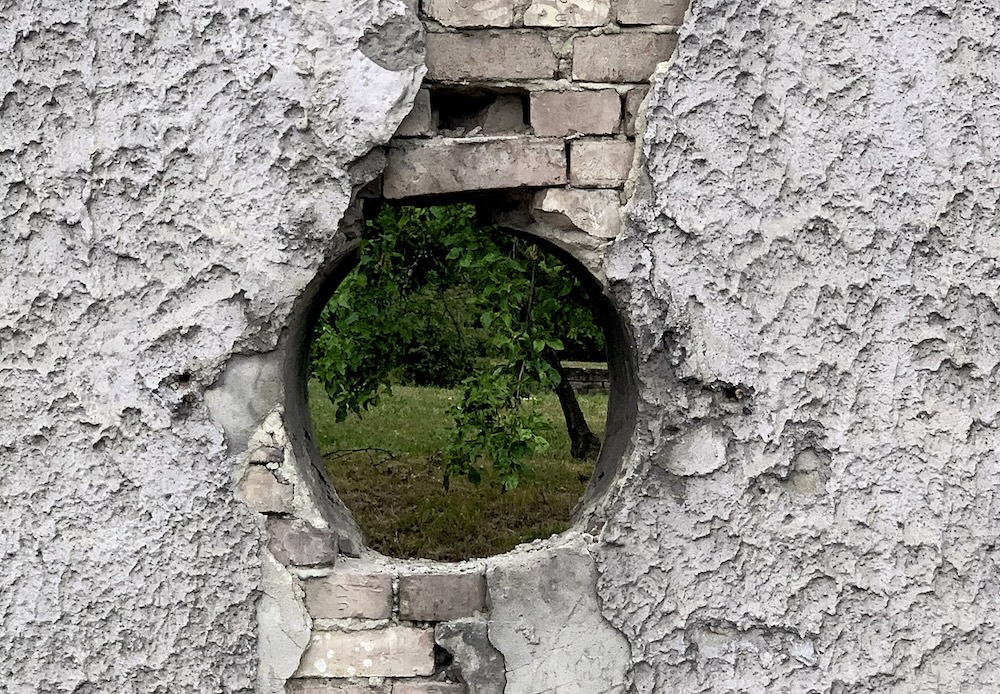
Usually the viewport that the players have to the performance is through something like a barred window in a door, or some holes in a cave wall. Both of these can look and feel great from an aesthetic perspective… but both can be fraught.
Barred Windows
The issue with barred windows in a door is a function of width.

You just can’t get enough people around a door to see through to the other side.
Holes in the Wall
A similar but slightly different problem exists when you carve out holes in a wall.

Perhaps there are enough, but once your start factoring in height and size differences, it usually feels like someone is stuck with a bad view.
Setting a Stage
I’m empathetic to the creative desire to make a space feel as real as possible.
Similarly, I understand that sometimes it’s easier to carve a window in one place and not another.
That said, when you have performers who are putting on an amazing show, the performers are more important than anything else. Sacrificing aesthetic realism, or putting in a little more effort to make sure that every person on every team can truly appreciate the artistry of your experience is critical.
It’s tragic when someone on a team leaves a game praising an amazing scene and someone else in the group sheepishly admits that they didn’t actually see that incredible scene. This is the kind of finer point of design that is preventable. I hope that more creators think this through and ensure that it doesn’t happen in their productions.



![Escape Comics – The Alien Ship [Review]](https://roomescapeartist.com/wp-content/uploads/2026/01/the-alien-ship-the-alien-ship-1.jpg)
Leave a Reply