
If you’ve ever watched a film, seen a musical, or played a video game, you likely know the importance of a good soundtrack. When done well, musical scoring can massively amplify emotions and stick with you for weeks or even years to come.
I bet you can hum a tune from your favorite movie. Try it right now. I also bet that you remember a specific character, scene, or emotion associated with that music.
Much like more established storytelling media, escape rooms also have soundtracks, and they’re even more important than you might think. There’s a fabulous quote from Oscar Wilde’s The Importance of Being Earnest: “You see, if one plays good music, people don’t listen, and if one plays bad music, people don’t talk.”

Players may not always notice when an escape room has an amazing soundtrack, but they will certainly feel its absence.
In this article, we will:
- Look at the different components that comprise an escape room soundtrack.
- Run through some tips for leveling up your escape room soundscape.
- Share a list of escape rooms around the world that have published their soundtracks.
Score, Soundtrack, and Soundscape
Let’s start by defining some key terms. While these distinctions largely come from film, we’ll look at how they can apply specifically to escape rooms.
The score, or underscoring, is the background music. It’s typically nondiegetic, which is to say that there’s no visible reason for why there’s music playing, like a band in the corner.
Songs are less common in escape rooms, but when present, they are usually more foregrounded and diegetic. You turn on a record or cassette player, or a performer sings to you.
Sound effects are all the other small sounds you hear. These include prerecorded feedback (you press a button and hear an audio file of a ringing bell) and practical effects (you ring a physical bell and you hear the sound it makes.)
Dialogue refers to the speaking parts. In an escape room, this can include voiceovers and scenes with performers.
The soundtrack includes all these elements: the score, songs, sound effects, and dialogue.
Now here’s where things get interesting. Unlike a more static medium like a film, or even a well rehearsed piece of traditional theater, an escape room changes with each playthrough based on each team’s specific interactions.
Layered onto the prerecorded and scripted elements of the soundtrack are all the sounds that the players themselves make. The sound of footsteps and the shutting of doors are also sound effects. All words spoken by players, both unscripted and scripted, as well as audio hints, could be considered part of the dialogue. Perhaps a puzzle even leads players to sing a song together.
Do we consider all these sounds to be part of the soundtrack or are they something more? While this is ultimately a question of semantics, I’ll opt to refer to the outermost layer — all the sounds we hear in an environment — as the soundscape.

Mixing Media
Escape room sound design has matured significantly over time. This progression looks something like the following:
- No Music: You’re solving puzzles in a quiet room. It’s kinda awkward.
- Static Backing Track: The gamemaster presses “play” and starts a 60-minute audio file of royalty-free covers. If you finish in 40 minutes, you never get to hear when the music picks up in the last 10 minutes of the track.
- Dynamic Scoring: Each scene has its own music, chosen to match the mood and intensity of that scene. Solving a puzzle or opening a door triggers a new track.
- Fully Integrated Soundtrack: In addition to the underscoring, you encounter a number of other complex sounds throughout the game — an actor speaking with a mic, audio feedback for puzzle inputs, spatial audio that’s different in different areas.
By the time we get to #4, the sound design starts to get quite complex. It’s one thing to compose an hour of music. It’s a level further to ensure that numerous audio sources, both prerecorded and live, actor-driven and player-driven, are perfectly timed and mixed, factoring in the varying acoustics of different spaces throughout the game.
When polishing your escape room soundscape, key considerations include:
Transition Smoothly
When sounds come from multiple sources, make sure they all play nicely together. If players trigger multiple sound effects at once, do they conflict with each other? If an audio file is on loop, does it transition smoothly back to the beginning? When switching to a new audio source, like putting on headphones or entering an enclosed space, simple crossfades go a long way.
Be Deliberate with Dynamics
The volume doesn’t need to stay the same throughout the experience, and dynamic contrasts can be a powerful effect. Never make music so loud that it’s physically harmful, or that players can’t hear each other speak. You can make it feel loud without actually being too loud, for example, by using subwoofers under the floor for increased vibrations.

Acoustics are Important
You could create the prettiest music in the world, but if it sounds too echoey in a cavernous room, it doesn’t matter. Design around the acoustic properties of each space, and especially ensure that all dialogue is clearly audible.
The Environment is an Instrument
All the player-produced sounds might seem unscripted and uncontrollable, but we can actually build the environment around the palette of sounds we want it to potentially produce. Make those floorboards or steps extra creaky. Add an extra door that squeaks open with some resistance to make the transition into a new space more dramatic.
Use Silence Strategically
Although you don’t want to neglect sound entirely in an escape room, intentionally placed moments of complete silence can be powerful. I’m sure John Cage would agree.
For a more in-depth and actionable look at escape room sound design, check out a 2021 virtual RECON talk entitled “Advanced Tech: Using Light & Sound to Build World-Class Experiences” featuring Malte Eiben, the sound designer behind many of THE ROOM Laboratories’ award-winning experiences.
Original Escape Room Soundtracks
A growing number of escape rooms around the world have worked with composers and sound designers to create amazing original soundtracks. Some of these experiences have also publicly released their soundtracks so you can listen to them at home (ideally after playing the game — soundtracks can be experiential spoilers!)
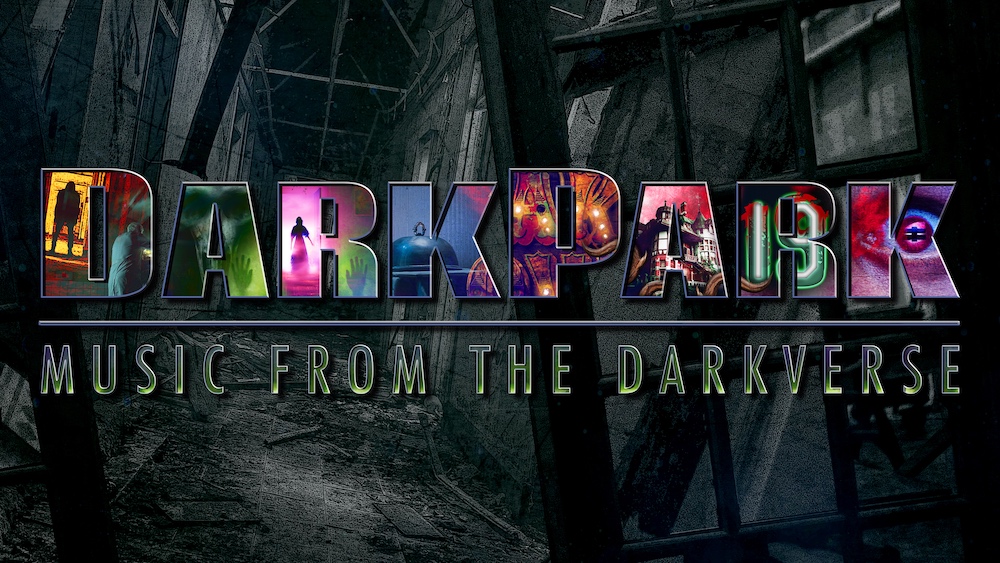
These include:
- DarkPark – Multiple experiences (Netherlands)
- Escaparium – Magnifico (Laval, Canada)
- Dream Labs – The Tale of the Heartless Pirate and Metropolis 2099 (Bad Steben, Germany)
- The Nemesis Club – E.V.I.L. Robots, Mogollon Monster, and Henchman’s Heist (Phoenix, AZ)
- Headlock Escape Rooms – The Keeper and the Fungus Among Us (virtual)
- The Escape Ventures – Phantom Files (Port Charlotte, FL)
- CU Adventures – Multiple experiences (Urbana, IL)
- 60 Out Hollywood – Big Brain Labs (Los Angeles, CA)
- The Escape Game – selections from various games (many locations)
This is a living list, so if you know about other publicly available original escape room soundtracks, please share them with us by commenting on this post or sending us a message.
Hire Professional Composers and Sound Designers
If you’re an escape room designer and you listen to some of the soundtracks above, you might think: “That’s impressive! But I could never do that!”
If you’re not a composer, then chances are you probably can’t do that, but that’s ok. Creating an escape room requires a diverse set of skills, and while it can be tempting to try to learn all of those skills yourself, I encourage owners to consider hiring specialists.
Things like sound and lighting design aren’t easy, but they’re essentially “solved problems” in theater, film, and beyond. Collaborating with professionals from those disciplines can have a huge impact on the quality of your experience.
To note, music composition and sound design are two very different skill sets. You may end up working with one person to compose music, and a completely different person to ensure that the music sounds good in the different acoustics throughout your escape room, and that you have the proper live mixing controls to ensure everything stays well balanced.
I also encourage more escape rooms to include end credits. If you’ve collaborated with other creative professionals, it’s important both to give them credit and to help players realize just how many voices went into creating what they just experienced.


![Pop Up Escape – Death & Taxes [Review]](https://roomescapeartist.com/wp-content/uploads/2026/02/death-taxes-death-taxes-3.jpg)
![Brain Games – Flynn’s Arcade [Review]](https://roomescapeartist.com/wp-content/uploads/2026/01/brain-games-flynns-arcade-1.jpg)
![Mothman Themed House AirBnB Escape Room [Review]](https://roomescapeartist.com/wp-content/uploads/2026/02/airbnb-mothman-house-2.jpg)
Leave a Reply