
This is the second part in a series about The Importance of Feeling Seen in Escape Rooms.
There is an art to making players feel seen without making them feel self-conscious. One escape room that excels at walking this line is Hope End from The Ministry of Peculiarities. The more I’ve learned about this game over the years, the more I love it and respect what it is trying to do, successfully in my opinion! Hope End is a good example of an escape room utilizing the power of the concept discussed in this series: the importance of making players feel seen.
The game’s story starts with players being tasked by The Ministry of Peculiarities to investigate the old familial home of Mrs. Dolores Wright, whose spirit lingers there still, making the home impossible to sell. Don’t worry, this article isn’t going to spoil the game. It is a dive into the ideas and inspiration behind creating something special.
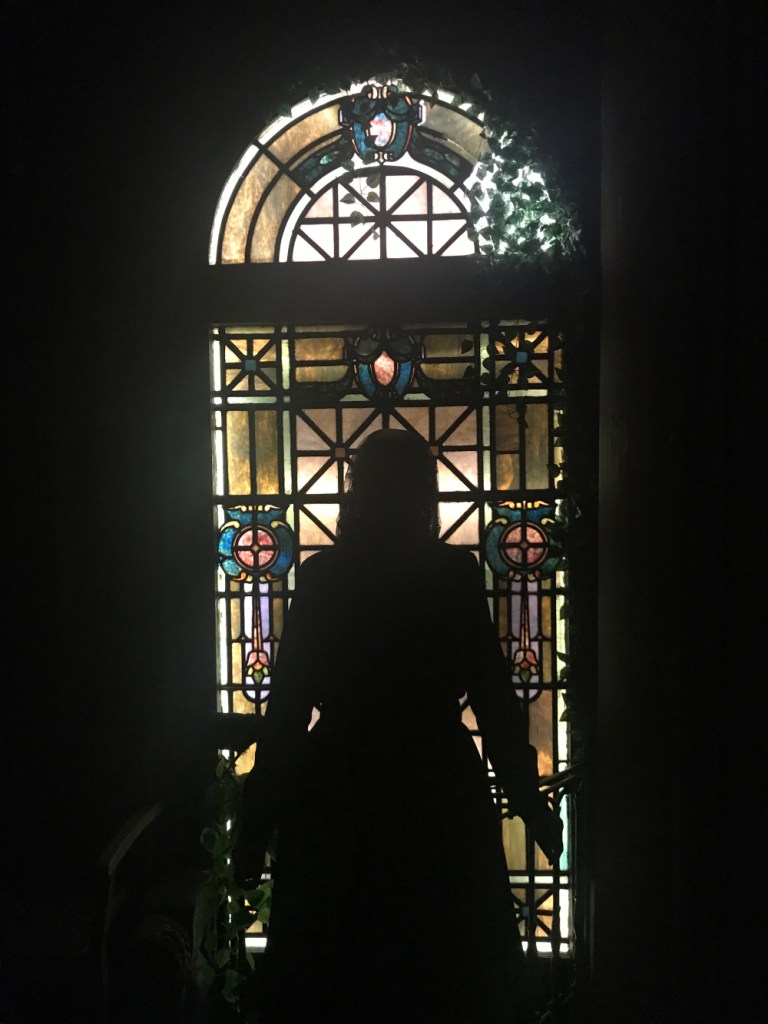
Speak To Me
Hope End makes players feel seen through several innovative and personalized approaches. Their use of immersive theater makes guests feel more like active participants in the narrative rather than unnoticed players of a game. The actors adapt their performances to each group. In fact, the game adapts to each group, creating intimate moments that can resonate with individual players.
A visit to this old house includes conversations and offers choices that lead to different outcomes, giving players agency and making their decisions feel impactful. Hope End has the power to create a deeply personal and engaging experience that makes the player feel truly seen throughout the adventure.
I spoke with Adam Moody, Jonathan Berk, and Benjamin Berk, co-owners of The Ministry of Peculiarities, about the inspiration for designing an escape room with moments that make players feel seen.
Adam Moody: “We were captivated by the idea of agency and the role we had, as ourselves, in certain immersive theatre productions and their underlying stories. And when a performer calls you out, reaches beyond that fourth wall, and pulls you in to play.”
Jonathan Berk: “It’s story first. Before we even had a location, we agonized and went back and forth for weeks about making sure we had something we wanted to say through a story. How can you really communicate with players if there’s nothing to communicate?”
I find this need to communicate as an initial requirement fascinating. Escape room companies founded and games designed because of a need to communicate something with players is an inspiring thought. Communication can be a two-way street, though. Games that value input and responses from the players make for special experiences. When players are seen and heard, they feel special.
It Starts At The Start
Entering the lobby of The Ministry of Peculiarities is far different from walking into most escape room facilities. From the moment players arrive, they are subtly being evaluated. Their actors immediately start to get a read on the players while simultaneously priming those players for the experience ahead.
Benjamin Berk: “The lobby experience is used to brief players on the story, but for us, the real purpose is to set them up for what they will experience inside Hope End. This character is not performing for you, he or she is interacting with you and expects you to take an active role. So, it should be effective at providing the sense that you’re in a world that you can shape, and that responds to you.”
It is an important step to teach players how to play this kind of escape room. This intro stage lets the players know they are being seen and that what they do and what they say from now on will impact this fictional world and their time in it.
Making It Work
Success is a process. Connecting with players is something that needs to be practiced. Design can only take you so far.
Benjamin Berk: “I’m going to be honest, what Hope End is [now] is not what we originally designed. It was through that early iteration period that we got better at figuring out what we could do to draw players in.”
Adam Moody: “[Trying to make] a player feel seen can be engineered to perfection, but your actors are the ones who have to bring the story into the players’ lives. We lean so heavily on the wonderful talent of our actors and their ability to draw people into a story.”
A Key Instrument
Personified characters at the Ministry of Peculiarities literally see, and often examine, newly hired investigators, but Hope End has a secret weapon of sorts.
Benjamin Berk: “Not many other escape rooms have actors; none have Dolores.* Dolores offers a personal connection to each guest and leaves it up to those guests to choose whether or not they accept that offering. The trick is to read the players, and tailor the experience to them. This is what makes Dolores different from other escape room actors; she doesn’t read lines, she uses a script as an essential narrative machine and adds embellishments that are designed to make players feel seen.”
*Dolores is a character in Hope End, played by an actor.
Mrs. Dolores Wright’s ghost still haunts Hope End and she makes sure your presence doesn’t go unnoticed. I still remember the first time I met her. I wasn’t prepared to feel so seen.
Jonathan Berk: “Our actors have a bit of freedom in their approach. There’s a loose script and some points that the actors have to hit, but the goal of the actor is to connect with the players. They ask questions that provoke authentic responses, and they push into those responses to get something a little deeper.”
It’s this request for more depth that can be surprising. Most escape rooms don’t ask you to give something of yourself the way Hope End does, but that is precisely what makes it so special. Dolores works with the gamemaster to mold, shape, and customize each playthrough based on the feedback they receive from the players.
See Every Player
Adam Moody: “Each Dolores is different, but I think I can say that each will single the players out, look them in the eye, and talk directly to that player.”
Benjamin Berk: “It’s important for Dolores to have a one-on-one interaction with every single participant. Whether or not they get selected to participate in one of the other encounters, they are able to say that they personally spoke with Dolores. So, this is a critical interaction to create.”
This is where the risk level starts to elevate. Trusting that customers will appreciate individual attention is a risk. The actors need to navigate awkward situations of all kinds, but in the end it is worth it. The impact of players feeling seen is worth it.
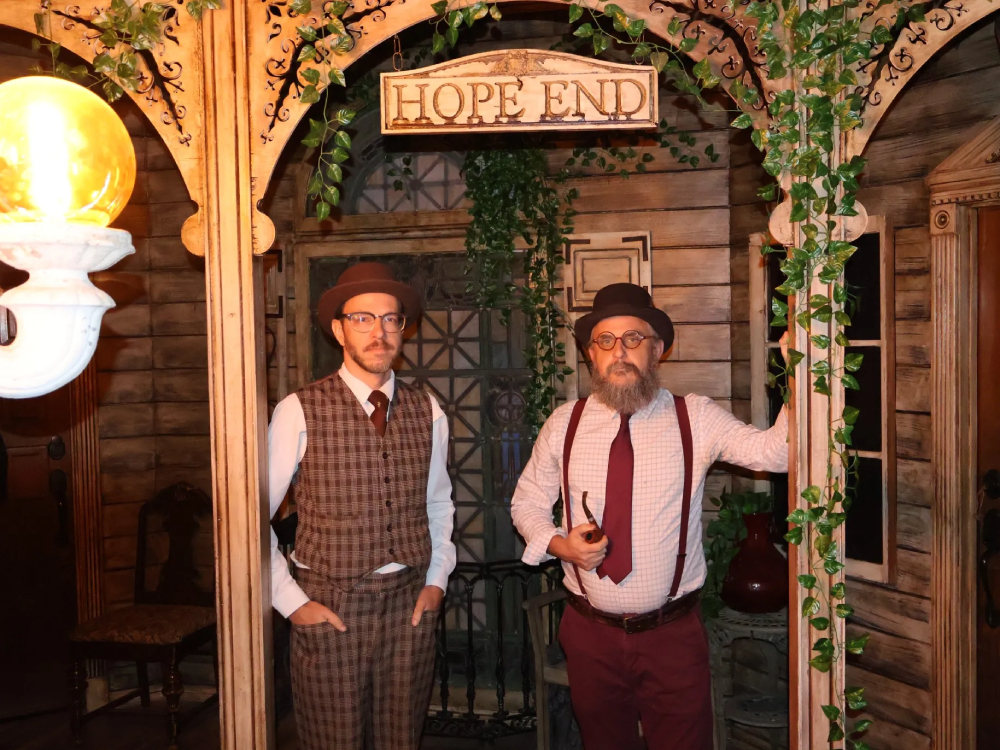
Photo Credit: Nathan Foster
It Is All A Risk
I was struck by how much they talked about risk and vulnerability on the actor’s part. It emphasised to me just how much of a two-party interaction these moments can be. The characters and the actors playing them are opening up a bit, ready to receive the player’s input.
Jonathan Berk: “The actor is risking something by opening up to the players she encounters beyond simply delivering her lines, in hopes that the players will do the same. Trust me, some don’t accept the invitation to engage; that’s why it’s all a risk.”
Benjamin Berk: “Knowing how unpredictable people can be, the safest way to have an interaction is to write dialogue that demands certain answers in order for the scene to progress. But this is essentially casting a player in a role for which they have no script. Even when this works, the scene falls flat because the player feels spoken at rather than spoken to.”
There is risk in counting on interactivity. Actor training and understanding is essential for a successful production.
Adam Moody: “Leaving breathing room and flexibility within the production for a player to provide feedback is an important part of being reeled in – to be seen is also to be heard. If a player responds and an actor skims past a response without drawing the player back into the story/ world, then you have lost the immersion of the moment.”
Benjamin Berk: “The actor needs to be able to look at the person in front of them and communicate that they are important to the action of the scene. I’ve seen this enacted through body language, eye contact, and physical touch, or through comments on a player’s demeanor, phrasing, and appearance. I’m consistently impressed by our actors’ ability to seamlessly transition between script and improv and back.”
Co-Creating The Experience
Hope End is really a collaborative effort between staff and guests. It takes effort from both parties to produce a successful show. The players are recognized and acknowledged, and they are essential for the story’s development. That sense of their two agencies mingling is evident.
Adam Moody: “Ultimately, we wanted players to feel like what they were doing matters, how they play affects not only their outcome, but the characters’ as well. You have to provide the players with choices that matter not only to the story, but to themselves as explorers in your world.”
Jonathan Berk: “One of the terms we’ve used a lot in the past to talk about this is “co-creation.” We wrote the script and built the set, but the actors and gamemasters bring it to life. And of course the players play a big role in creating their own experience through how they respond to those opportunities for authenticity.”
We affect each other, players and games. In really well done experiences both sides leave impacted. We all feel seen.
Benjamin Berk: “I think creators and players have a reciprocal relationship, they’re both able to impact each other. As creators, if we care enough about an idea, a feeling, or a situation to produce a work of art about it, we’re going to appreciate the time a player takes to spend within that experience, and the way they process it long after it has ended. It’s a way for the players to make us as designers and storytellers feel seen.”
Jonathan Berk: “[You asked] ‘How important is it to create experiences that can possibly impact the players beyond the short time they are in the game?’ I think that for us, if that’s not the goal, there’s no point.”
Next Time
Stay with us for the final section of this series where we will talk with some of the actors that play Dolores Wright. Their commitment to making players feel seen helps make Hope End one of the top escape rooms in the US.
Spoilers Club Episode #11: Hope End
While this piece avoided spoilers, if you are interested in a more in depth conversation about Hope End, you will probably enjoy our Spoilers Club podcast, available to our Patreon backers. When you support Room Escape Artist on Patreon at the “Search Win!” level ($15 per month) and you’ll get access to all the Spoilers Club episodes, including the one for Hope End.
![Le Donjon – The Last Knights Templar [Review]](https://roomescapeartist.com/wp-content/uploads/2026/05/the-last-knights-templar-the-last-knights-templar-2.jpg)

![The Artisan of Glimmith [Hivemind Review]](https://roomescapeartist.com/wp-content/uploads/2026/05/the-artisan-of-glimmith-the-artisan-of-glimmith-1.jpg)

Leave a Reply