
This is the third in a series of articles exploring the idea of escape rooms as a performer’s medium. The series examines the concept from the perspectives of players, performers, and owners.
Read Part 1, the player’s perspective.
Read Part 2, the performer’s perspective.
Owners looking to add actors to their games don’t necessarily need to train existing staff to act; often they can hire performers and teach them to run escape games. Or perhaps split up the traditional gamemaster job to play to the professional strengths of different types of individuals. Working at an escape room is a legitimate choice for individuals with a desire to perform.

Hire Performers To Improve Staff Retention
In this world full of performers, most of them are searching for a stage. Escape rooms are increasingly being recognized for the opportunities they present as a lower-bar entry point for amateur actors. Companies are finding it is easier to train performers to be gamemasters, rather than the other way around.
Will Rutherford co-owner of Escape Artist Greenville: “I can confidently say that over the past couple years almost everyone that has emailed us directly about a job has said they are excited about performing. Three years ago those emails would have said ‘I like puzzles so this job seems fun’.”
Jonathan Driscoll owner of Escaparium: “Since we started including acting in our games, we’ve had more and more applicants coming from a theatre background, which permits us to push further into acting which in turn gets us more applicants. This also has the effect of giving us better staff retention because they feel that they are an essential part of the experience instead of just a gamemaster.”
Improved staff retention was indeed a common theme echoed by several owners who employ performers.
Haley ER Cooper from Strange Bird Immersive: “Our staff has essentially no turnover. Actors LOVE performing regularly, and the joy that comes from working with different scene partners (the audience/ players), which in turn adds a layer of real customization to the team that customers adore.”
Venia Marinou is a hostess at No Exit Escape Rooms in Greece: “I wouldn’t say finding new actors that are reliable and great at what they do is the easiest thing, but as a company we are lucky to have a team of actors that have been with us for many years.”
Customer service is still a top priority and is important to remember when hiring actor employees.
Audrey Pelicano has 6 years of experience performing for customers at Escape Artist Greenville: “I would caution actors and escape room owners against placing more emphasis on being an actor than being proficient in customer service. It’s still a customer-facing job and it’s seldom glamorous.”
I am very happy to see the owner community finding success attracting performing talent to their businesses. This is a good thing for everyone involved. Hearing comments like these helped cement my theory that escape rooms are a place for performers.
Gamemaster and Actor As Different Jobs In Greece
I noticed something interesting while playing in Athens, Greece. Although actors usually helped reset the room after a playthrough, there often seemed to be another person onsite in a more traditional gamemaster role. When I questioned the organizational structure I was usually told that escape room acting and gamemastering were two different jobs.
Venia Marinou: “For me the job of a gamemaster and of an actor is completely different, especially in the last few years considering the acting in rooms nowadays is so much more challenging than what it used to be.”
Philip Stylianes is an actor and a gamemaster at No Exit Escape Rooms in Greece: “Performing in an escape room in Greece has definitely evolved over the past 4-5 years and the expectations are higher, as the rooms become more and more advanced. Sometimes there’s someone who is acting throughout most of the room’s duration and someone [else] who mostly has the gamemaster role.”
I find this compelling for a couple of reasons. First from a player’s perspective it is impressive to see the results of a gamemaster in a control room triggering lighting, sound, and other effects while an actor is in the game space performing in front of us.
Second, it frankly makes sense that that market has evolved to consider escape room acting as a separate, specialized position, because the jobs take such different skills. The person doing game and show controls needs to have impeccable attention to detail, and reliably do their job exactly the same way every time, but they may never need to interact with the players. The actor can have a completely different set of skills such as the ability to improvise and adapt to player personalities.
Something I always find myself analyzing after (and even while) playing an escape room is how many staff members were dedicated to our game. Some games are able to utilize a smaller number of people to create the feeling of a multitude of characters. There are companies all over the world drawing or blurring the line between actor and gamemaster to varying degrees and many of them are achieving spectacular results with a number of different approaches.

The Need For More Roles
Several escape room owners told me that their performers often desire more work than they are able to provide for them. This can result in acting being added to older games or more heavily designed into games that are in future development. More games means more roles and more opportunities to alleviate the pent-up desire to perform.
At Escaparium in Quebec, Canada, it is important that the cast rotate through performing the different roles in most of their games so that they can keep developing their skills and to also provide flexibility in staff scheduling. However, as experiences get more complex, such as their newest game, Magnifico, specific skills are lending themselves to a bit more specialization in character selection.
Multiple performers playing multiple roles through the course of normal business often leads to the discovery of small adjustments and improvements that can be made to the characters and the games. Happy accidents and new ideas are occurring all the time.
Actors Need A Director
Although the specific need depends on the size and complexity of the production, escape room actors can benefit from having another person in the role of the director.
Haley ER Cooper: “Actors need a director, the person who can stand outside the scene, report when choices aren’t reading to the audience or the actor is conflicting with the story…Even the most seasoned professional actors can’t tell if their choices are having the proper effect on the audience…In the theatre world, here’s the breakdown of responsibilities: The actor is in charge of the character. The director is in charge of the story.”
Jonathan Driscoll: “We depend on our director to provide consistency in performances, coherence to storyline, performer adaptability to players, but also actor development and actor and player safety.”
Kim Rutherford co-owner of Escape Artist Greenville: “Ultimately it’s me and Will. We work with the design team to set the character motivations and actions in the scene. But for that to work, we have to have buy-in from actors. If we direct them to do something and it feels wrong for the character, they probably won’t do it when we’re not there watching…We do hundreds of shows a month with 14 different actors, and much of it is unscripted. The only way that will work is if everyone understands the goal of each scene and can take feedback if something isn’t working.”
Comedy roles, often full of improvisation opportunities, seem to allow for a larger amount of actor freedom.
Audrey Pelicano: “None of our characters are heavily scripted, so as long as we communicate the story and don’t contradict the genre of the room (horror, campy, mystery), we have a lot of freedom. Will and Kim, the owners of Escape Artist Greenville, put a lot of faith in us to let us develop the characters and as long as we, the employees, understand what direction they want the characters to go, it typically works well.”
Philip Stylianes: “I’m free to pick the characters that I’m playing, explore and improve them as I see fit. There are no limitations really on what to do with a role, especially in Wanted: Dead or Alive where the comedy aspect leaves room for a lot of improvisation. And comparing it with other jobs I’ve had, it is by far the most fun and stress-free environment!”
Having a person in the position of director is another factor that owners need to consider when employing performers in their escape rooms. Actors come with overhead.
While many escape room companies might not need to employ a separate director in the traditional sense, the role of directing actors can be essential to the success of the product. A well-coordinated team with a guiding hand that can help ensure consistency will elevate an escape room into a more artful, memorable experience that resonates with customers.
That’s A Wrap
Throughout this series I have been exploring the idea of escape rooms as an artistic medium for performers. By interviewing a number of performers and owners that employ them, I have solidified my belief that viewing a portion of the escape room industry as a place for performers will continue to build a win-win-win situation long into the future.
People with a passion for performing are finding a new space to showcase their talents. Owners are utilizing a new labor source that helps add real value to their game products. Customers are able to enjoy higher quality escape room productions that get them excited about the hobby and maybe more likely to return.
Thank You
I wanted to thank all the people who indulged me with conversation and interviews while working on this series. I encourage everyone to go play their games and experience the talents of these performers while supporting the owners who bring us these incredible escape room experiences.
Jana Erbes is a performer, game designer, & media creator in Germany
Laurence Deslauriers is a performer and gamemaster at Escaparium in Quebec, Canada
Venia Marinou is a hostess at No Exit Escape Rooms in Greece
Will Rutherford co-owner of Escape Artist Greenville in South Carolina
Kim Rutherford co-owner of Escape Artist Greenville in South Carolina
Haley ER Cooper from Strange Bird Immersive in Houston, Texas
Jonathan Driscoll owner of Escaparium in Quebec, Canada
Salwa Labeid is a performer and gamemaster at Escaparium in Quebec, Canada

Audrey Pelicano is the Prop, Set, and Show Technician for Escape Artist Greenville in South Carolina
Marc Welings former Scorcher at Stay In The Dark, now with Escape Stories in Germany

Philip Stylianes is an actor and a gamemaster at No Exit Escape Rooms in Greece
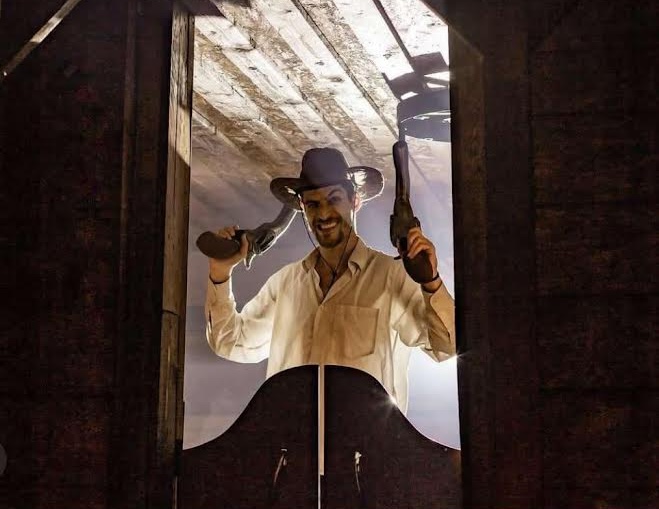
Jamie Schojan from The Exit Games FL in Clearwater, Florida

If you enjoyed this series, you can find more articles about escape room game design here. And we’d truly appreciate it if you supported our work on Patreon.



![Trapped! Escape Room – Grandma’s Surprise [Review]](https://roomescapeartist.com/wp-content/uploads/2026/03/grandmas-surprise-grandmas-surprise-2.jpg)
![My Father Lied [Hivemind Review]](https://roomescapeartist.com/wp-content/uploads/2026/04/my-father-lied-my-father-lied-1.jpg)
![Marissa Meyer & Tamara Moss – The Escape Game [Book Review]](https://roomescapeartist.com/wp-content/uploads/2026/04/marissa-meyer-tamara-moss-the-escape-game-book-1.jpg)
Leave a Reply