
Adaptive Design in the RECON Game
The RECON Game is a unique design challenge each year – create something for industry professionals and enthusiasts that can be played amid the various activities, talks, and sessions of the event and can scale to accommodate a few hundred attendees. As discussed in the first article The RECON Game: A Walkthrough, we had three goals for this year’s game:
- Help attendees discover the event space.
- Foster collaboration between players.
- Require minimal operational energy.
One of the major challenges in creating these games, specifically for in-person RECON events, is the need for adaptive design—intentional and flexible design decisions that can be molded and modified during the event to adapt to unforeseen circumstances or problems. We create something on paper that we hope to be magical and exciting. We craft puzzles and moments to delight our players. But, making something at this scale requires continual design attention throughout the event to ensure it runs smoothly.
The preparation we do leading up to RECON, and the decisions we make during the event, are essential to our ability to execute the RECON Game. Below are five areas where design enables the event to succeed.
Know “Why”
Throughout the days leading up to RECON Laval, and during the convention, we had to make quick on-the-fly decisions. These were only possible because I knew exactly why each element of the game existed. What purpose does this component serve? What about it is critical to the function of the game? What about it can be changed without sacrificing the player experience?
Before running any event, take time to go over every element and really understand these questions. There will always be adjustments when running the RECON Game. Making changes on the fly is risky. My thorough understanding of each game element ensured I was fixing problems rather than creating new ones.
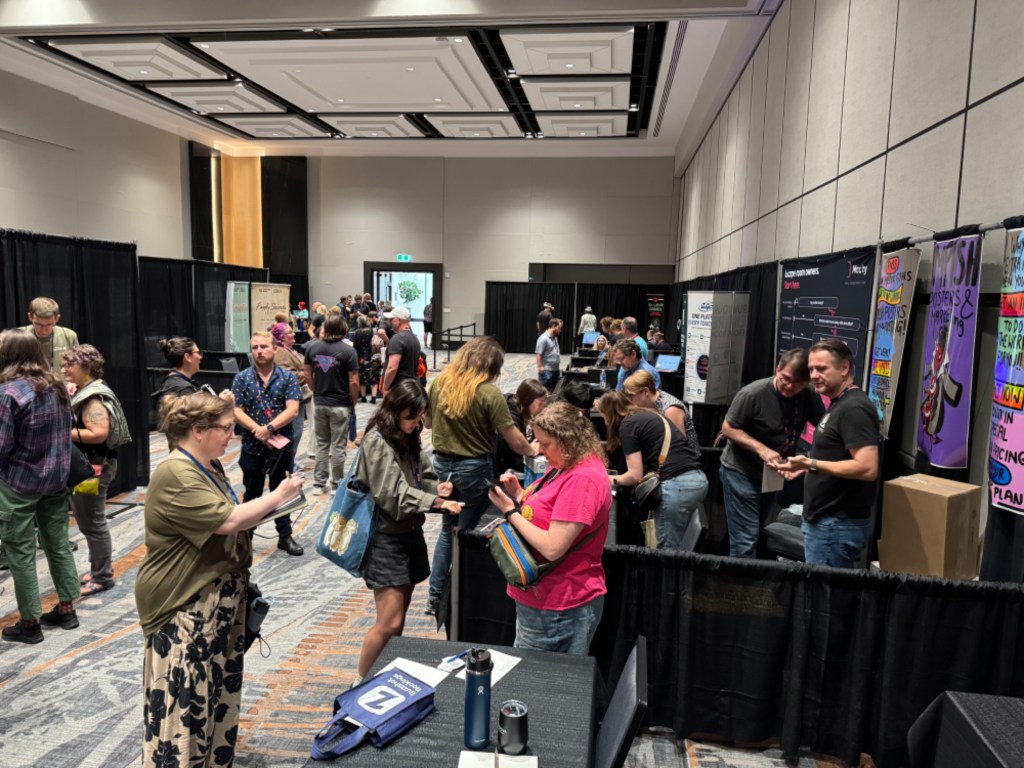
For the RECON Game, the first element we had to adjust days before the event was the timing of when the game started. The first puzzle was designed to get players exploring the event space. We designed a marketing flyer to be included in the swag bag given to all attendees at check in. This puzzle had players find letters that were displayed on the various room signs around the convention. But as we reviewed our plans with other members of the RECON team who were closer to other aspects of the event, we realized that the venue signage wouldn’t be available during the Saturday (pre-con) check-in.
We decided to adjust the timing of handing out that flyer, distributing it to attendees at the door of the first speaker block. That would distribute the information to almost everyone, and we’d have spare copies at the info desk for anyone who checked-in after that time. We also rewrote the event descriptions for the RECON Game, indicating it “started just before 9:00 AM on Sunday,” hinting that we’d provide the trailhead material with the start of that speaker block.
This choice also meant that we were sacrificing a bit of utility for one of our goals. By providing the first element of the game at the start of the convention, we were giving players less time to explore the convention space prior to the event. We could have instead made temporary signs for the rooms for Saturday, but we didn’t want to upset or confuse hotel staff, or cause unnecessary traffic through the hotel during setup. Ultimately, this was the trade-off we went with to ensure smooth operation of the game for players, unencumbered set up of other aspects of the event, and a good relationship with our venue.
Plan for Alternate Options
When planning the RECON Game, we identified elements that had potential for failure. And, for each such element, I had a back-up plan that we could implement to cover the gap. Rarely do we implement these – for example, I had backup QR codes, notes, and signage that I carried in my satchel, should something fail. But, we did have to pull from that proverbial bag of tricks once.
As discussed in the previous article, we split the RECON Game into four parts. The first two parts could be completed on the first day, while the other two wouldn’t have vital information released until day 2. We did this to help spread out content for players, and to allow players who didn’t engage with the game until later in the conference to not feel alone, as many puzzles required cooperation with other players.
Impish Posters and Marketing had a series of email addresses that were set up to automatically respond to messages. We created these up as Gmail accounts, and had players email and interact with them during the game, culminating in a newsletter that was sent out early Monday.
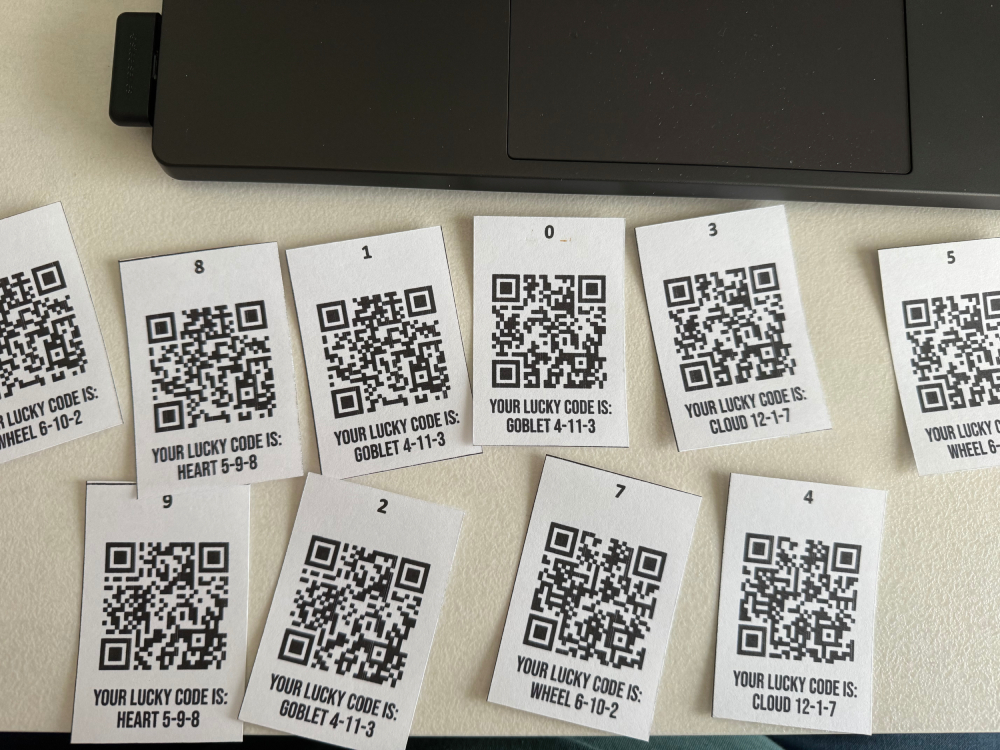
On Sunday evening, I collected the submitted email addresses and prepared four emails to send out, one per QR code from the printed receipts in part 2 of the game. But, Gmail decided that night that we weren’t trustworthy and blocked our email accounts, likely due to emailing out to such a large number of people at once. We didn’t discover this problem until right before the first speaker block of day 2. (Thanks, Theresa, for discovering this!)
But, we had a backup plan already in place. Because we knew players could get to this stage of the game after day 1, we had duplicated the newsletter information onto the Impish website, so players would naturally bypass the newsletter-gating portion of the game. When the newsletter didn’t land in inboxes, as intended, we redirected players back to their QR codes on Monday to get the needed information.
This is where the next lesson in adaptive design came into play…
Communication is Vital
How are we communicating with our players during the game? What if something needs to change? Often games have a way to provide assistance or updated information to players – an app or website to feed hints, emails to directly communicate with players, or a gamemaster who can oversee the game’s operation. Convention games like this one need to have other options.
At RECON, we had key moments when we could capture most attendees’ attention – the speaker sessions. We intentionally do not counter-program during them, meaning most attendees are present. We also provide announcements and updates to everyone during these sessions, giving us a useful tool to adjust, nudge, or update our players.
Lisa Spira delivered these announcements at the end of each speaker session, and she did a masterful job of providing critical game updates. If we didn’t think players found the trailhead, we planned to give an announcement to better direct them toward it at the end of day 1. For the start of day 2, Lisa instructed players that Impish Posters and Marketing wanted to send out a newsletter, but had some problems with their email server. So, players should reuse their QR codes to gain access to that information.
Was this a perfect solution? No. I interacted with a couple of players who had received the newsletter email and were confused. But, the on stage announcement reached enough people to redirect players to the information, and they could then help others along the way. Because, we successfully did something else…
Deputize Your Players
Our third goal, minimize operational energy, meant we didn’t have a robust system to provide players guidance or hints along the way. But, the convention was full of a few hundred escape room experts. Who better to give hints and support players than this community?
The very first puzzle’s partial solution resulted in the phrase “ASK 4 HELP.” The intent here was to let players know they needed more information on this puzzle. To progress forward, they had to ask others for assistance. If any of the RECON Guides were asked for help at this stage, they were instructed to say: “I don’t know anything about this. Maybe try asking other attendees for help? They may have information you’re looking for.”
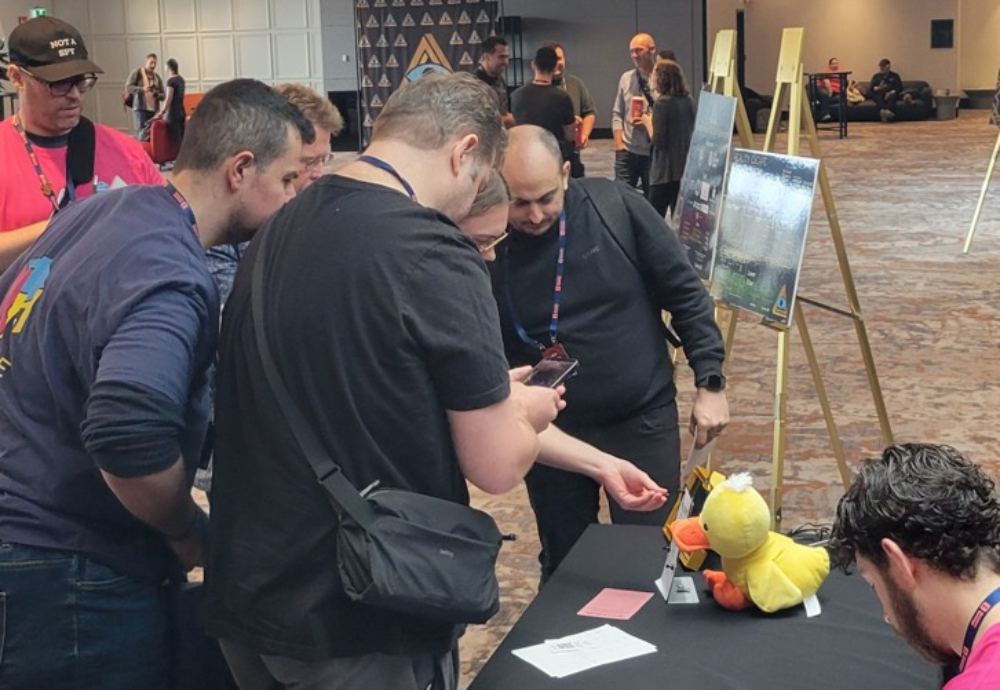
This taught players early to turn to other attendees if they needed assistance. Players had to work together to succeed. And, if players felt confused at any point, maybe that was because they didn’t have all the information. Even when players had the information, if they needed a hint, they now had someone else who could point them in the correct direction or work with them to solve the next challenge. This reinforced our second goal: fostering collaboration between players.
Create an Event that Handles Adaptability
Finally, we knew we were creating something that had a layer of chaos baked in. Something of this scale cannot be effectively playtested. We didn’t have the capacity to oversee everyone playing the game to ensure there weren’t problems or issues along the way. Some components weren’t completely in our control.
We created a story that fit this narrative. Impish Posters and Marketing clearly had their own problems. They missed RECON entirely. They didn’t have their booth put together. Their social media was a mess. But this was by design. The changes and adjustments we knew we’d have to make on site could be credited to the chaotic nature of the company, and enhance the story, rather than cause a moment of confusion and disconnect for solvers. Rather than fight that chaos, we embraced it.
The moments we had to adapt and change on the fly strengthened the story and looked like intentional choices. They disguised when and where we shifted well enough that players never lost confidence in the game.
Conclusion
Rarely does an idea unfold perfectly upon execution, especially for large events like the RECON Game. By utilizing principles of adaptive design, we were able to create something that could withstand the challenges and uncertainties of the event and impart something fun and memorable to our players.
When making your next design, keep these concepts in mind:
- Know “why” every element is in your game, so you can more easily adapt on the fly and ensure you are fixing problems, rather than creating new ones.
- Plan for alternative options, especially on the riskier elements you have the least control over.
- Identify how you’re communicating with players and ensure they know when and where to expect communication from you.
- For large games like this, particularly where you want to foster collaboration between players, utilize your player base to provide assistance to those needing help.
- Design an experience that embraces the chaos; any changes or modifications you need to make can blend in unseen.
To everyone who played the RECON Game, on behalf of the RECON Games team, thank you! It’s a delight to craft this event every year, and it’s thrilling to see so many people take a nugget of joy from our designed chaos.
To follow RECON and learn when tickets go on sale for our next event, please sign up for the RECON newsletter.
![Escape From the Elevator [Unintentional Review]](https://roomescapeartist.com/wp-content/uploads/2026/09/escape-from-the-elevator-escape-from-the-elevator-1.jpg)
![Artifact Escape Game – 404 [Review]](https://roomescapeartist.com/wp-content/uploads/2026/04/404-404-1.jpg)
Leave a Reply