
If you are looking for other overnight escape room type experiences, check out our Overnight Escape Room recommendation guide.
Old roots, new growth
Location: Monmouthshire, Wales
Date Played: May 4-5, 2024
Duration: 24 hours (noon through noon the following day)
Price: £400 per participant, plus lodging starting at £350 per room (for 2-4 people)
Ticketing: This is a public group experience, and lodging is booked privately
Accessibility Consideration: Participants must be able to climb uneven wooden stairs
REA Reaction
The Key of Dreams opened a scintillating window into an emerging category of long-form hybrid experiences, blending immersive acting, narrative-driven exploration, puzzle solving, and fine dining, all set at a breathtaking 400-year-old manor in the countryside of South Wales.
Over the course of 24 hours, I and 20-some other participants indulged in a generously constructed alternate reality, one in which the experiential saturation was cranked up to 100 and our options for engagement felt endlessly — if at times overwhelmingly — vast. There were multiple modes of interaction: conversing with characters, investigating “story strains” that were physically scattered throughout the property, assembling fragmented circle poems known as “cuttings,” and helping to further the aims of various secret societies. Further filling out the space, we encountered puzzle boxes, custom-made wooden cryptexes, and other secret items and game mechanics that led into some truly unforgettable hero moments.
The team behind The Key of Dreams, consisting of writers, performers, prop designers, voice actors, composers, and chefs, created a staggering quantity of high-caliber art for this experience, of which each participant got to see only a fraction. They pulled off the rare feat of bringing an entire world to life, and their commitment and passion shone through on all fronts.
Above all, The Key of Dreams excelled at interactive narrative, or, put otherwise, narrative as puzzle. The experience was at its most cohesive and compelling when it propelled participants through a continuous flow of intimate actor interactions, intriguing written records, and shocking revelations. Each thread I pulled led into another as abstract story details manifested in the physical realm. Countless such threads, differently developed for each participant, progressively entwined throughout the day and crescendoed from leisurely investigation into exhilaratingly action-packed confrontation by the evening hours. The relationships we’d cultivated, the secrets we’d uncovered, and the items we’d procured or created all meant something.
However, The Key of Dreams wasn’t always able to maintain this momentum. While broad swaths of the experience were meaningfully interconnected, other interactions were dead-ends, and there was an excess of well-written yet non-actionable lore. This was the case for many of the more explicitly puzzley puzzles I encountered, which typically unlocked fragments of story that, lacking sufficient context, meant nothing. For an experience as intricate and dense as The Key of Dreams to function as an integrated whole, narrative gating must be consistently equal to puzzle gating, and everything must lead to something. Otherwise, if participants start feeling like they wasted their time working on filler content, then their awareness of everything else they could or should have been doing during that time heightens and the FOMO starts to set in.
To be honest, my experience at The Key of Dreams was one of the most memorable, transportive, and soul-nourishing days of my life (and that’s quite a high bar at this point!) Between deeply vulnerable relationships I developed with characters throughout the day, an endless supply of beautiful words to read, record, and apply, poetically presented feasts that effortlessly supported my dietary restrictions, and a “pinch me, how is this real?!?” stunning setting, The Key of Dreams tapped into the core of what I’m personally looking for out of immersive theater and the immersive elements of escape rooms. The fact that many of those elements also showed potential for further refinement was a point of intrigue more than an outright negative for me, and it didn’t majorly detract from the immense beauty The Key of Dreams has already cultivated.
My travel companions had a range of experiences, not all quite as consistently positive as mine. Some shied away from anything resembling a puzzle or got lost in the sheer quantity of content strewn throughout the hallways. Others found the onboarding to be too much to process in the time given (whereas I found it to be quite lengthy yet thoughtfully structured, never more verbose than required.) There was an ongoing tension between collaboration and competition, as global information-sharing was implicitly encouraged but side objectives related to secret society alliances were kept more secret. I perhaps lucked into navigating these modes of play smoothly, while others were at times unsure of how the experience wanted them to behave. I also realized that a skill I’ve developed throughout my life — a knack for finding patterns and organizing information in large datasets — especially came in handy here, yet was not shared by all.

The Key of Dreams was ambitious, gorgeous, tasty, deeply interesting, and still actively developing. Created with relatively little influence from the broader worlds of escape rooms and traditional immersive theater, The Key of Dreams was an innovative and idiosyncratic dream experience for connoisseurs of these mediums, particularly those who care about narrative. If you are looking for a long-form puzzle-centric escape room, don’t like reading, get easily overwhelmed by large amounts of information, or shy away from actor interactions, this may not be the show for you. But if you are in the target audience, The Key of Dreams is a hidden gem worth traveling just about any distance to experience.
Who is this for?
- Story seekers
- Adventure seekers
- Scenery snobs
- Lovecraftian connoisseurs
- Players who aren’t turned off by reading
- Players who are not easily overwhelmed by information dumps
- Players who don’t need to be a part of every interaction
Why play?
- Long-form immersive exploration
- World-class acting and writing
- Original takes on Lovecraftian lore
- Countless secrets to uncover
- A delectable fine-dining experience
- A gorgeous setting at a historic property
Story
We arrived as guests at Treowen, an old manor filled with even older stories. By investigating the house and its inhabitants, we attempted to unravel its many secrets.
Setting
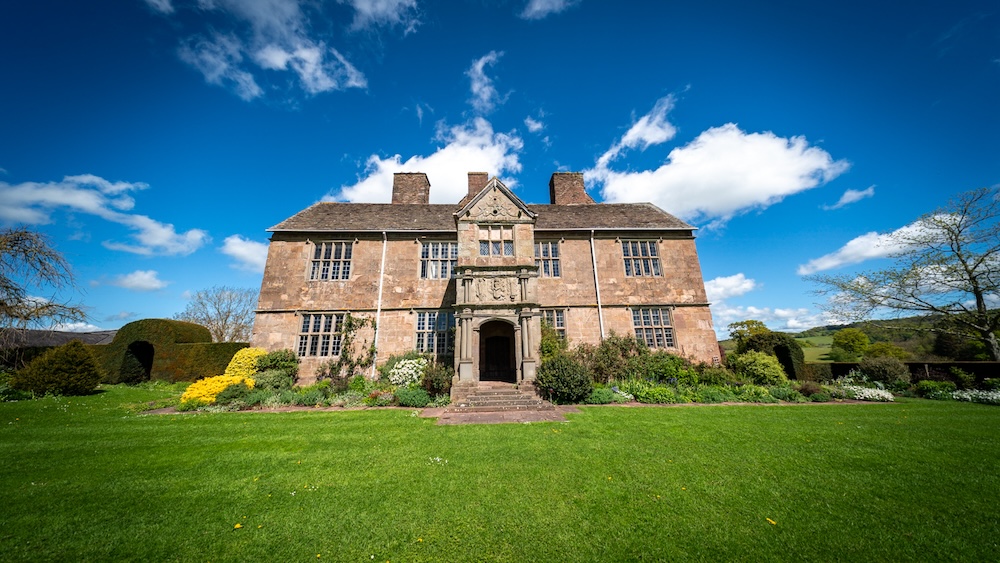
The Key of Dreams took place at Treowen, a 400-year-old manor in South Wales. This stunning historical stone building was surrounded by acres of pristine meadows, hedges, and orchards.
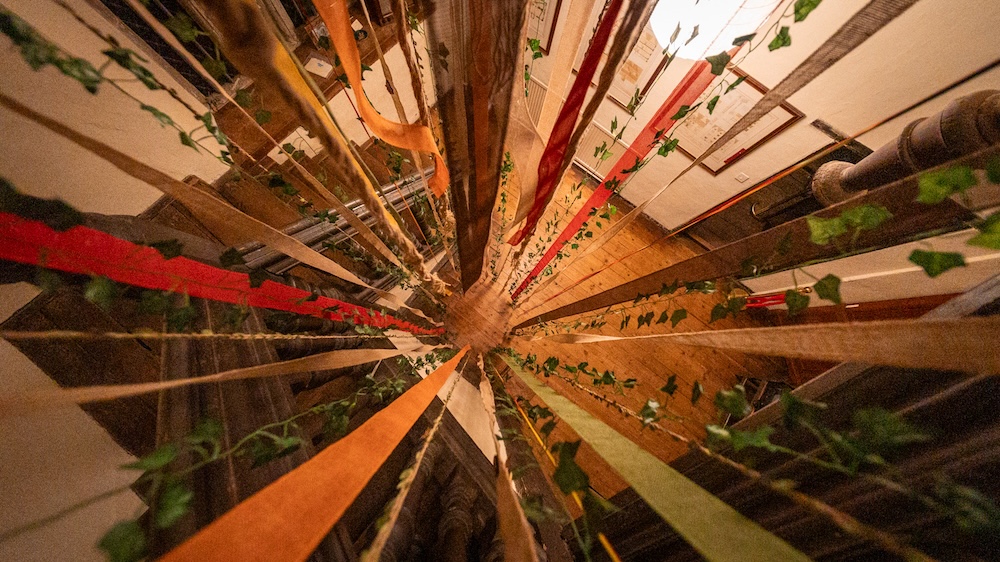
Inside, a labyrinth of public and private rooms were connected by the most fascinating assortment of doors, each seemingly with its own unique locking mechanism.
Gameplay
Lemon Difficult’s The Key of Dreams was a long-form immersive experience that included a wide range of puzzles and interactions with varying levels of difficulty and complexity. Much of the gameplay revolved around reading documents, searching for items, or talking with actors and taking notes along the way.
We were also encouraged to engage with up to 3 different (secret) societies, each led by a different character. Some players were assigned to a particular organization at the start, but everyone had full agency to join new factions as the experience progressed. Different societies had different tones and objectives, likely influencing which other elements of the experience a player focused their efforts on.

Analysis
➕ The writing and acting ranged from beautiful to sublime. Sometimes scripted and sometimes improvised, The Key of Dreams paid tribute to the words and worlds of Lovecraft while also establishing its own clear voice. As much as possible, this reality was dynamically shaped around the decisions and offerings of participants. There was a substantial amount of written material available to process throughout the environment, but contrary to most escape rooms, the writing in The Key of Dreams was the work of professionals and was an absolute delight to read, especially in such a stunning setting. I regularly took little introvert breaks to sit and read in a cozy location, whether that be the library, a little nook in a stairwell, or the verdant oasis outside. The writing made sense in context and on location, and as such, this felt like time well spent. For me, the reading rarely competed with the gameplay, and just like if I were in a public library, I was able to enjoy what I was reading without focusing on everything I’d never get around to.
➕ The setting was otherworldly. Weighted in history and lush with greenery, pictures don’t even begin to capture the beauty of Treowen Manor. I would travel here even if it didn’t temporarily house a world-class immersive experience, and yet The Key of Dreams expertly utilized the history and features of this setting to their advantage, taking our appreciation of our surroundings up a notch. Inside, I was dazzled by the diversity of rooms. There was a clear division between an older and a newer wing of the property, though all of it was pretty old. I stayed in the “Midnight Lily” room, which, true to its name, was covered in a range of blue textures and an aggressive lily-print wallpaper, had a rustic wooden door with a latching mechanism that was a mechanical puzzle in and of itself, and had a marvelous view out onto endless green fields.
➕/➖ The Key of Dreams contained a range of puzzle formats, including narrative investigation and deduction, puzzle boxes, riddles, jigsaws, and treasure hunt-style searching. At their best, these puzzles naturally emerged from the world, fitting diegetically and actively driving forward story threads. At their worst, not everything could be approached as a puzzle in the sense of having a single correct answer or extraction, and it wasn’t always clear which content could be approached through which solving style. Some cluing was unnecessarily flourishy and obtuse, and the presence of more recognizable puzzles in some areas led us to expect similar layers of discoverable meaning elsewhere, even when there was none. The puzzles themselves were not bad; in fact, most were thoughtfully designed and well produced, a level above what I’ve come to expect from any immersive theater production largely designed by non-puzzlers.
The main area for improvement was the context and consistency around how puzzles were presented. In future iterations of The Key of Dreams, I hope that the creators consider 1) working puzzles into the design process earlier to ensure that puzzle structure is meaningfully integrated with narrative structure, and 2) playing more escape rooms and puzzle hunts themselves to better understand the common behaviors and assumptions that players of these mediums inevitably bring into any experience with puzzles. This will not only strengthen a core dimension of the existing experience, but it has the potential to further expand the audience that would find value in The Key of Dreams.
➕/➖ The complex structure of The Key of Dreams necessitated robust onboarding, with numerous layers to explain: general rules, specific interaction mechanics, house layout and history, character backstories, schedules, and so on. The Key of Dreams largely frontloaded this onboarding, with an hour scheduled at the start of the day during which we were invited to get settled in our rooms and read through a range of onboarding documents. A double-sided “Read This First” gave a useful high-level overview with bolded sections, an in-world welcome letter from one of the societies led us a step further into player-specific modes of interaction, and an additional 35 or so short pages in our Field Guide provided additional context for overachievers, not all of which needed to be fully absorbed at the start. The onboarding more subtly continued as we made our way through the first hours of the experience.
I read quickly, and this approach to onboarding worked well for me. However, not everyone takes in information the same way, and I observed other participants quickly get overwhelmed by the amount of information and seemingly open-ended choices presented upfront. A more experiential, progressive approach to onboarding might make The Key of Dreams a notch better accessible to more participants.
➕/❓ The design and structure of a “Field Guide” book given to each participant was meticulously professional. This book stayed with us at all times, providing maps of the space, important worldbuilding, and structured and unstructured pages for us to take notes. While the book looked nice enough to earn a place on my bookshelf back home, it might be further elevated by pulling inspiration from “keepsake games” (to reference pioneering experience designer Shing Yin Khor) to expand our interactions beyond just reading and writing.
➖ Too many interactions throughout The Key of Dreams required transcribing fragments of text into our Field Guides. While I don’t mind a moderate amount of note-taking, a bit of streamlining, whether through engravings, stickers, or some other creative solution, could have gone a long way.
➕ Throughout the experience, we had the opportunity to collect one or more beautifully designed enamel pins (or badges) which served as quality keepsakes. They now proudly reside on my ever-growing display board of immersive, escape, and puzzle pins.
➕ The Key of Dreams served up a proper fine dining experience with beautiful plated and equally delicious food. Meals were continuations rather than breaks from narrative action, with both scenes and more casual conversation with characters woven in. The menu for the multi-course evening feast was particularly clever and poetic.
➕/❓ While The Key of Dreams was overall a low-tech experience, two items retrofitted with custom tech offered forth some of the most ethereal moments, for those who got to see them. There’s a tricky balance when it comes to scarcity in an open-world show, and as much as I adored the thematic ephemerality around a certain type of interactions, I was dispirited to learn that more audience members didn’t get to witness them.
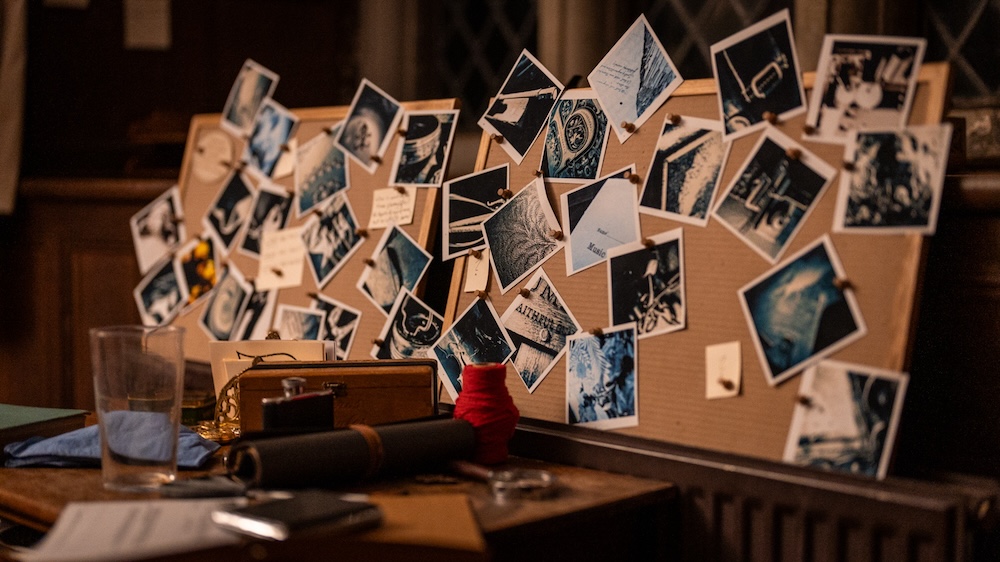
➕/➖ To facilitate information sharing, a number of “murder boards” were set up in a common area where participants could pin photos, write notes, and use string to connect related entities for each of the main story strains. With the extra curation of a character who also primarily resided in this space, this method was overall fairly effective, especially as the experience progressed. However, many participants still experienced a pull between this mode of collaboration and their more competitive objectives, especially since the character watching over this space was the leader of one of the factions. A clearer structure to plug information into and a more neutral space within the house could make the murder board mechanic more welcoming to more players.
➕ The final hours of day 1 provided plenty of action leading into a sequence of emotional climaxes and chosen endings. Following this, we had some time to discuss everything we’d just experienced, alongside out-of-character cast and crew, in a public social area.
➕ The Key of Dreams designed a full night’s sleep into the experience. Once the events of day 1 reached a conclusion, just about everything shut down for the night and we were encouraged to return to our rooms until around 8:30/ 9am the following morning. Having participated in countless overnight puzzle experiences, like the MIT Mystery Hunt and The Game, where sleep is not a given, I appreciated this approach taken by The Key of Dreams.
➖ The morning of day 2 tried to function as a finale, whereas it should have been some mix of epilogue and aftercare. We were met with far too much brand new content, including only a single copy of some essential reading to be somehow shared across the full group. This led into a final scene which was well intentioned but felt out of place and unsatisfying, all compounded by an acute need to somehow ease us back into the magic circle. We lacked a more succinct summary of all that had happened the prior day, why it mattered, and how it would weave together into something bigger. A more linear, more casually approachable content structure than that of the day before could have helped to deliver this sort of post-experience experience, rather than continuing to pack in as much material as possible at every moment.
➕ The cost of The Key of Dreams is high, yet this experience was actually a remarkable deal. Any of the individual elements — equivalent to a night at a fancy inn, a multi-course dinner at an acclaimed restaurant, multiple standard-length immersive productions chained together — provide generous value to justify their price tag.
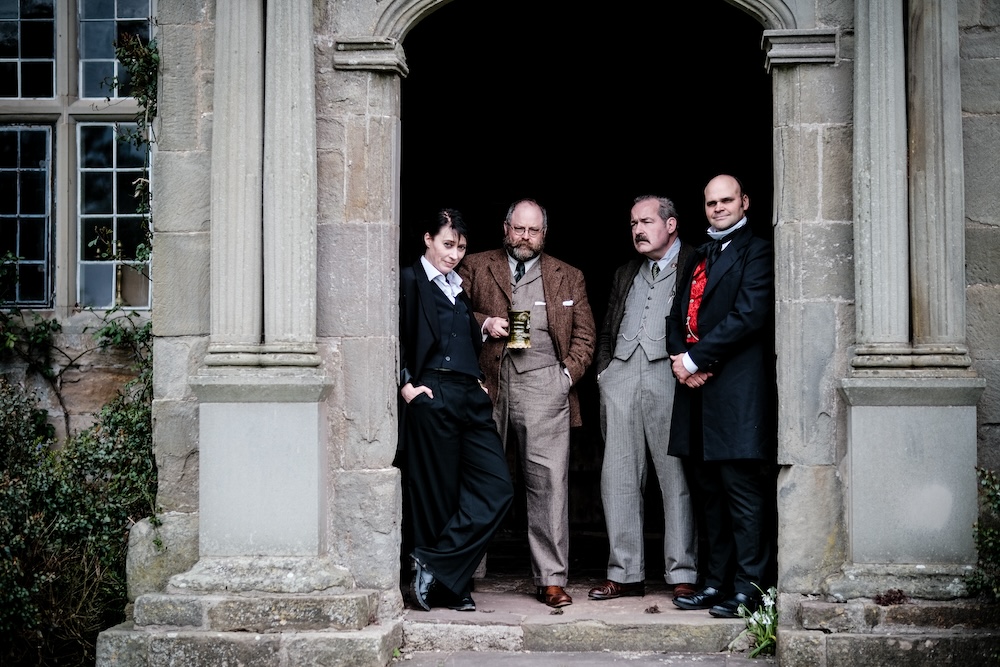
❓The Key of Dreams was not a LARP, though it contained some LARP-inspired elements. We were encouraged to wear nice clothes that fit the vibe of a 400-year-old house, but we came as ourselves, juxtaposing our modern era with the out-of-time historical fiction of the characters and customs we encountered. Each participant’s “character” became a branch of their existing identity that organically developed through the alliances they made and secrets they discovered throughout their experience. Without ever really being directly addressed or justified within the experience, this balance worked well.
Tips For Visiting
- I received two tips prior to visiting The Key of Dreams that significantly enhanced my experience: 1) There are many threads to pull on from the start. Pick just a couple and follow them to completion; else risk starting everything and finishing nothing. 2) Focus on interacting with characters and investigating stories. Solve any puzzles you encounter along the way, but don’t spend too much time on the countless other puzzles available throughout the space.
- The Key of Dreams will next be running on select dates through the fall, including September 14, 19, and 21, October 24 and 26, and December 14, 16, and 21. Their sister show, The Locksmith’s Dream, which takes place on the same property but with a completely different narrative and gameplay structure, will next be running September 26 and 28.
- The Key of Dreams is a short car or taxi ride from the Newport train station, which is just under a 2-hour train ride west of London.
- Even though it’s an option to find lodging elsewhere, we highly recommend staying in one of the magnificent rooms on-site to get the full experience.
- The food was delectable, and the catering staff was admirably accommodating of a range of dietary restrictions and preferences as long as they’re told in advance. As a vegan, I was delighted to receive very close to the full culinary experience, not just a smattering of side dishes.
- No prior Lovecraftian knowledge is needed going into The Key of Dreams, though some high-level familiarity with his aesthetic may help you to more fully appreciate the experience.
Book your trip to The Key of Dreams, and tell them that the Room Escape Artist sent you.
Disclosure: The Key of Dreams provided media discounted tickets for this game.
![60Out – Big Brain Labs [Review]](https://roomescapeartist.com/wp-content/uploads/2026/02/big-brain-labs-big-brain-labs-1-3.jpg)

![TR-49 [Hivemind Review]](https://roomescapeartist.com/wp-content/uploads/2026/02/tr-49-tr-49-1.jpg)
Leave a Reply