
This is the first in a series of articles exploring the idea of escape rooms as a performer’s medium. I will examine the concept from the perspectives of players, performers, and owners.
I am coming to view escape rooms, or at least a subset of them, as a performance medium: a type of art that customers attend, not only to solve puzzles and play around in cool sets, but also to witness a performance. Actors are adding a new level of depth and drama to escape room experiences. Personified characters that look you in the eye provide an impact that is impossible to replicate with a non-human form.
And if escape rooms are a performance medium they are also a performer’s medium. Individuals with the desire to perform are discovering acting in escape rooms as an outlet for their creative energy.

What This Means For Players
What does that mean from the player perspective? What does that mean for us, as customers, that more people – more talented and more qualified people – are choosing to work in these games that we love? They are adding value to the product, improving the entertainment level of escape rooms and adding art to gaming and puzzling. Actors often make for a more personalized experience, provide players with more agency, and can blur the line between hinting and cluing, making the game less a battle of wits and more of an adventure.
I’ve spent some time over the past few months chatting with a number of people – players, owners, actors – about what live performers add to escape rooms. This series contains quotes and thoughts from a few of these people.
Live Actors In Escape Rooms
Escape room acting has come a long way since the birth of the industry. Now far more than just in-character story introductions or jump scare moments, current high-end games include acting and performances that really add quality to the overall experience. Some common misconceptions surrounding live actors in escape rooms simply aren’t true any more, if they ever were.
Not all escape room actors are scary, most of them are not chasing you or touching you. They don’t all put players on the spot and force them to improvise dialog. They don’t stand in the room and make you feel self conscious as you try to solve puzzles.
Escape rooms use actors in a variety of ways to enhance the immersive experience and create a more dynamic, interactive environment. Actors often portray characters that are crucial to the storyline. By playing villains, secretive allies, or people in need, actors help tell the story of the game. They interact with players throughout the game, providing clues, or obstacles, or story exposition, and yes, sometimes scares, but should always be driving the plot forward. All of this is being done with an ever increasing degree of professionalism and quality.
Actor involvement makes the game feel less like a simple puzzle room and more like a live, evolving narrative, where the actions of the players and the actors intertwine to create a memorable experience. “The actor really made the game” is a reaction that I have heard many times. The fact that the escape room industry is attracting more true performers is an encouraging sign of what is to come.
Scenes
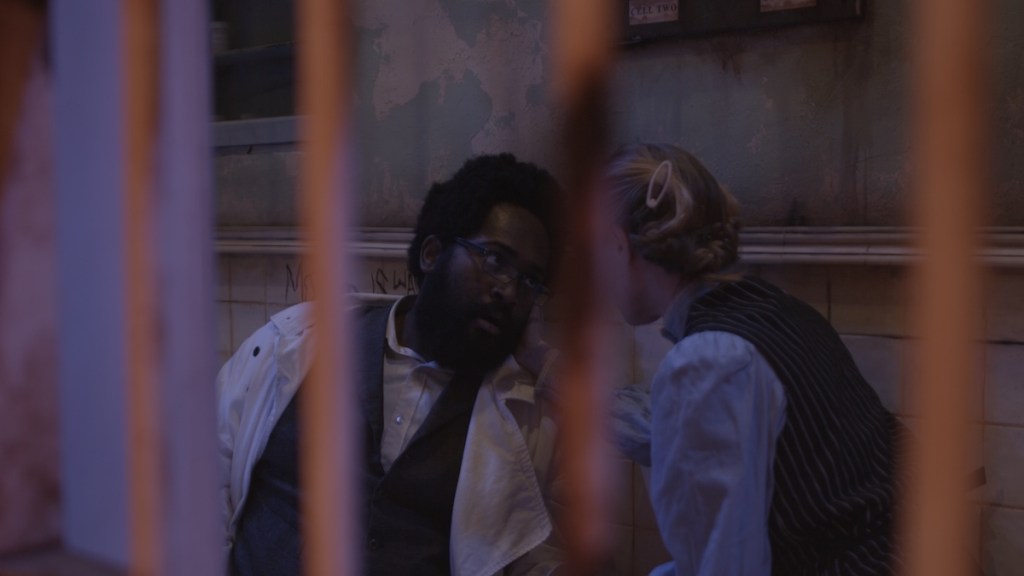
Sometimes one or more escape room actors perform scenes during the game. These often occur as act breaks or as the result of players opening up a new space. Many times scenes don’t include player interaction and are a chance to relax and appreciate a performance, usually while learning some new story information.
The best designs stop the game clock (if there is one) during exposition scenes so players don’t feel pressure to rush on to the next puzzle. Scripted scenes are one area of experience design that I expect will benefit greatly from the influx of performers into the industry.
Actor As Puzzles
Actors as puzzles in escape rooms is a tool that opens up more avenues in game design. As a player, this is one of my favorite types of actor utilization. It is one of the industry’s brightest frontiers and one of the most complicated ways that players interact with performers during a game. The performers I spoke with have seen first-hand the pros and cons of the concept.
Salwa Labeid is a performer and gamemaster at Escaparium: “I personally love it, but I also know that it’s not for everyone. The more escape rooms you do, the more you realize that some puzzles have the same concept or logic, and having an actor as a puzzle can be a fun change.”
Audrey Pelicano is the Prop, Set, and Show Technician for Escape Artist Greenville: “It’s important to avoid making the actor just a fixture in the room; make them relevant! Make it real! Make the interaction(s) with the actor a plot point that changes the trajectory of the gameplay. Deceive the character! Deliver them dreadful news! Or wonderful news! Then have the players deal with the consequences of their actions, you know, like real life.”
We are just beginning to see the potential of using actors as puzzles in escape rooms. The opportunity to provide fresh, new puzzle types to players while more effectively delivering story at the same time is a feature that creative designers and performers will continue to optimize in the future.
Players Are Learning To Appreciate Actors
The escape room industry is growing up, with production quality and sophistication increasing. As a result, players who’ve previously said they don’t like actors in escape rooms are finding their opinions changing. Winning over the skeptics seems to be a point of pride for some performers.
Salwa Labeid: “…as a performer, it always warms my heart when a group who does not usually like having an actor in the game says that they have changed their mind, and my presence made their experience even better.”
Audrey Pelicano: “Nothing feels better than winning someone over who thought the experience wasn’t going to be for them.”
We are seeing more and more comments like these from a couple of recent public reviews of Magnifico at Escaparium:
“I wasn’t a big fan of games with actors, but my perception changed drastically after doing this room.”
“I’m not a big fan of actors in an escape game….. Here, I not only appreciated [them], I was moved, and I felt invested in the mission of helping the characters with their quests.”
This is a trend I see continuing. Games with actors will sometimes cost more, but it is truly becoming worth it. Acting in escape rooms is getting better. Stories and scripts are being taken more seriously. Players are learning to appreciate and patronize the higher quality games. All of this leads to a future where the inclusion of a “live actor” in an escape room will be recognized as the premium feature that it is. This in turn should draw more and more quality performers to the medium, creating a feedback cycle that benefits everyone.
Follow Along
I hope you will follow along with this series as it expands to include the perspectives of escape room owners and the performers themselves. We’ll share more thoughts directly from the talented people I spoke with. And as players, I hope we all start to more fully appreciate some of the great performances that escape rooms actors are delivering.
Part 2 – Escape Rooms As A Performer’s Medium : The Performer’s Perspective
Part 3 – Escape Rooms As A Performer’s Medium: The Owner’s Perspective
Read more articles about escape room game design here.
![Brain Games – Flynn’s Arcade [Review]](https://roomescapeartist.com/wp-content/uploads/2026/01/brain-games-flynns-arcade-1.jpg)

![Mothman Themed House AirBnB Escape Room [Review]](https://roomescapeartist.com/wp-content/uploads/2026/02/airbnb-mothman-house-2.jpg)
![The Escape Game – Legend of the Yeti [Review]](https://roomescapeartist.com/wp-content/uploads/2026/01/legend-of-the-yeti-legend-of-the-yeti-3.jpg)
Leave a Reply