
Escape room players crave agency; they want to feel like they can impact their situation and the game itself. In order for that to happen, the game needs to recognize the players. I believe the next level of experience design is more escape rooms that use their own agency to impact the player, by making them feel seen.
When an escape game really makes it feel like it matters that you are there, right now, it can be thrilling. When a character asks you a question and expects a response, making you feel like what you say matters, this is where the two forms of agency intersect and it can be magical.

See Me
Just imagine the potential differences between a heist game where players break in and escape without ever being detected and a heist game where at a certain point the players come upon a guard who asks, “What are you doing here?” The players must choose how to respond, and the game has to bend to their response. Their escape is that much more of their own making.
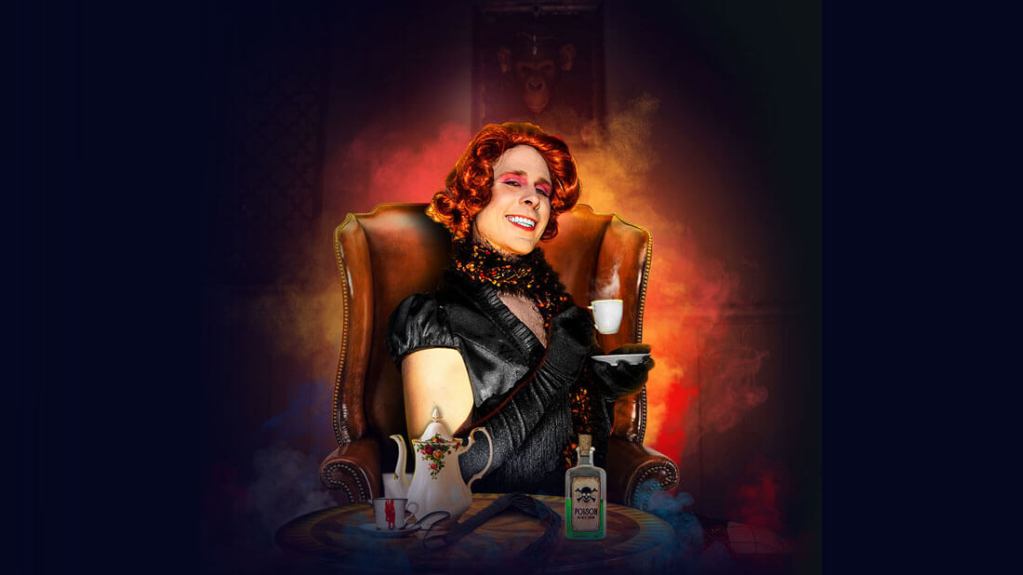
Another example might be a game with a character that calls out players by name, commenting on their appearance, or challenging them with a task, or maybe seeking their help. If anyone else showed up to Miss Jezebel’s esteemed tea party wearing cargo shorts, you know what I mean. It is not so much putting players on the spot as it is recognizing that they exist.
Talented game guides can sometimes spot specific players who are feeling left out and target character attention at them, promoting an underdog into a much more important role and turning a potentially unsatisfying experience into a memorable triumph.
Moments like these, and many others, are a sort of agency the game is exerting over the players. It can make customers leave feeling moved, affected, or at least with a satisfying sense that they existed in that game world. This is a feeling far beyond what we sometimes get from a more traditional escape room experience where players go through the puzzle solving motions en route to a predictable ending with little real connection to the game, its story, or its characters.
In Game Design Terms
Tommy Honton is an experience designer specializing in the intersection of interactivity and narrative. He has produced work around the world for audiences of all sizes and regularly lectures about design. I asked Tommy, “Is there an accepted game design term for this concept of creating the thrill of feeling seen?”
Tommy Honton: “There’s no official terminology that I’ve ever found but I like to talk about those moments. It’s rare to have a person look at YOU in most things, so when they do, it’s very special. Acknowledgement, winking at the guests, and giving them a sense that it’s not black or white, but that the game is responsive to YOU is really fun. You [as a game designer] just have to do something with it, otherwise it can be a letdown.”
When we look up at a camera and speak directly to a non-character game host, that is one of the most immersion-breaking interactions a player can have. What I am imagining is the opposite of that feeling. And it happens so infrequently that, when it does, players immediately sense something is different in this game. There is joy in that feeling.
Tommy Honton: “It is how the game acknowledges the players and what they’re doing – some kind of diegetic [in world] acknowledgement which serves as a “prover” to use the term from magic. [A magician is a prover who claims to know a secret that allows them to perform an illusion.] That sets up the audience that maybe, just maybe, the game isn’t on the rails and they can affect things. And if you do it a few times, once early, once in the 50-75% point, and then end strongly with one, you can get the sense of real power and impact.”
I want to be clear that the best of these types of moments are more than just an actor jumpscaring players or delivering a piece of story exposition. They are often a true two-way communication between character and player. Tommy talked about what he called “reactive or responsive design”.
Tommy Honton: “I’d add that for these interactions to truly work, the game must genuinely care about the answers players give. These questions need to be integral to the narrative itself; the story requires these moments of connection. This is precisely where the collision of agencies creates magic: when you’re asked a meaningful question that matters to the story and you can choose exactly how to respond in your own way. That intersection – between the game needing something from you and you deciding what to give back – creates those powerful moments where both parties have agency and both matter to the outcome.”
Interactive vs Immersive
Paris Langle is the acting lead at The Ministry of Peculiarities in Azusa, CA. We will hear more from her later, but she added some interesting thoughts that fit in well here.
Paris Langle: “I do believe that there’s a distinction between interactive design and immersive design, and knowing the power we have as creators, performers, and players alike to draw those lines is something to explore. Interactive feels tactile, immersive feels emotional. Interactive allows you to play, immersive allows you to be a catalyst for some shift in the narrative, a real part of the cause and effect, whether it’s by meticulous design or not.”

Power In Design
This type of intimate player interaction isn’t for everyone; no single aspect of escape room design is. This is often done – and maybe best done – by utilizing an actor, but that is not a strict requirement. Ultimately it is about making the players feel important, and that what they do and what they say is important. It is immersing them and keeping at bay the reality that there is another group of players coming in to have this exact same experience soon after they leave.
Speaking with a Play More Games attendee shortly after playing Wardrobe For Sale, they told me, “It truly felt that if we, the players, had not been a part of this story, it would have ended in a different way.”
Paris Langle: “The times when we feel like the gameplay shifts to a place where we suddenly have agency within the narrative to be able to effect and ultimately, be responsible for some divergence in the storyline, these moments are memorable. We love the connection and palpability of those special instances in which we feel uniquely called out, seen, or interacted with.”
Escape rooms, as a type of small group immersive, have a power to do something that more traditional media and games don’t have. There are opportunities for connection that don’t exist in other forms. We can love a song or a movie or a book and feel deeply that it speaks to us, but rarely do we, the audience, get the chance to feel heard in an artistic setting.
Connecting with a character in an escape room is absolutely possible. Escape rooms can make players feel personally important to a story’s outcome and perhaps emotionally moved by the experience. When players feel seen, the stakes rise. When games exert their own agency on us, they become more real.
Stay With Us
This is the first part of a series on this subject. Follow along with future installments, where we will consider a real-life example of an escape room that makes players feel seen and talk to the creators and actors behind it.
![Puzzle Corp. Escape Rooms – Bigfoot: Secrets of the Swamp [Review]](https://roomescapeartist.com/wp-content/uploads/2026/03/bigfoot-secrets-of-the-swamp-bigfoot-secrets-of-the-swamp-2.jpg)



Leave a Reply