
A Puzzle Gallery on Chicken Legs
Location: Sabadell, Spain
Date Played: June 26, 2026
Team Size: 2-5; we recommend 2-4
Duration: 80 minutes
Price: €25-35 per player depending on team size
Ticketing: Private
Accessibility Consideration: All players must go up a step and pass through a narrow space, though there is a way around
Emergency Exit Rating: The door is locked, but there’s an emergency release override in the control room.
Physical Restraints: [A+] No Physical Restraints
REA Reaction
Mindblow Escape’s Gaya was a hidden gem of thoughtful puzzle design and artistic finesse. Amongst a sea of bombastic blockbusters that increasingly seem to prioritize spectacle over substance, Gaya stood out for honing the quality of its content — transforming a small space into an intricate puzzle box, filled with beautiful art, original music, refined storytelling, and satisfying ahas.
Gaya also had a rare theme for an escape room: a gallery of Slavic-inspired art, seeped in layers of Slavic folklore.
Like many Spanish escape rooms, Gaya offered “mystery” and “horror” modes, yet I’d strongly recommend booking the “horror” mode even for players who dislike horror. This is unabashedly a puzzle-centric game across both modes, and “horror” mode adds some visually striking cutscenes that actively added to the experience. You won’t be chased or tormented while solving puzzles; the world of Gaya will just come to life more vividly in a few moments.

While I adored everything that occurred within the walls of Gaya, I was perplexed by its self categorization as a “hall game.” It’s idiosyncratic even within Spain’s usual definition of “hall game,” which usually involves multiple teams in a shared space and some sort of puzzle box on a table. (Outside of Spain, hall-type games are most popular in Japan, where the genre has taken on a life of its own.) For Gaya, this label was meant to indicate that it’s a smaller game — at least relative to Spain’s increasingly massive adventure games — and is more puzzle focused.
But I’m not sure whether calling Gaya a “hall game” is actually effective in expectation setting. For clarity, Gaya is unequivocally a standard escape room, for one single, private team at a time, in a fully built-out set, with creative tactile gameplay and clear storytelling. Perhaps calling it a “hall game” does set players up to have their expectations exceeded, but I just hope that the label doesn’t hold it back from being recognized for the artful escape room design it embodied.
For escape room enthusiasts, and especially puzzle lovers, visiting the Barcelona area, Gaya is the embodiment of quality over quantity and of substance over spectacle. Don’t miss this small yet mighty masterpiece.
Who is this for?
- Puzzle lovers
- Story seekers
- Scenery snobs
- Any experience level
Why play?
- Beautiful puzzle design
- Masterful art direction, both through the visual art and soundtrack
- A polished experience
Story
As art appraisers, we were called to the small gallery in the town of Navari to evaluate a newly acquired collection of paintings.

Setting
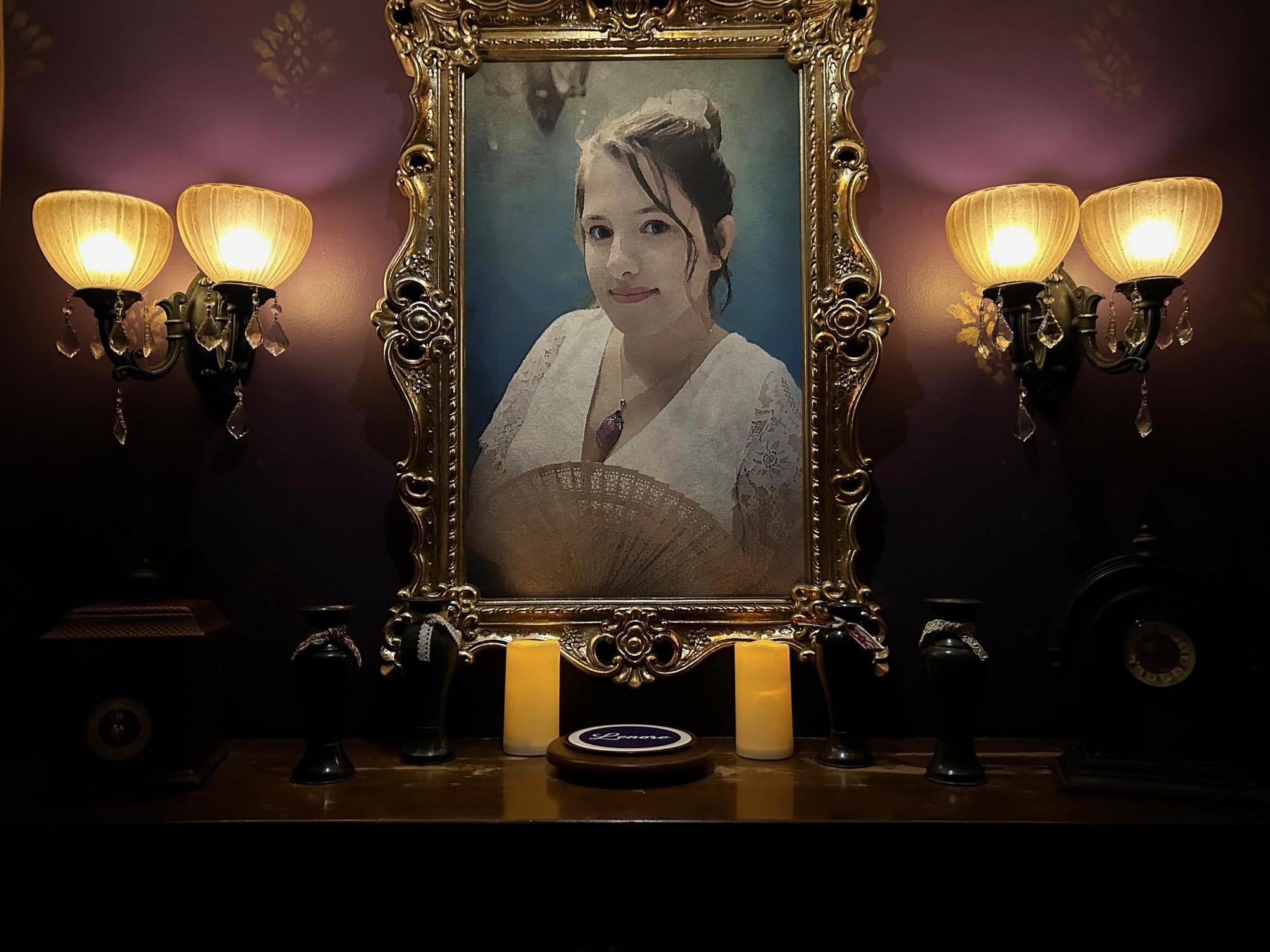
Gaya took place in a meticulously designed art gallery. Framed paintings covered the walls, interspersed by various instruments and folk art objects.

Gameplay
Mindblow Escape’s Gaya was a puzzle-centric escape room with a high-ish level of difficulty.
Core gameplay revolved around solving puzzles, communicating, and making connections.
Analysis
➕ We arrived at the gallery of Gaya and were delighted to encounter a space filled with lovely art and animation. Various folk art objects and instruments further filled out the space.
➕ Gaya also featured a full-length original soundtrack, which is impressive for any escape room but especially rare for a smaller, puzzle-focused game. The music was nicely composed and carefully tailored to each moment of the experience. After playing, I highly recommend listening to the full album, which is linked in our article about escape room soundtracks.
➕ Gaya‘s practically single-room space was a feature, not a fault. We explored every detail of this environment, leading to a sense of depth and interconnectedness that is often lacking in larger adventure games. The space was laid out efficiently to great effect. As Mindblow Escape works on their second experience, which will be much larger, I hope that they still manage to maintain the sort of environmental focus which made Gaya stand out.
➕ Above all, Gaya excelled in its gameplay. The puzzles were creative, layered, and satisfying, prompting numerous satisfying ahas. Nothing was filler.
➖ One puzzle was interactible early on before it was actually solvable. While this was an absolutely lovely puzzle once it came into play later, I wish it had been turned off at the start, amidst otherwise impeccable signposting and flow.
➕ A low-tech visual extraction was elegant in its simplicity. This puzzle mechanic that made us think, “wow… how have we never seen this technique before?” Mindblow Escape lived up to their name.
➕ While Gaya was primarily a puzzle game, it also told a clear story throughout. It showed how puzzles and story are not competing elements; they support each other when well integrated. Furthermore, video and audio elements were produced at the highest level, fully capturing our attention with their artistry.
Tips For Visiting
- This game is available in English, Catalan, and Spanish.
Book your session with Mindblow Escape’s Gaya, and tell them that the Room Escape Artist sent you.


Leave a Reply