
Isklander is a trilogy of online games, originally created during the pandemic by SWAMP, and now returning for a limited six-week run at a discounted price. This run ends on April 26, 2025. (However, we’re told it will still be playable after the run.)
Format
Style of Play:
- Light puzzle hunt
- Includes video segments
- Interactive NPCs
Who is it For?
- Story seekers
- Any experience level
Required Equipment: computer with internet connection, mobile device, pen & paper
Recommended Team Size: 1-3
Play Time: 90 minutes, but experienced players will complete it in less time
Price: £35.00 per game
Booking: book online for a specific time slot
Description
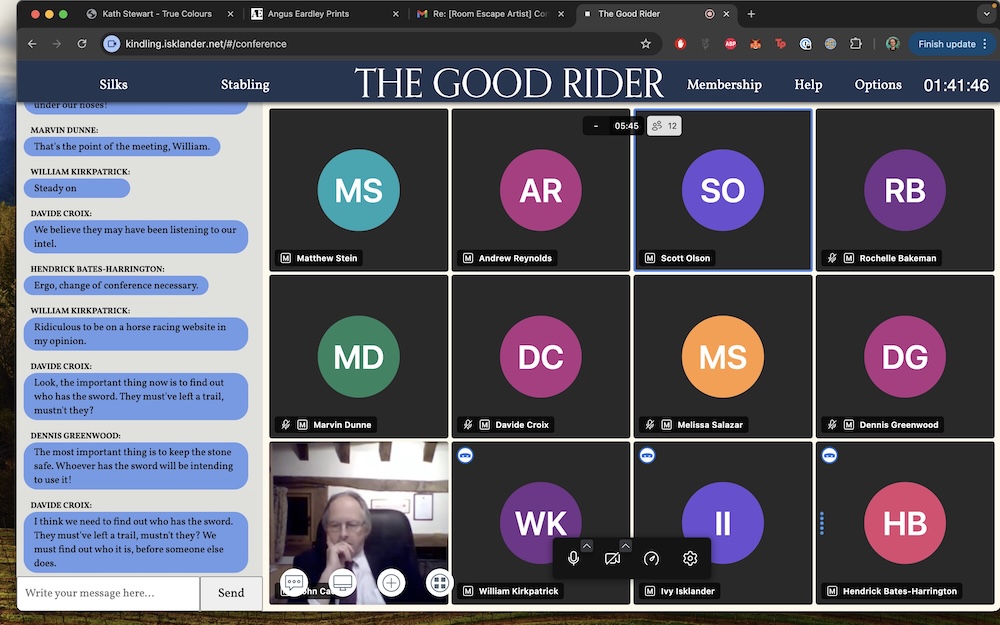
Isklander is a light ARG/ puzzle hunt, using the SWAMP online platform. Players find links to websites they have to explore and pull information from, which either unlocks codes to other sites or gets fed to the gamemaster. There is an integrated browser-based video chat for players to collaborate and share screens/ information. In-game characters provide onboarding and support, as needed.
For this review, we played chapters 2 and 3 of the trilogy. One writer had already played chapter 1.
Andrew Reynolds’ Reaction
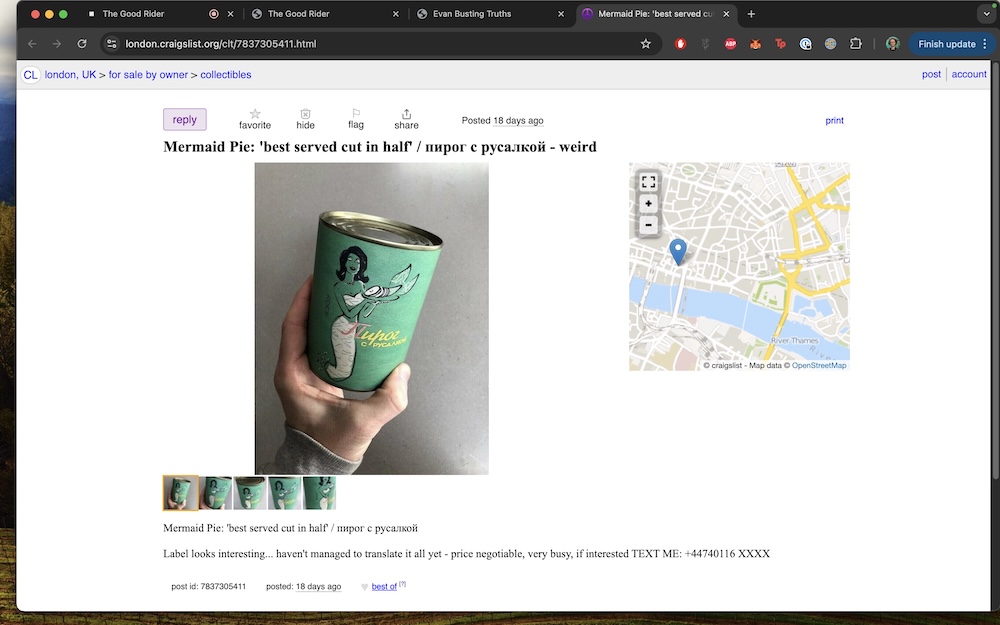
Isklander was a dramatic and high-stakes three part online puzzle-solving adventure. We played parts 2 and 3 of the series, which is intended to be played in order. While playing all three parts would be helpful in understanding the greater mystery, they were standalone stories, of note if playing all three would be prohibitive in some way. Part 3, The Kindling Hour, did a very detailed job of providing a recap of the previous chapters. I welcomed this, because part 2, The Mermaid’s Tongue, provided no such synopsis (but a synopsis would have felt out of place considering the cold start to part 2).
The conceit of both chapters we played was that we were digging up information and, of course, breaking into the computer systems of a mysterious and powerful secret society. The websites that Swamp Motel (the developer) created were varied but felt a bit thin, usually making them trivially easy to squeeze information from. There were a lot of exposition-heavy videos, but the actors in these clips were believable, and we had a merry old time watching them. We were especially impressed at the dramatic leap in quality of production in part 3. All in all, these were solid, enjoyable games with some surprisingly detailed production elements.
Scott Olson’s Reaction
“Is that the guy from Lord of the Rings?” I asked my teammates halfway through Part 3 of the Isklander trilogy, and indeed it was Dominic Monaghan on pre-recorded video. This was just one example of the high production value delivered throughout the well-connected chapters that spins a unique, modern twist on a classic legend. Players work through puzzles and break codes found at websites, social media, video clips, and recorded phone messages to infiltrate the London Stone Consortium, with gentle nudges from in-game characters along the way. The linear gameplay breaks no new ground in a hunt of this style but does add both theatrical twists and an immersive sense of urgency as players get closer to some very bad people. Isklander will be for those that prefer their puzzle hunts more about the experience than the challenges, but a Merry time will be had by all.
Matthew Stein’s Reaction
I played Plymouth Point, the first part of the Isklander trilogy, back in July 2020. At the time, it was clear that the story of Plymouth Point was setting up for something more, but no further episodes were yet available. As a standalone experience, Plymouth Point’s storytelling was intriguing yet convoluted, the gameplay was simplistic and under-signposted, and our team struggled to stay in sync along an ARG-esque trail of websites.
Returning nearly 5 years later to play The Mermaid’s Tongue and The Kindling Hour, I’m glad I gave SWAMP’s Isklander trilogy a second chance. Across the two episodes, we encountered a modern inversion of a classic legend that seamlessly intermixed pre-recorded video, live triggered interactions, and a range of real-world platforms. The gameplay was well clued and flowed smoothly — a more polished version of the style that the original Plymouth Point had attempted.
(To note, we learned that Plymouth Point has undergone some upgrades since the version that I and the original Hivemind review played back in 2020/2021, but we did not play the updated version of Plymouth Point for this new review.)
A creatively themed web interface for each episode embedded video chat and screensharing, though since the puzzles were linear and rarely required much meaningful collaboration, there was not much to do for multiple players, and we spent a good part of the time watching one of our teammates screenshare their progress. Puzzle difficulty wasn’t really the point, though, and I’d advise approaching the Isklander trilogy more as an interactive story.
While each episode technically stands on its own, the Isklander trilogy was best when you experience the complete story arc. Each episode ended on a cliffhanger, and we appreciated a short video recap at the start of The Kindling Hour which both refreshed my memory of the full sequence of events, as well as tied everything together for my teammates who’d missed Plymouth Point. Throughout, video production quality was consistently high. The finale of The Kindling Hour was particularly impressive, and the actress who played the titular Ivy Isklander put on an especially compelling performance which strongly tied all 3 episodes together.
The Isklander trilogy is both a relic of pandemic-era online escape rooms, as well as representative of a genre of play-on-demand ARGs that I’d love to see continue to expand. For such a style to be sustainable ongoing, I suspect they’d need to shift to being fully unhosted, yet I appreciate the creativity and ambition that SWAMP poured into the format they chose.
Disclosure: SWAMP provided the Hivemind reviewers with a complimentary play of the second and third chapters.
![TR-49 [Hivemind Review]](https://roomescapeartist.com/wp-content/uploads/2026/02/tr-49-tr-49-1.jpg)

![Escape Hour Austin – Edison vs. Tesla [Review]](https://roomescapeartist.com/wp-content/uploads/2026/03/escape-hour-austin-edison-vs-tesla-1.jpg)

Leave a Reply