
Some escape rooms have a soul. It’s a feeling as much as anything. A heart you can feel while playing the game. A connection between creator and player. A resonance you notice while you’re experiencing it. It feels like something we are living, or at the very least, living inside of. A soul is what separates a competent, but forgettable escape room from a memorable one. It can be hard to describe, but it can be profound.
A game having a soul is a sentiment that is hard to put into words, but is something I have long wanted to discuss: What is it that gives an escape room a soul? Is it infused naturally from the start of the design? Can it be forced or manufactured and then slipped in later?
In this article I’ve compiled a few ways a creator can ensure their experience contains a soul.
Vulnerability
Vulnerability on display goes a long way. Vulnerability can be shown by the characters and by the situations they find themselves in. Players should feel like everything could fall apart if they weren’t there to resolve it, that the characters would be lost without our assistance. Games where players are being taunted and tested by some confident, evil genius villain don’t tend to have the same emotional depth.
One of my favorite well-known examples of this is The Man From Beyond from Strange Bird Immersive. That room is home to characters that exhibit total vulnerability. They look us in the eye and ask for our help. What would happen if we weren’t there for them? Only we can give them the advice and comfort they seek.
I gained the moniker of Escape Room Philosopher years ago because of the way I thought about and talked about what these games can be. They are not just puzzle rooms, they are opportunities for all of us to escape, and to be somebody who matters to somebody. They are a place where we can fix things and where we can help vulnerable people.
The opportunity to help those in need and to right some wrongs in a way that feels real goes a long way in connecting with players. The soul of an escape room is often glimpsed when its characters are at their weakest.
Life
Adding life to escape rooms definitely helps add soul, but it is not a guaranteed outcome. The inclusion of live beings, be they human or not, can give players somewhere to witness vulnerability. They can give us a signal to take emotional cues from and be a receptacle for our emotional responses.
These interactions provide opportunities for players to feel something. A whole range of emotions become available to us when we get the chance to engage with live characters. Players feeling something in the game, and from the game, is a required element when we talk about sensing the soul of an escape room.

Relatable Stakes
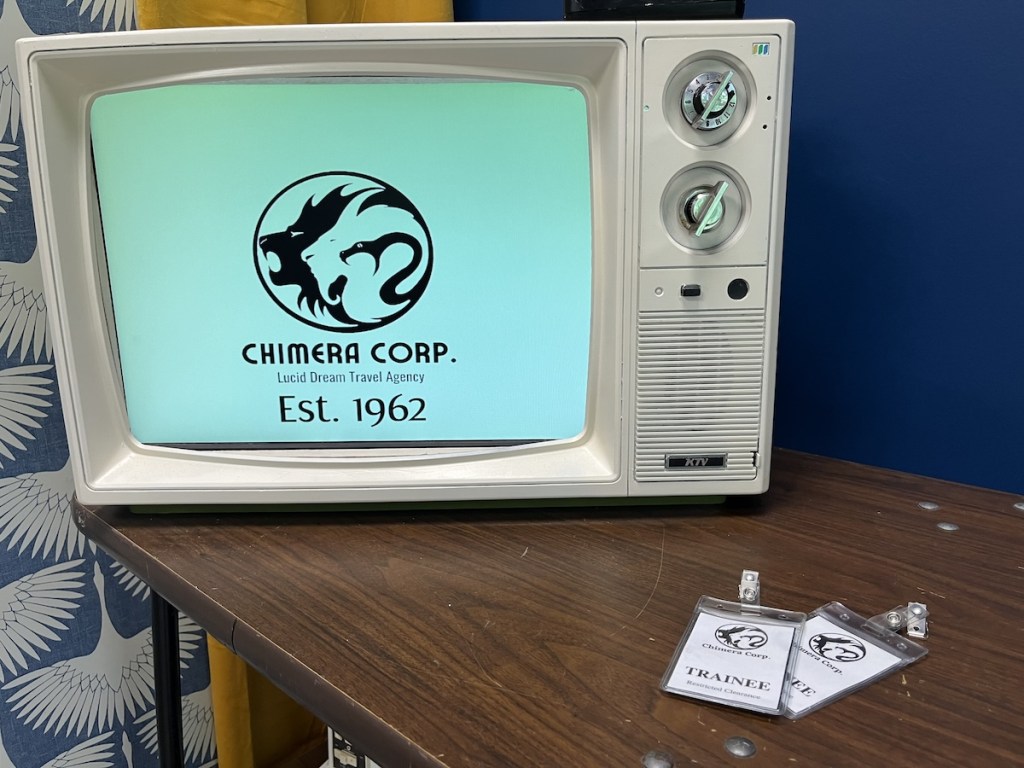
An escape room with a soul often has a relatable storyline and characters. Stakes that are believable and that make simple sense help players get comfortable and better able to connect with the story and the creator. As fanciful and wonderful as The Chimera Corp Saga is, it’s the basic human urge to help known characters in the game’s third act that brings it all home.
Constantly questioning confusing motivations or finding ourselves in laughably complex circumstances creates a distance and a disconnect that can make feeling a game’s soul impossible. My only relatable experience with diffusing a bomb under pressure or stabilizing a space station comes from watching action movies where the main characters never fail, so I find myself in this weird head-space knowing that as much as I, (whomever I am cast as) fumble, the game will probably force me into succeeding in a way that won’t feel genuinely earned.
Huge fictional worlds with deep backstories can overwhelm players’ imaginations, but games set there may fail to move them emotionally if the situation feels too immense, with the objective too obscure. Many times, smaller, more relatable stories filled with compelling characters find a way to get to us, and to get inside us in ways that we can’t quite explain. That is the soul of the room.
Connection With The Creator
A soul can be evident when players feel connected to the creator. Where they can empathize with the designer’s thoughts, feelings, and intentions. A room with a soul feels like it was designed with passion and purpose.
Designers should leave a little bit of themselves in the room, metaphorically of course. Your weirdness and quirkiness can inject personality and soul to a room. So can your playfulness, or melancholy, or grief. We want to see some rough edges (metaphorically, again), a point of view, risks being taken – a sense that a human created this and not a faceless factory.
A soulful escape room is the result of a designer invested in creating an overall experience that has something to say, rather than just a cool game with cool puzzles built around a cool theme inside a cool set. A soul is what shines through when a designer stops trying to check boxes or impress and starts trying to connect with their audience using the tools at hand.
It’s the feeling that given a slightly different alignment of the planets, or under the direction of a slightly different creator, we would be walking into an entirely different experience. Players can feel the creators’ fingerprints, and by extension, them.

Let Me Feel Something
This is different than trying to make me feel something, which can sometimes get awkward. Give us things to sink our emotional teeth into, but don’t force it or overdo it. It is usually characters and the situations they are in that stick out when we think back on emotion-evoking escape rooms. Building a memorable character into a room, one that can take people on an emotional journey is tough, and it isn’t a puzzle and it isn’t set design or special effects, it’s something entirely different. It is a someone, a someone that we can’t help but care about.
Show us characters that feel essential to the story we are a part of. Maybe it’s even a cute hinting mechanism or the creepy doll that needs to be carried from room to room. Give us someone to connect with in that world.
It doesn’t have to be positive or upbeat, just something that gives players the opportunity to feel. There is something cathartic about being able to empathize with hurt in a safe way, and it is still exhilarating to take risks in a place where the consequences of failure disappear at the end of the hour.
Non-physical characters can also be extremely effective at making us feel. Experiences like The Nest and The Storyteller’s Secret exude soul without any live performance from their principal characters.
Be Sincere
A soul is rooted in authenticity. It can’t be faked. Players can’t be fooled or coerced into connecting with a game. It is possible to be silly and to make a comedy with a soul, like Wanted: Dead or Alive from No Exit, but don’t try to trick the players with a twist that negates what they have been working towards in a game with a more serious narrative. That sort of lack of sincerity can be a turn-off.
Soul isn’t about being clever. There are rooms that delight and astound with beauty or amazing gimmicks, but lack connection. An escape game without a soul always has some sort of distance to it. We might appreciate and admire those types of rooms, but they don’t become part of us. In rooms with a soul, there’s a desire to return and revisit, even if it’s only in our thoughts.
Soul is feeling like we’ve entered a world that’s been there forever. The Forgotten Cathedral inside the Escaparium building is ancient and The Reading Witch has prowled since long ago. The characters within have a past, present and will have a future that players are actively participating in. In this world, we are making a difference as time goes on. Time actually feels like it’s moving forward. There’s something or someone meaningful in this world and this then becomes meaningful to us.
As players, we love the feeling that we are doing something that has never been done before. It’s the illusion that if we weren’t present, everything would be different. This feeling can be harmed by things like standardized rules videos or leaderboards in the lobby. They signal that others have taken this same path before and more will afterward. The sincerity of the game’s narrative is diminished.
Wonder
Escape rooms that lack a sympathetic main character can demonstrate a soul by filling guests with wonder. Through things like set design, reveals, scenes, or epic discovery, a designer can make a memorable connection with their players. The Dome, The Toy Maker, and maybe even Chapel and Catacombs are examples of this. These are almost pure adventure games where characters are secondary, if they are present at all, but you can’t call them soulless; they have too much personality oozing through them. Players still feel like they matter in those scenarios.
This can be done on a smaller scale as well. Pandora’s Box comes to mind, as does Red Sled Redemption. The core of their soul is the feeling that someone built this wondrous thing for us to enjoy. We can picture a smile appearing on the builder’s face as they imagine us delighting in what they have created.

Utilize The Medium
Use what the escape room medium offers to help connect with players. The special affordances created by the small group immersive format provide a conduit through which audiences can feel the soul of a game.
Techniques like designing in Bookends & Bottlenecks can help ensure players are gathered and focused in the moments that best deliver the creator’s message. Solo moments and scenes, with or without actors, become tools that can be used to implant lasting memories or become opportunities for emotions to bubble up.
When we view escape rooms as a storytelling art form, it is easier to understand their ability to be more than just temporary, puzzley entertainment. Designers can take advantage of this as they express themselves in ways that players feel long after the experience is over. That feeling is the soul lingering.
The Debate
Escape room enthusiasts will debate amongst themselves about which games they feel have a soul and which ones don’t. They will discuss exactly what it is in each game that gives it that soul. It is subjective, but yet still common enough that many of us will find we agree much of the time.
This isn’t the type of debate I thought I’d be having back when my escape room hobby began, but I think it just helps prove the potential of the artform. The fact that we are having these conversations makes me even more excited about what the future holds for this amazing industry.
Edit: I wanted to add a few lines to this article after noticing a trend among the US winners in the most recent TERPECAs. This group of winners is predominantly made up of what can be considered moderate build budget games by 2025 standards. This would seem to contradict some of the thinking around what it takes to win this award, except that the other thing that most of these games have in common is a soul. And the voters are telling us that is what matters most.
Special Thanks
Significant credit for portions of the content in this post goes to the members of the Room Escape Artist Patreon Discord channel and the Escape Room Discord, where we’ve had some great conversations about this subject. Some phrases included here are lifted straight from those discussions (with permission) because I couldn’t have said it better myself!
If this article resonated with you, please join our Patreon community, and check out our Discord. I’d love to continue this conversation with you there.


![Games by Stitch – Elsewhere Electric [Hivemind Review]](https://roomescapeartist.com/wp-content/uploads/2026/01/Elsewhere-Electric-Van.jpg)
![Great Gotham Challenge – Rockefeller Rendezvous [Reaction]](https://roomescapeartist.com/wp-content/uploads/2026/02/rockefeller-rendezvous-rockefeller-rendezvous-1.jpg)
Leave a Reply