
For puzzle lovers, Japan offers some of the most brilliant cryptic experiences you’ll find anywhere in the world.
Typical gameplay is staggeringly clever, elegant, interconnected — and proportionately difficult. Much like puzzle hunts in the United States, escape rooms in Japan have their own distinctive puzzle style, which can have a fairly steep learning curve. While premium escape rooms in other countries are pushing the limits of immersion and theatrics, the top games in Japan are innovating in a different direction. They stand out for the ingenuity of their puzzles, and often for how they tell a story directly through the puzzle structure.
Japan also has a different set of cultural norms around difficulty, failure, and replayability. Unlike many Western escape rooms, a low escape rate in Japan is not a marker of careless or cruel design but rather an intentional calibration of difficulty that is integrated into the core of the experience. By allowing players to fail on a genuinely difficult challenge, games in this style are setting up players to have even more satisfying successes. These games don’t just make players artificially feel like they’re smart; they require players to demonstrate real problem-solving skills that can be developed with practice over time.
In Japan, “escape rooms” are part of the broader nazotoki (“puzzle-solving”) culture, which includes many different game formats: room-type games, hall-type (and ballroom) games, facility tours, city and metro puzzle hunts, stadium games, theme park games, and more.
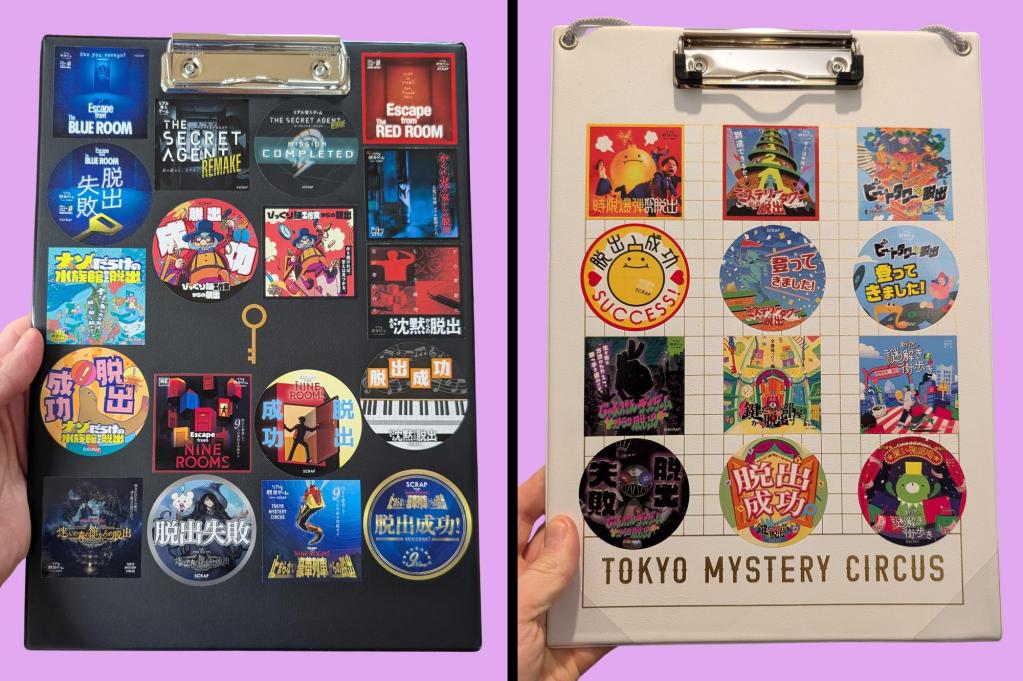
The vast majority of Japanese nazotoki experiences are only playable in Japanese. For casual English-speaking players, SCRAP currently offers around a dozen of their experiences in English. In addition to Japanese-style escape games, there are also companies with English-friendly offerings in Western and Chinese escape room styles. For more adventurous English-speaking players, many companies beyond SCRAP offer incredible games only in Japanese, which may be approached with Japanese teammates or online translation tools, depending on the game. However, simply hiring a professional translator is unlikely to suffice; they must also be a strong puzzler to be helpful.
Given Japan’s emphasis on puzzles over elaborate, expensive set builds, Japanese escape rooms tend to rotate out more regularly than in other regions. This article includes short reactions to all the English-friendly games I played in Japan between September and December 2025. This is not a recommendation guide, and in fact some of the games have already closed as of this article’s publication. Yet, as these games represent a range of intriguing formats, the tapestry of perspectives below may inform your choices to play future games of similar styles, and serves as a snapshot of the current state of Japanese puzzle games in 2025. This style has evolved massively from the SCRAP style some players may have seen in the US or Canada a decade or more ago, and I have no doubt it’ll develop further as time goes on.
For more on navigating escape rooms in Japan, check out REA Contributor Ryan Brady’s tips for playing escape rooms in Japan as a foreigner.
Studio Escape (Osaka)
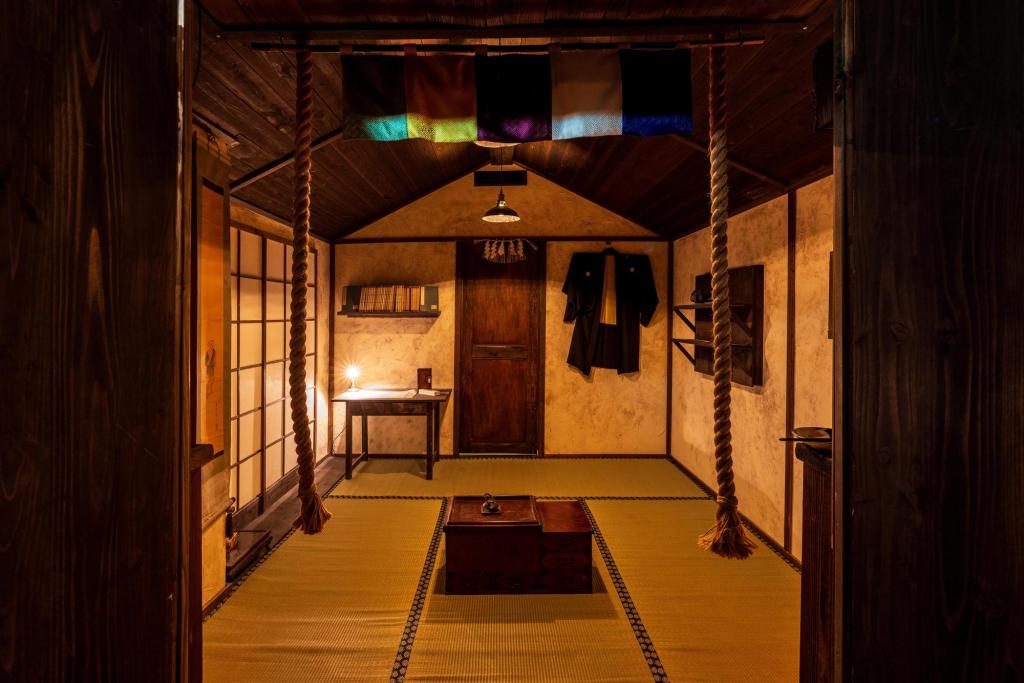
For English speakers, Studio Escape’s experiences bear the closest resemblance to the premium escape rooms you’d find in Europe or North America. In contrast to the challenging, puzzle-centric style of most Japanese escape games, the games at Studio Escape focus more on narrative and cinematic immersion. In delivering immersive story experiences, these games also ensure 100% completion, and they’re optimal for smaller teams of 2-3 players.
While Shadow Zen attracted international attention when it became the first Japanese escape room to enter the TERPECA Top 100 in 2024, each of Studio Escape’s games is a must-play in its own right.
Read our full reviews:
Note: The Dame and the Diamond — an alluring noir detective thriller — closed shortly after we played it in October 2025. We eagerly await its sequel, which is actively in development, and expect it to be as much a standout as Studio Escape’s other experiences once it (re)opens.
Tokyo Mystery Circus by SCRAP (Tokyo)
Centrally located in the heart of Shinjuku, Tokyo Mystery Circus is a six-floor “mystery theme park” that seems almost too good to be true. The ground floor features a store with hundreds of different at-home puzzle games, books, and walking tour kits created by SCRAP, along with a small cafe (which includes puzzles with certain items) and a check-in desk that doubles as a concierge for the venue’s varied experiences. Each of the other floors houses one or more experiences, the majority of which are offered only in Japanese. Even if you’re only playing the English games at TMC, I suggest at least taking a peek in on each floor to marvel at the full breadth of this remarkable venue.
If you’re visiting Shinjuku for the first time, make sure to leave some extra time to navigate the station. Holding the record as the world’s busiest station, figuring out how to navigate the crowds and exit the station is a challenging escape room in and of itself!
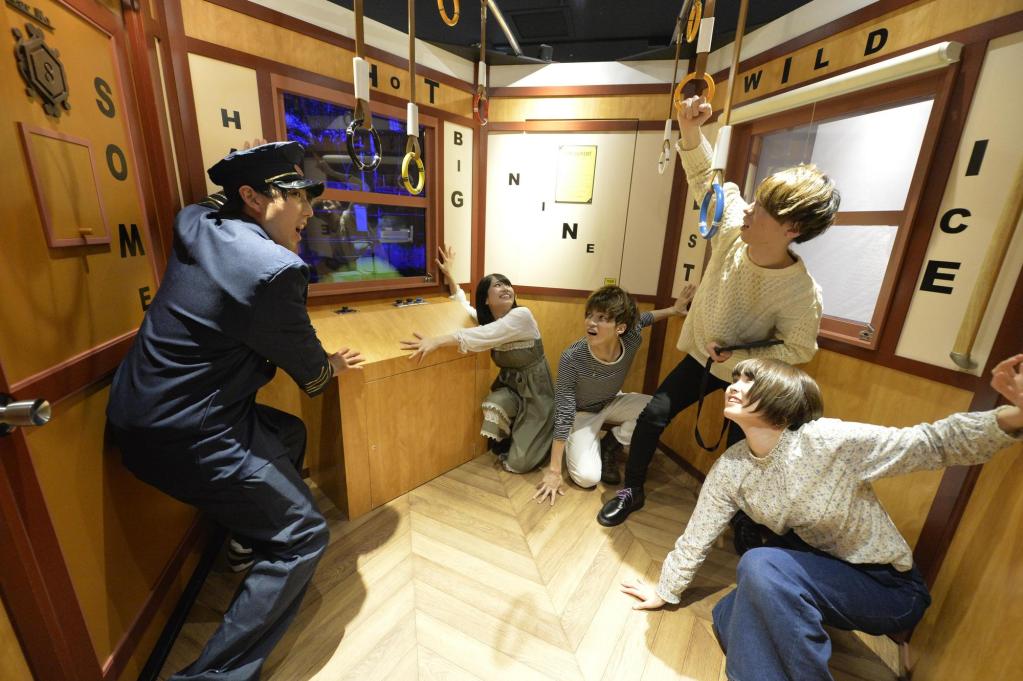
Two of the games at Tokyo Mystery Circus use SCRAP’s “Nine Rooms” format in which teams progress through a pipelined series of nine mini escape rooms. After completing the first eight levels as quickly as possible, the ninth room must be completed in the remaining time on the clock — up to ten minutes. But this final room is the boss level… you’ll face a multi-layered ō-nazo (final puzzle) that requires you to creatively synthesize what you’ve encountered up to that point. Note that while these games have up to 50 minutes of active gameplay, your overall experience may take longer if you’re stuck behind a slow team and have some waiting time between rooms.
- Escape from The Runaway Train (Nine Rooms) featured some of my favorite escape room puzzle revelations of all time, though not all players will get to experience them. My team actually failed on our first attempt of the final room, discussed the scenario, and had some breakthroughs… so we purchased a “revenge ticket” — a cheaper add-on ticket to replay just the final room — and succeeded with time to spare. While I initially scoffed at the idea of the revenge ticket as a money grab, my experience convinced me otherwise. This setup allowed us to experience the full pleasure of puzzling under pressure. Had we been hinted through the hardest bits, we might have “succeeded” the first time around, but it would have been a significantly less rewarding experience. For puzzle lovers, this game is a must-play; just be prepared to shift your thinking and possibly have another go at the final scenario to get the complete experience.
- Escape from the Witch’s House in the Woods (Nine Rooms) offered some of the prettiest set design yet from SCRAP. With a delightful range of magical sets, the constant contrast from space to space was alluring. The gameplay was varied and creative, sneakily layering into a challenging final room. This game added more narrative details than any other Nine Rooms games, and while I appreciated the attempt to make this game more story-driven, the repeated stopping and starting for cutscenes competed with the rapidfire competitive structure and ultimately led to a somewhat bumpier flow for our team. Nonetheless, for teams looking for a balance of scenic immersion and classic SCRAP ingenuity, this is a strong option.
- Escape from The Prison is a 10-minute mini escape room for 1-3 players. With perhaps the most classic “escape” theme, Escape from The Prison was an approachable introduction to SCRAP-style games. They packed an impressive number of clever reveals into a tiny space. I had no trouble completing this game solo, and it was an enjoyable add-on to my visit at Tokyo Mystery Circus.
- An Invitation from the Mystery Man is an example of SCRAP’s “Mystery Mailbox” game format, which provides players with a packet of physical materials and guides them to explore the escape room facility. Along the way, codes unlock metal mailboxes mounted to the wall which contain the next step(s) of the game. I first played An Invitation from the Mystery Man at SCRAP’s now-closed San Francisco location in January 2020, but I had forgotten enough to replay the game in Tokyo. If you’re curious to try some of SCRAP’s more difficult games but want to familiarize yourself with their distinctive style first, An Invitation from the Mystery Man offers a great entry point. With no time limit and some sneaky yet relatively approachable ahas, this game was both a great way to explore the Tokyo Mystery Circus facility and to practice your puzzle skills.
Tokyo Mystery Circus had one more English-language offering which I didn’t have a chance to play: a 90- to 120-minute walking tour around Shinjuku called A Mystery at Magic Academy SHINJUKU. I’d also previously played a version of A Mystery at Magic Academy in San Francisco, and while the location-specific elements had been adapted, I was told that the gameplay was similar. For a lightly puzzly tour of the surrounding area that allows you to explore at your own pace, this is a great option.
Tokyo Mystery Circus also sells English-language kits for their Asakusa and Yokohama Puzzle Adventures, which are discussed in further detail below.
Real Escape Game Asakusa by SCRAP (Tokyo)
SCRAP’s Asakusa location offers English support in the form of their “CROSSING” model. Unless you purchase a full “Group Ticket” to guarantee a private game, most of these games are public booking. If you are matched with Japanese players, you’ll each be given portable translation devices to communicate with your teammates. My team experienced the CROSSING model while playing Escape from The RED ROOM and Escape from the Haunted Manor, and it actually turned out to be a highly enjoyable form of cultural exchange.
While you’re in the area, check out the Inventor’s Shop TOKIMEKI across the street, where you may encounter an eccentric Japanese puzzle and game designer eager to share some of his clever enigmatic creations.
- A Challenge from the Crafting Genius 🔒 was a masterpiece of puzzle art. With innovative gameplay, perfect flow, and a jaw-dropping finale, this was a groundbreaking reinvention of the hall-type game format and our top recommendation for any puzzle enthusiasts . Read our full review here.
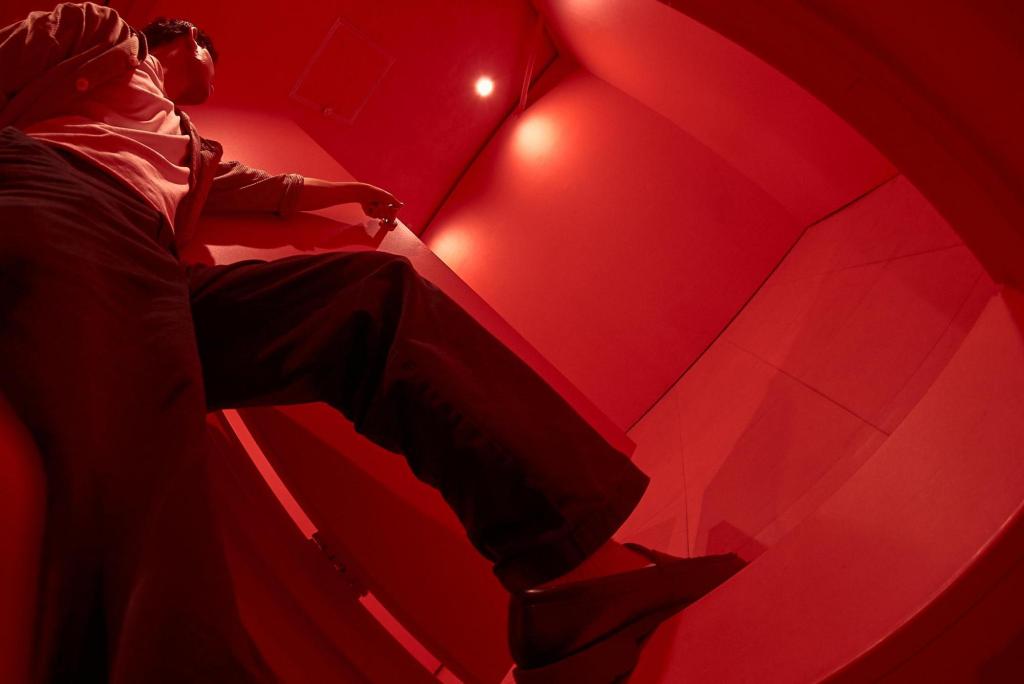
- Escape from The RED ROOM was the first game in SCRAP’s “color series” — you’re placed in a seemingly empty single-color room, and the puzzles require no language. While The RED ROOM is one of SCRAP’s oldest games still running, it’s a timeless classic. The central game mechanic requires you to shift your assumptions of how an escape room works, and the puzzle progression throughout is remarkably elegant. This game has a relatively low puzzle count, but it’s no walk in the park… be prepared to put on your thinking caps and consider the situation in its entirety. After playing The RED ROOM, I strongly recommend visiting The BLUE ROOM in Ikebukuro to see this design philosophy taken to a truly mind-blowing extreme.
- Escape from the Haunted Manor combined an escape room with a Japanese-style haunted house. With a range of tasteful jump scares and actor interaction mechanics, the puzzles themselves were on the easier side for a SCRAP game, focusing more on searching, observation, and fetch quests. Escape from the Haunted Manor was scary yet approachable. As long as we followed the rules, we knew we’d be safe, and we each experienced some exhilarating cinematic moments from multiple perspectives. (And for players frightened by difficult puzzles, this might actually be one of SCRAP’s least scary experiences!)
- Escape from a Silent World [CLOSED] was designed during the pandemic as an ode to finding connection and meaning during a time of isolation and silence. A seated hall-type game, all players wear face masks and must remain completely silent throughout the game. The gameplay was essentially a theme and variation on charades, as two teams communicated and combined their own private information. Yet, in true SCRAP fashion, what started off simple very quickly developed in some creative and unexpected directions.
- Asakusa Puzzle Adventure took us on a guided tour of Asakusa’s many highlights using a mix of light puzzles and a photo scavenger hunt. The difficulty remained low throughout most of the game, and the finale (which could be solved from anywhere) featured a satisfying and thematic papercraft sequence. Our tour included a mix of iconic sights, hidden gems, and some points where we could choose which attractions were most of interest to our team. If you have a few spare hours around playing at Real Escape Game Asakusa, this is a wonderful way to explore the neighborhood.
Real Escape Game Shibuya by SCRAP (Tokyo)

SCRAP’s Shibuya location has a cheery exterior with brightly colored signs like “Not Scary” and “Fun with Friends” welcoming potential players in for a playful puzzle experience. While Shibuya also offers the CROSSING model, the games we experienced during our visit were all private booking for smaller teams.
- Escape from The NINE ROOMS originated SCRAP’s “Nine Rooms” format. Whereas the newer Nine Rooms games had more pronounced theming across the full experience, Escape from The NINE ROOMS took us through a series of charmingly random and liminal environments. The gameplay was consistently clever, especially in its implementation of reset mechanics by solving multiple puzzles with the same physical pieces such that we reset the room for the next team without any gamemaster intervention. This was the closest I’ve experienced to a classic point-and-click escape room aesthetic implemented in real life, and it was compelling in its variety.
- Escape from the Underwater Puzzle Challenge was a facility tour around the hallways of Real Escape Game Shibuya. After checking in and receiving our instructions and answer sheet, we explored the venue to find puzzle plaques, hidden clues, and a dedicated room with additional puzzle props. Half of the puzzles were in English, and we were able to get full marks by completing just the English puzzles (though presumably bilingual players would have twice as many puzzles overall to solve.) It’s advisable to divide and conquer, as there were a large quantity of brainteasers to work through. Self-service hints were also available through a web app. With a 33-minute game time, the final three minutes of this game was a mini escape room with a sneaky gimmick. In contrast to most SCRAP games, hints were available even for this final puzzle, but I still advise working through the scenario without assistance if you can.
- Real Stealth Game: The Secret Agent [CLOSED] was a real-life version of a classic video game mechanic: evading roaming guards while completing various missions. We received a tablet for our team, which was used to track our progress, input puzzle answers, and give us crucial mission info. The gameplay required some level of physical agility as we navigated various environments. While the core puzzle path was relatively simple and gameplay centered more around avoiding being spotted by guards, there was yet more to discover for astute players. During our visit in October 2025, we experienced a Halloween version where the usual military guards were replaced by zombies who’d spew invisible vomit in our direction rather than shooting us if spotted. While Real Stealth Game: The Secret Agent is now closed, “Real Stealth Game” is a recurring SCRAP format, much like “Real Escape Game” for their escape rooms, and I look forward to seeing other RSGs adapted to English in the future.
Real Escape Game Ikebukuro by SCRAP (Tokyo)
SCRAP’s Ikebukuro location does not yet offer official English language support, but it is home to two phenomenal games that are already largely playable in English. For non-Japanese speaking players, just make sure to purchase a “Group Ticket” rather than “General” tickets to ensure a private game. Unlike in SCRAP’s other locations with English support, you may not be allowed to play if you book a public ticket and don’t speak Japanese as this location doesn’t offer translation devices.
- Escape from The BLUE ROOM is the spiritual successor to The RED ROOM, and the second in what will hopefully be an ongoing series of language-agnostic, color-themed games. Where The RED ROOM was memorable for its elegant minimalism, The BLUE ROOM transformed a similarly minimalist environment into a densely populated playground of ingenious puzzles. The entire room was a Russian nesting doll of puzzle boxes and an ode to the joy of puzzles for puzzles’ sake. If possible, I suggest playing The RED ROOM first to get a sense of this unique style.
- Escape from the Never-Ending Locks and Keys found a clever way to turn searching into an interesting puzzle. Our objective seemed simple: use all the keys in the room to open the locks. At first, we discovered some keys simply hidden around the room, but of course, nothing is ever that straightforward, and the gameplay soon took some unexpected turns. Searching, the Achilles heel of many an escape room enthusiast, was explored in all its variations and reinterpreted in an enjoyable and fresh manner. A multi-stage finale was particularly delightful — a clever take on some classic SCRAP stylisms. This game used to be run in English, and it’s a shame that SCRAP no longer guarantees English support as it would be especially approachable for international teams.
Nanica Shimokitazawa (Tokyo)
Nanica is a unique take on an “escape cafe” concept, with a central cafe area where patrons can play Nanica-exclusive tabletop puzzle games while enjoying snacks and drinks, along with multiple side rooms offering a rotating selection of creative hall-type and room-type games. The venue is themed as a mysterious art gallery with a secret speakeasy entrance. Upon completing each official offering, as well as various other side quests and “blind spot” puzzles hidden throughout the venue, players receive exclusive art cards which they can collect in an official binder. Upon collecting enough cards… well, that’s a secret you’ll have to discover for yourself.
No offerings at Nanica are officially available in English, but with some translation support or a Japanese-speaking friend, this venue is well worth a visit. I played most of their cafe games solo with the help of Google Translate and built-in hints in their LINE chatbot. I found Tetra and the Mysterious Dollhouse 01 to be the most approachable, requiring some knowledge of common Japanese puzzle mechanics like shiritori (word chains), yet with no time limit, this was a great environment to practice this style of puzzling.
- Strange Box [CLOSED] was a 30-minute masterpiece in a closet-sized space that packed more astonishing ahas into an unassuming stack of boxes than plenty of other escape rooms accomplish with sprawling cinematic sets. As I described in A Case for Smaller Sets and Deeper Worlds, I’d love to see more games that optimize for depth and layers, and Strange Box demonstrated just how effective this approach can be. Co-produced by hydra and Takarush, Strange Box‘s style would equally delight escape room and mechanical puzzle lovers, with a plethora of immensely satisfying tactile and structural gimmicks. The experience folded in on itself, leading to a poetically inevitable final step that tied the whole thing together perfectly. Strange Box was not marketed as being available in English and I attended with a friend who spoke some Japanese, yet we were surprised to find that the game used practically zero language, with some puzzle solutions actually being English words. I don’t know whether this will be the case for future Nanica room-type games, but I certainly hope they’ll consider adapting more of their charming creations for an international audience.
Real Escape Game Yokohama by SCRAP (Yokohama)
While SCRAP’s Yokohama location does not currently offer any indoor games in English, Yokohama is a lovely port city that’s an easy day trip from Tokyo. I purchased my copies of the Yokohama Puzzle Adventure at Tokyo Mystery Circus, so I never actually visited SCRAP’s physical location in Yokohama.
- Yokohama Puzzle Adventure is a 2-4 hour walking tour around Yokohama’s Chinatown. With a particularly scenic and well choreographed walking route around town and multiple segments of clever papercraft manipulation, Yokohama Puzzle Adventure was my favorite SCRAP walking tour available in English. That said, upon noticing that the translated English version had an hour shorter play time than the original Japanese, I purchased a copy of both games and played them side-by-side. For players who know some Japanese or are willing to take the extra time to use translation assistance, I suggest playing the Japanese version as the English version cuts out one of the coolest parts of the game (which would be nearly impossible to translate… but gosh, it was cool!)
While Yokohama Puzzle Adventure was my favorite English-playable SCRAP walking tour, my overall favorite walking game in Japan was SCRAP’s 2025 Tokyo Metro Hunt (Chikanazo), which had one of the most wildly mind-blowing puzzle progressions I’ve ever encountered, in escape rooms, puzzle hunts, or otherwise. This annual event used to be offered in both Japanese and English, but it’s only been available in Japanese in recent years.
Dark Escape (Yokohama)
Dark Escape is a Chinese company, and all of their games in Yokohama were available in English. The Chinese escape room style emphasizes storytelling through audio-driven cutscenes, with scrolling supertitles in English. None of these games had the flashy physical transitions or moving rooms that Chinese games are often known for, yet they still had more intricate set design, theatrical lighting, interactive tech, and smaller-scale special effects than is typical for Japanese-style escape rooms.
At Dark Escape’s Tokyo location, Yayoi – Chapter 1 featured multiple actors and some jaw-dropping physical transitions that would rival top European games. This game was a showcase of the impressive gimmicks that characterize the Chinese style, and still, I was informed that Yayoi – Chapter 1 was still two or three tiers below the top spectacle you’d find in China. This game required a high level of Japanese, and it was only possible for me to play with the help of Japanese teammates.
- Fantasy Adventure of Starry Sky Ruins is my top recommendation at Dark Escape Yokohama. I’d love to see more fantasy-genre escape rooms, and the style in this game — both narrative and aesthetically — was unusual and intriguing. Hand-painted flat cutouts of various characters and set pieces gave the space a real-life manga vibe, and extensive cutscenes told an intricate yet largely comprensible story through multiple characters’ perspectives. The gameplay further extended this approach, with a dreamlike exploration of the sparse astral plane that directly advanced our understanding of the story through the puzzles. Much like getting sucked into a fantasy novel as a teen, I felt a genuine emotional connection to the characters by the end.
- Escape from the Depths of Nightmare and Escape from the Dungeon were classic escape rooms interpreted through the Chinese style, interspersing segments of puzzle-solving with audio narrative cutscenes. Neither of these games involved live actors, and they were spooky but not overly scary. Both would make solid add-ons while playing Fantasy Adventure of Starry Sky Ruins, or other new games that may open at Dark Escape Yokoyama.
To note, many Japanese escape room enthusiasts seemed to refer not just to Chinese but also European and North American escape rooms at “Shanghai-style games” with that style being characterized by an emphasis on physical gimmicks and scenic immersion rather than difficult puzzles. The Chinese-style puzzles at Dark Escape were much closer to what I’ve encountered in Europe than Japan… but they definitely had their own distinctive style and vocabulary. I suspect a trip to China would be required to properly investigate and discuss this style in greater depth.
Puzzle Heaven Just Keeps Expanding
For puzzle lovers, Japan offers a truly astonishing breadth and depth of mysterious experiences. In just a few weeks, I experienced more mind-shatteringly clever aha moments than in years of playing Western-style escape rooms. I’ve come to expect 100% completion amongst Western escape rooms, with fairly predictable puzzles that often serve to drive forward an interactive story. In Japan, I actually had to put back on my puzzle-solving cap and really work for each and every win, and these successes were all the more satisfying and memorable for it.
Western escape room players may have to shift their expectations to fully appreciate the top experiences Japan has to offer. Some of the most incredible puzzle moments took place in relatively unremarkable physical spaces, but environmental immersion was often not the focus. I appreciated how many Japanese puzzle experiences relied less on tech and more on the players’ collective imagination to concoct some truly zany scenarios and game mechanics that would have been impractical to build out otherwise.
Just a few months after my time in Japan, multiple new games and venues have already opened up. Creators and consumers of puzzle-based media in Japan continue to raise the bar, and the nazotoki community is actively in conversation with itself, similar to the puzzle hunt community in the US. And yet, much of this scene remains invisible and largely inaccessible to the outside world. As time goes on, I genuinely hope that non-Japanese players will pay more attention to the enigmatic innovations in Japan, and perhaps that Japanese creators will consider adapting more of their experiences for an international audience.
🔒 Golden Lock-winning experience

![MindMaze – Galactic Pioneers [Review]](https://roomescapeartist.com/wp-content/uploads/2026/06/mindmaze-galactic-pioneers-1.jpg)

Leave a Reply