
A dream come true
Location: Voorburg, Netherlands
Date Played: April 13, 2026
Team Size: 2-5; we recommend 3-4
Duration: 3 hours
Price: €375 per team (early bird price)
Ticketing: Private
Accessibility Consideration: All players must climb and crawl
Emergency Exit Rating: [A] Push To Exit
Physical Restraints: [A+] No Physical Restraints

“Sleep showed how an escape room can be a powerful vehicle for emotional storytelling and nuanced character development. A hybrid of interactive narrative and immersive theater, Sleep also included a high density of layered puzzles, proclaiming that puzzle quality needn’t be sacrificed in service of story or flow.”
REA Reaction
According to medical experts, I’m fairly certain that even a full three hours isn’t enough Sleep. Freshly holding the title for the longest escape room in the Netherlands, this vivid dream used its extended canvas to tell a tragic tale that I surely won’t forget anytime soon.
When I visited Molly’s Game three years ago, auteur-creator Loran Laus had stated that it would be his final escape room creation. I’m immensely grateful that he went back on his word and began work on Sleep just a few months later. Like with Molly’s Game, the design and construction of Sleep was — remarkably — a solo endeavor, but with the addition of multiple live actors in Sleep, Loran no longer stands solo in presenting his poetic vision. Across these two experiences, a distinctive personal style was evident throughout Loran’s unique way of painting with place, texture, lighting, time, and flow. It was easy to get blissfully lost in the worlds he dreams up.
Yet the comparison perhaps stops there, and Sleep did not try to one-up Molly’s Game in spectacle or scale. In place of the mindblowing special effects that elevated Molly’s Game and in fact inspired so many other top games in the region in the years since, Sleep instead showed a level of artful restraint in prioritizing nuance, emotion, and, yes, even some more substantive puzzles. While I’m sure many players will still prefer the style of Molly’s Game, for me, Sleep was unequivocally the more mature and refined experience.
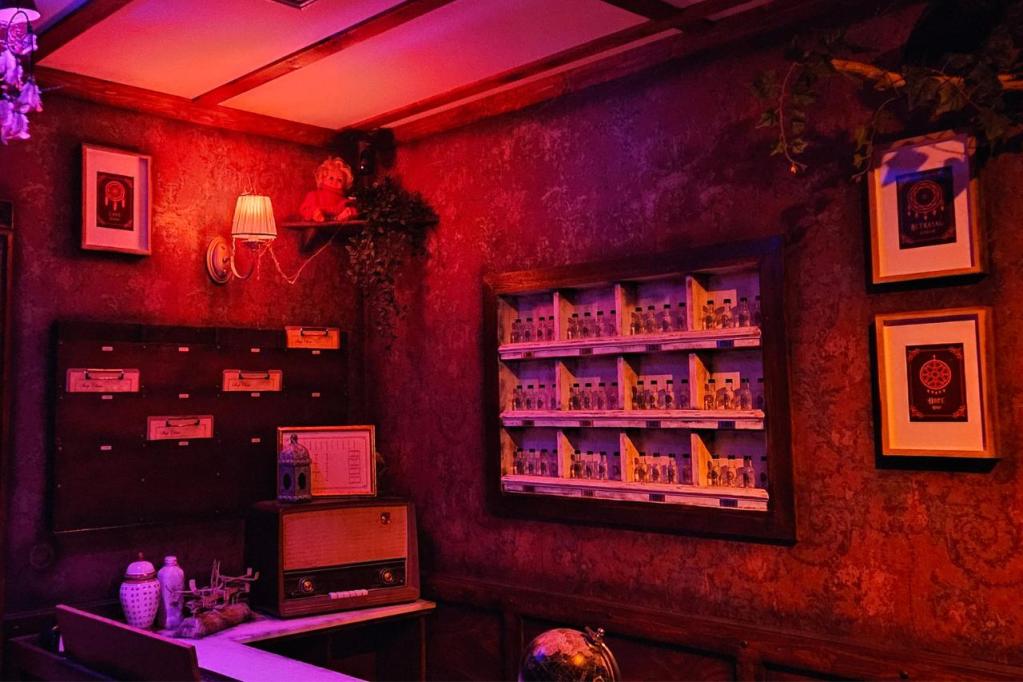
While Sleep demonstrated an admirably coherent and potent narrative, there were still opportunities to dive even deeper. While the majority of the gameplay beautifully fit the environment, there was more variance in whether the actions we took while solving puzzles directly contributed to the story. Additionally, Sleep introduced a few recurring symbologies which, with an extra level of reinforcement and interconnectedness, could have raised the narrative to a level of interpretive depth closer to that found in a literary analysis class. Even the potential for this sort of next-level narrative nuance has me giddy.
Sleep existed in the same world as Molly’s Game, though the two experiences don’t directly flow into each other and can be played in any order. While it would be spoiler-y to describe the exact connection between the two, suffice it to say Sleep added new context to the exquisite nightmare of Molly’s Game. Whether or not this reframing was devised retroactively, it was effective in offering more depth to both experiences, and it led me to view some of the more jarring narrative choices in Molly’s Game in a more favorable light.
Escape rooms can be art. Escape rooms can be storytelling. Escape rooms can be a vibrant form of self-expression, one which may be used to process and share complex emotions. I was wholly entranced by intricate textures and deeply personal tone of Sleep, and while this opinionated style may land differently for different teams, Sleep is a bold addition to the Benelux escape room market that is not to be missed for players who appreciate both puzzles and narrative.
Who is this for?
- Story seekers
- Scenery snobs
- Puzzle lovers
- Adventure seekers
- Best for players with at least some experience
Why play?
- Ambitious storytelling
- A high density of thoughtful, layered puzzles
- A gorgeous, poetic environment
Story
We paid a visit to neuroscientist Dan Kowalski’s sleep clinic, where Dr. Kowalski had been conducting highly experimental research in dream programming. Meanwhile, five teenagers who’d been involved in a fatal car crash a few years ago had been missing for quite some time, but were recently sighted in the vicinity of the clinic.

Setting
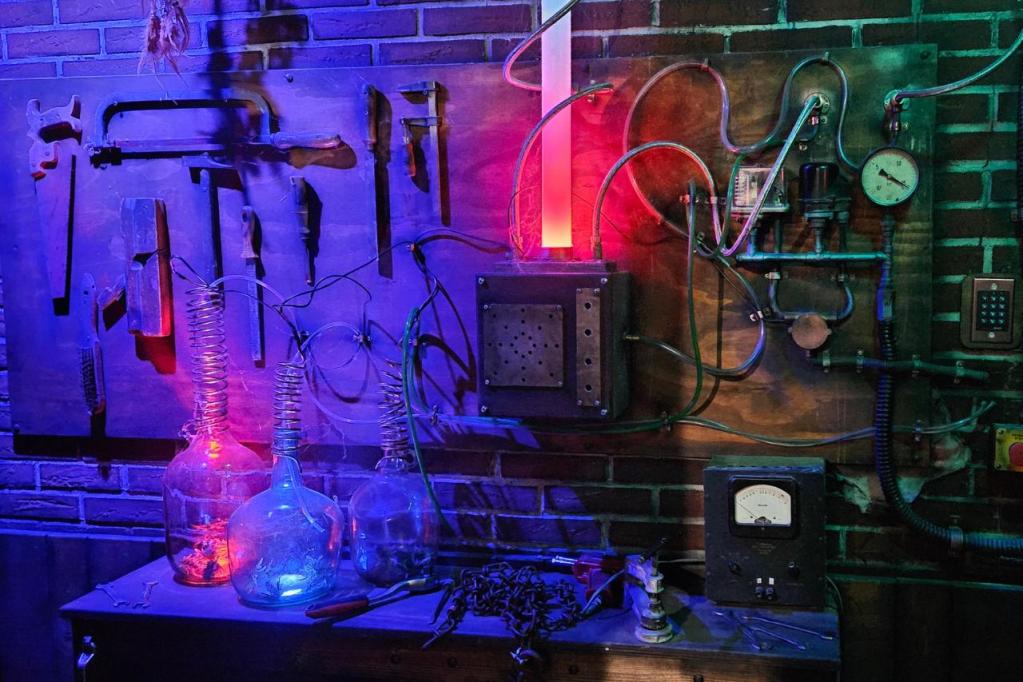
Sleep took place in the halls of an old sleep clinic. This labyrinthian environment was dark and detailed, full of immense trials, tribulations, and traumas.
Gameplay
Down the Hatch’s Sleep was a theatrical escape room with a high level of difficulty.
The experience alternated between puzzle-solving and actor-driven cutscenes. There were a high volume of layered puzzles to fill the three-hour experience, requiring observation, communication, and exploration.
Analysis
➕ The environmental storytelling throughout Sleep was top-notch. Stripping away the flashier effects that often made Molly’s Game stand out, Sleep was left with an even more mature and refined interpretation of the same distinctive visual language. The space was fairly large yet very efficiently utilized. Like in a film, we often revisited previous spaces for new scenes, with some subtle psychological trickery helping to smooth over the transitions. Meticulous lighting, sound, and scent design brought the space to life, guiding our movements, emotions, and focus at all times.
➕ Sleep featured a high quantity of layered puzzles that were well situated within the environment. I especially appreciated when the gameplay directly choreographed our movements and vantage points to fit the tone and tempo of each environment.
❓ Sleep was a fairly difficult game relative to the Netherlands escape room market, given both the layered, detailed nature of many puzzles as well as the endurance required to sustain focus for up to three hours. This is not likely a game that teams will be allowed to fail, as narrative was everything. Diegetic audio-based hints were available for each puzzle, yet we still questioned how this experience might scale for teams who struggle more with the puzzles and require more regular hinting to make it to the finish line.
➕ The narrative played out through multiple mediums: the physical environment, actor-driven scenes, the gameplay, audio, and some reading. For players paying attention, it was nearly impossible to miss the key plot beats. In particular, an early-game puzzle led us to unearth and synthesize story details from various sources, while also providing additional details for those players who want to dive even deeper. All written materials were offered in both Dutch and English.
➖ Amidst a surplus of thoughtful, diegetic puzzles, a more generic counting puzzle stuck out negatively. Apart from getting us to observe our surroundings, it added nothing to the narrative and was the sort of interaction I’d expect to encounter in a less poetic experience than Sleep.
➕ Sleep stood out for its striking theatrics. The set was a stage, designed around optimal sightlines for actor-driven scenes. With a consistently beautiful quality of movement, methodical pacing, and interesting cross-character dynamics, Sleep proclaimed itself to be not just escape room but also immersive theater.
➖ It was never fully clear whether or not Sleep wanted to acknowledge our presence. One early interaction with a character pulled us in strongly, then asked us to hide with no proper place to do so. Some later scenes treated us as if we were invisible, choosing not to gamify our presence in a scene. With the same characters sometimes confronting us directly and sometimes drifting by like a Sleep No More specter, we were never quite sure which modality a scene would take. Either approach is fine, but it would have been more internally consistent to pick one lane and stick to it.
➕ Like many escape rooms in the Netherlands and Belgium, Sleep included a number of references to other top games in the region. These Easter eggs were subtle and tasteful, with an almost puzzle-like aha around recognizing certain more subtle mementos.
➕/➖ The ending was dark and emotionally impactful, building on nuanced character motivations that had been developed throughout the experience. Sleep earned its emotional weight far more than most games in the region. While the acting in this scene struck a powerful contrast with some supplementary imagery, it was jarring to encounter a religiously-coded, AI-generated video out of the blue. I didn’t mind Sleep‘s central message being presented so on the nose, yet a different technique — ideally bypassing the use of a screen altogether — could have been more texturally and tonally consistent with the rest of this beautiful experience.
Tips For Visiting
- Sleep was passively scary. While there were segments of darkness and some brief intense moments, light was always our friend and fear was not the focus.
- There is a small parking lot and street parking. Down the Hatch is also a 5 minute walk from the nearest train station.
- Review our tips for playing escape rooms with actors.
- Down the Hatch cautions that Sleep is best for experienced players. Heed this advice, and play with teammates who enjoy puzzles, appreciate narrative, and can sustain focus for multiple hours straight.
Book your session with Down the Hatch’s Sleep, and tell them that the Room Escape Artist sent you.


![Scriptlab – Dust, Blood, and Calavera [Jubensha Review]](https://roomescapeartist.com/wp-content/uploads/2026/06/Box-Game-contents.jpg)
![Lock Academy – The Examination [Review]](https://roomescapeartist.com/wp-content/uploads/2026/04/lock-academy-the-examination-2.jpg)

![Secret City – The Wedding Party [Review]](https://roomescapeartist.com/wp-content/uploads/2026/06/secret-city-the-wedding-party-2.jpg)
Leave a Reply