
A Case in Paradise is a video-based couch co-op puzzle game created by Couch Clues.

Format
Style of Play:
- Video-based experience
- Designed for couch co-op
Who is it For?
- Story seekers, especially mystery stories
- Whodunnit fans
- Any experience level
Required Equipment: Large screen (i.e. TV) with Youtube/ Vimeo streaming or screen casting capabilities; each player needs a mobile device
Recommended Team Size: 2-5
Play Time: Approximately 2 hours
Price: $24.95 – $29.95, depending on the number of players
Booking: purchase and play at your leisure
Description
A Case in Paradise is designed to be played with all teammates (up to 5 people) in the same physical space, each on their own mobile device but watching the same video on a large screen.
To begin, we logged into the game via our mobile devices. This provided instructions and also a link for a YouTube or Vimeo playlist to play on a shared TV. Two intro videos/ practice puzzles were also provided as onboarding.
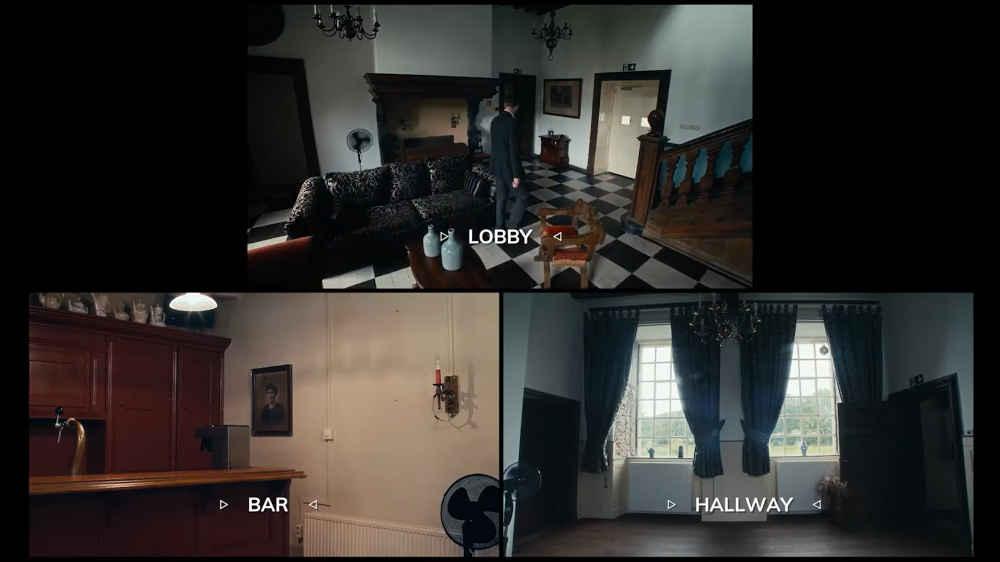
During the course of play we watched short story videos followed by a looping video that included vital puzzle information. We were then directed to focus on different details in the looping video and input distinct puzzle solutions or participate in a full group solve.
A Case in Paradise was developed by the makers of Backspace Escape Rooms in Amsterdam, creator of Aurum: Order of Gold 🔒.
Jayna (Jay) Shea’s Reaction
A Case in Paradise by Couch Clues hit me with nostalgia. It reminded me of the classic Clue movie and the feel of a Poirot mystery. But instead of watching and waiting for the big reveal, my team stepped into the story and helped the investigator solve the crime. I liked how the setup pulled everyone into equal participation, though I can imagine it challenging players who prefer to sit back and observe.
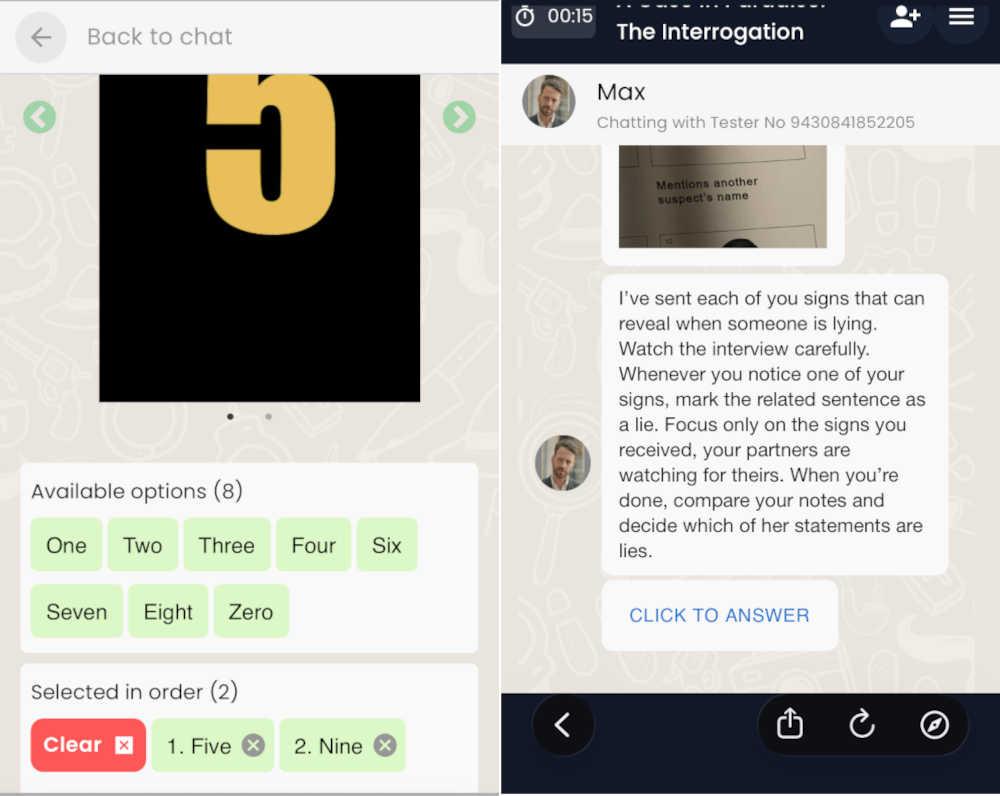
The game offers two difficulty levels you can switch at any time, but the adjustments seemed to mostly alter how the investigator responded to incorrect answers rather than puzzle difficulty. Even though all answers required fill in the blank inputs, the puzzles offered more variety than I expected. I learned clicking the answer submission link before solving a puzzle was helpful as sometimes it included extra information, such as which teammate was assigned to which question. There are hints available for teams who get stuck, but mileage may vary depending on which part of the puzzle is tripping you up.
After we completed each puzzle there was feedback on how quickly our group solved it in comparison to other teams. While I appreciated the information (it helped us feel better after momentarily getting stuck), this felt out of place and broke the immersion of what we were trying to accomplish. Overall, I enjoyed playing within this creative structure. The cutscenes did not overstay their welcome, and the looping videos made the experience feel smooth and hands off. Of note, you can’t replay this game or pass it along to someone else. It’s truly a one-and-done experience.
Scott Olson’s Reaction
The structure of the Couch Clues series of games is appealing: bring an at-home puzzle game to life through high-quality video and sound production so a group of friends can play police inspector to solve a mystery. The execution, however, could be improved to better use the format. Watching looping YouTube videos while receiving differing pieces of information on mobile devices made the gameplay clunky.
Puzzle design in A Case in Paradise was uneven as teams pieced together information to ultimately determine whodunit. We had the most fun when the whole team was focused on a video to find the anomalies/ evidence and less so when we had to use mobile pings to solve logic puzzles not well suited to group engagement. The difficulty level and intensity are casual game night appropriate, but the length and focus required will be a bit much after a few cocktails. We hope for refinements to the intriguing Couch Clues concept to bring us back for more.
Christina Rohlf’s Reaction
Aurum: Order of Gold by Backspace Escape Rooms was a standout on our trip to the Netherlands because the game excelled at engaging the entire group and requiring large group collaboration on many of the puzzles. When I heard that A Case in Paradise was an at-home escape experience developed by the same creators, I couldn’t wait to play!
The puzzles were introduced via looping YouTube videos and focused on visual connections and deductive reasoning. I played A Case in Paradise with two players which split the details each of us needed to focus on and solution inputs in half. Yet, there were a couple instances where both of us had to input the same solutions to progress the story forward. In those cases, we would have preferred that just one player needed to provide a response.
In general, with two experienced players the puzzles were on the easy to moderate side. However, the system supports up to 5 players and would keep a full sized group engaged for the entire experience, though the difficulty level would likely decrease with more participants. I was especially impressed that the game was created to captivate an audience of 5, considering that most other at home puzzle experiences are best with 2 players. I also enjoyed the narrative of the Whodunnit mystery, thought that the narrative tied well into the puzzles, and found the cheesy acting added to the charm in a very Clue: The Movie style. I would highly recommend A Case in Paradise as a fun group activity for a puzzle enthusiast to share an escape room style game with some of their non-enthusiast friends.
Disclosure: Couch Clues provided the Hivemind reviewers with a complimentary play.
![Great Gotham Challenge MMXXVI [Hivemind Review]](https://roomescapeartist.com/wp-content/uploads/2026/10/GGC-2026-1.jpg)
![Descifra Escape Room – El Laberinto (The Maze) [Review]](https://roomescapeartist.com/wp-content/uploads/2026/07/el-laberinto-el-laberinto-1.jpg)
![👑🔒 Twist n Turn Studios – Blood Moon Pact [Review]](https://roomescapeartist.com/wp-content/uploads/2026/06/blood-moon-pact.jpg)
![Board and Dice – Escape Tales: Low Memory [Review]](https://roomescapeartist.com/wp-content/uploads/2026/07/escape-tales-low-memory-escape-tales-low-memory-1.jpg)
Leave a Reply