
The real crime here is overzealous AI use
Location: at home
Date Played: June 8, 2026
Team Size: 1+; we recommend 1-2
Duration: 2-4 hours
Price: about $20
REA Reaction
It was supposed to be an easy grab. Get into the envelope, solve the puzzles, and get out. Well — and then write a review about it. I’ve played countless prison and asylum at-home escape games. I know the drill. Escape from Ironwood, they said. Sure, kid, I’ve learned the tricks from all the escape room designers. I was expecting to evade abstraction guards and to pick some logic locks. But they didn’t tell me one thing about Ironwood, a thing that left me here in puzzle penitentiary: robot guards roamed the grounds without human oversight. In other words, AI content pervaded the experience, and it often lacked editing or polish to give it soul or scrutability.
So what did my crew find? Standard paper props like newspapers, postcards, and “handwritten” notes filled the game’s flat mailer envelope and the 3 smaller envelopes within. A standard narrative about thwarting a jailbreak introduced me to the game. Throughout its 3 parts, we would unravel the mysterious artifacts collected from a prisoner in order to discover his escape plan. These elements are the usual suspects in this flavor of at-home tabletop escape game.
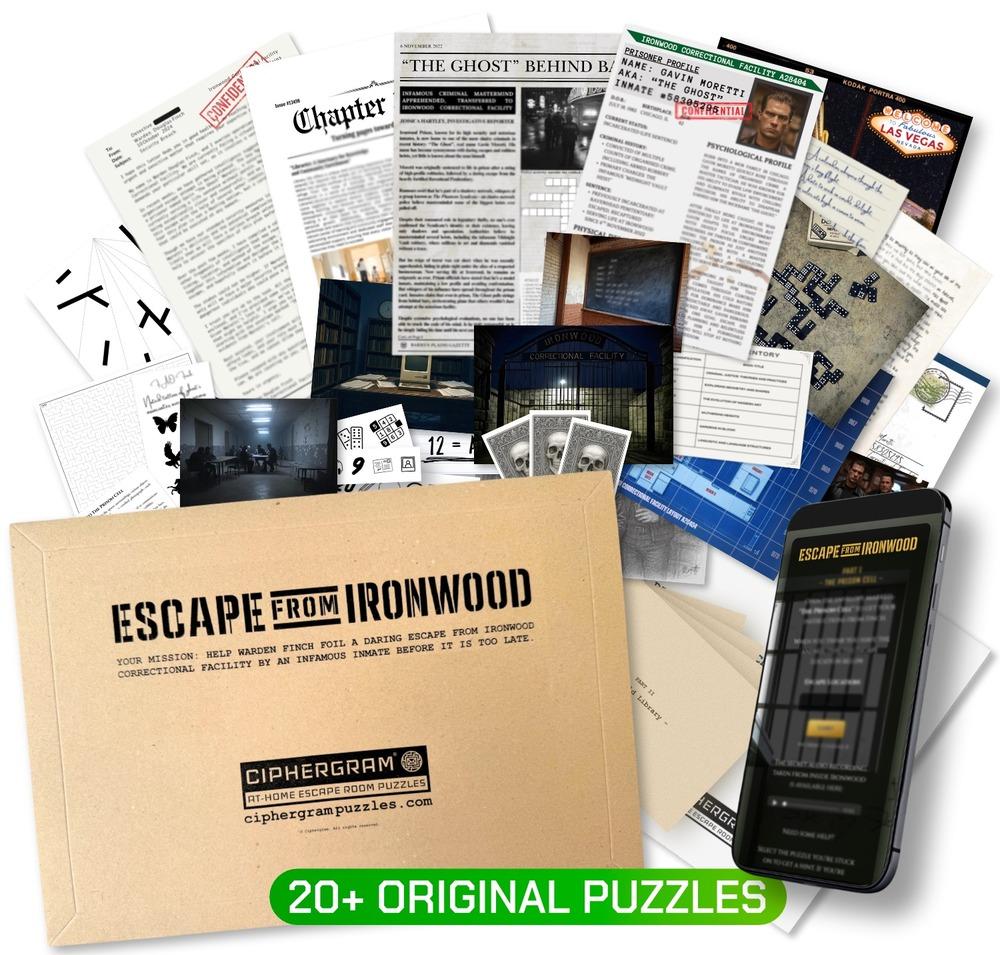
As an English teacher, I am duty-bound to read all text within an escape game (especially considering many are allergic to story in their games). But I’m not entirely immune. Any exposure to AI has the risk of sending me into existential anaphylaxis, as I deem it anathema to human creativity. Escape from Ironwood boasts an overwhelming quantity of text with all the telltale signs of generative AI. I do believe AI can be a beneficial way to augment or enhance elements of writing, but its whole cloth creations fail to inspire. When presented with AI text, pictures, hints, and (possibly) puzzles that were flat, confusing, deeply flawed, or seemingly superfluous, I faced a dilemma. Should I try to be more invested in the story than the creators, or should I ignore all the text? In this case, I chose the latter. Most puzzles were solvable without the walls of text. If the text is unnecessary, why does it exist at all? It all led to a feeling that there was a lack of consistent oversight, playtesting, or outside feedback.
I could enumerate all the signs of the game lacking human oversight, but here’s the kingpin:
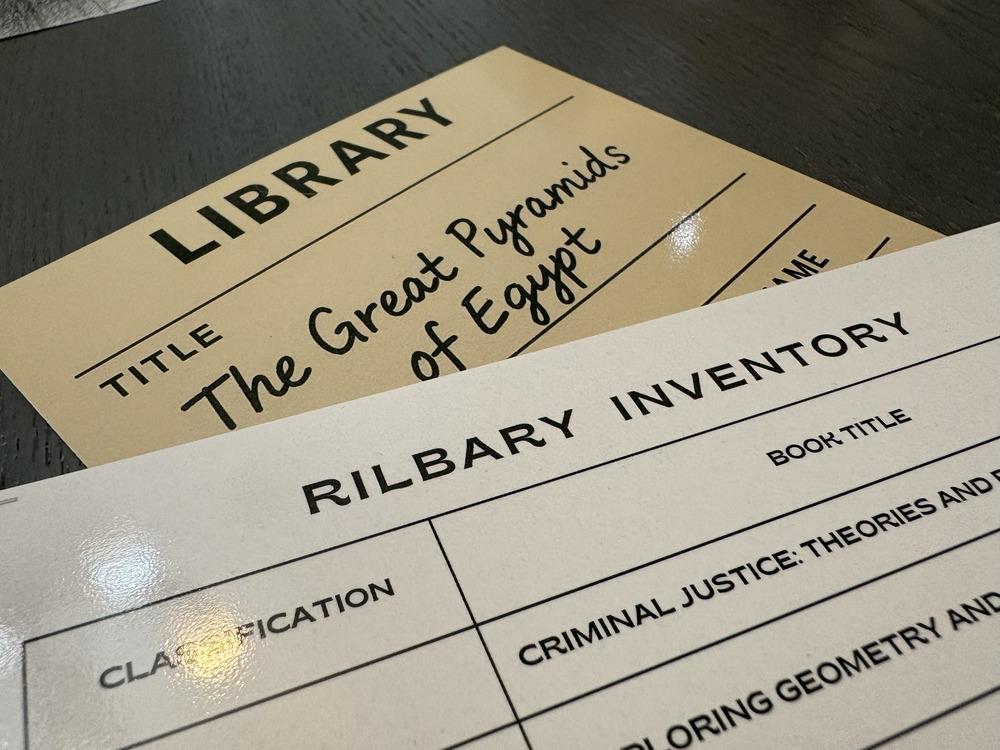
The game directed us towards the above material with the narration, “Your gaze drifts to a nearby inventory of books, something about it looks odd.” Ironically, the glaring typo (RILBARY instead of LIBRARY) wasn’t the culprit. It wasn’t even in this puzzle’s lineup. Instead, the digital hints revealed that the element we should have investigated was something entirely innocuous that no physical material directed us towards. A game that demands attention to detail must also abide by its rules.
The introductory video promised, “Everything you need is in front of you if you can see it…” This implied that I didn’t need to smuggle any information from the outside. However, this proved untrue. A puzzle in Part I put my flow state in lockdown. The hints revealed that I needed knowledge of both the 7 wonders of the world and a specific type of cipher. This bait-and-switch highlighted a discrepancy between the designers’ advertised ethos and the actual puzzle design. This additionally eroded my trust in the experience.
Just when I thought I was out, they pulled me back in. Escape from Ironwood boasted a few puzzles that I’m happy to sing like a canary about. An early auditory puzzle had me tapping my feet with delight. A tactile paper puzzle had me flying. Even a tedious labyrinth puzzle left me a-mazed when I saw the bigger picture. Bright spots like these encouraged me to crawl through the river of AI with the hopes of coming out clean on the other side.
When first casing the place, Escape from Ironwood seemed fine enough. A couple snags in the plan never ruined a heist before. But examining the security footage closer, I found thematic inconsistencies, inadequately clued puzzles, unnecessary or distracting visuals, and befuddling hints. Maybe someone would want to examine these blueprints to make a cleaner escape. But I think this is going to be my last job with Ciphergram. I’m tired, boss.
Who is this for?
- Players who need to play every single at-home escape game on the market
- Designers who want to be aware of puzzle design pitfalls
Why play?
- You want to know the ins and outs of the greater at-home escape game prison grounds
- You’re morbidly curious about how people are using AI in tabletop escape games
Story
Gavin “The Ghost” Moretti was planning an escape from Ironwood Correctional Facility. Warden Douglas Finch contacted me, a seasoned detective, to unravel the cryptic clues Moretti created and determine the when, where, and how of his escape.
Setup
Within the game’s brown flat mailer envelope were a small collection of paper materials and 3 smaller sealed envelopes (each its own numbered part of the experience). Each individual envelope established the scene and provided evidence unique to the location. Every puzzle lead to a number or letter, and a strip of paper informed me how to sequence these smaller answers to get the larger solution.

Gameplay
Ciphergram’s Escape from Ironwood was a standard play-at-home escape game with a moderate level of difficulty.
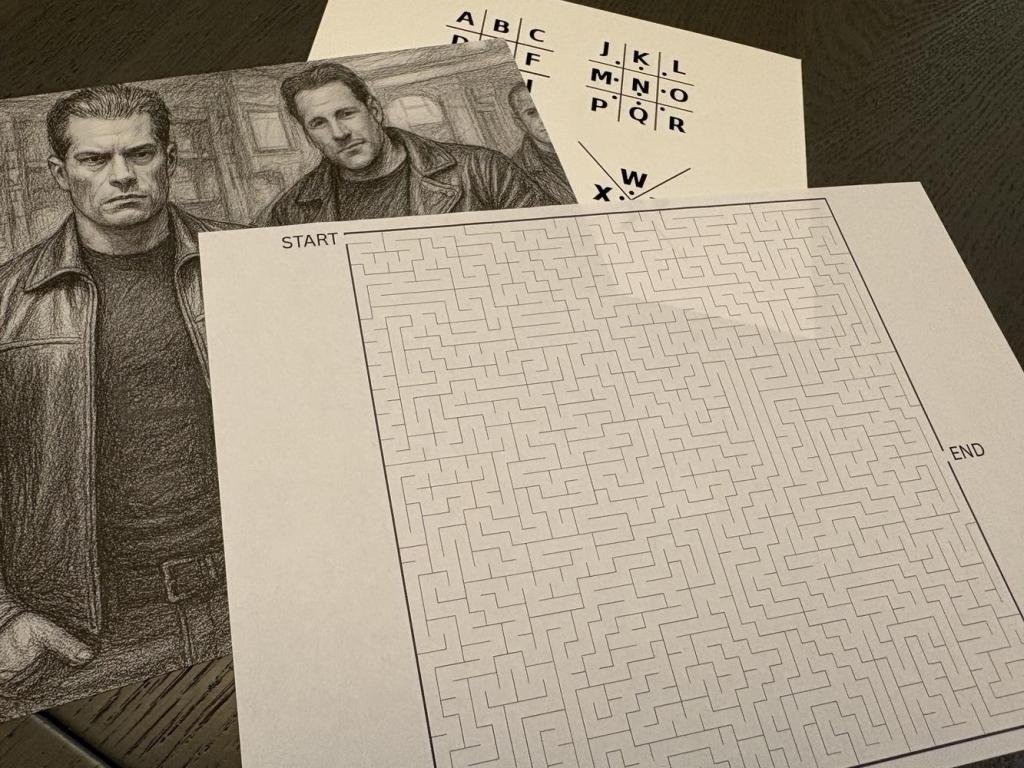
The gameplay emphasized observation, decoding riddles, and solving paper puzzles (such as a crossword, maze, and Sudoku).
Analysis
➕ The way individual puzzles’ solves contributed to a greater answer was satisfying.
➖ Hints occasionally felt more like essential clues for puzzle. Written in cryptic verse, they would contain information necessary for the solve yet absent from the printed materials.
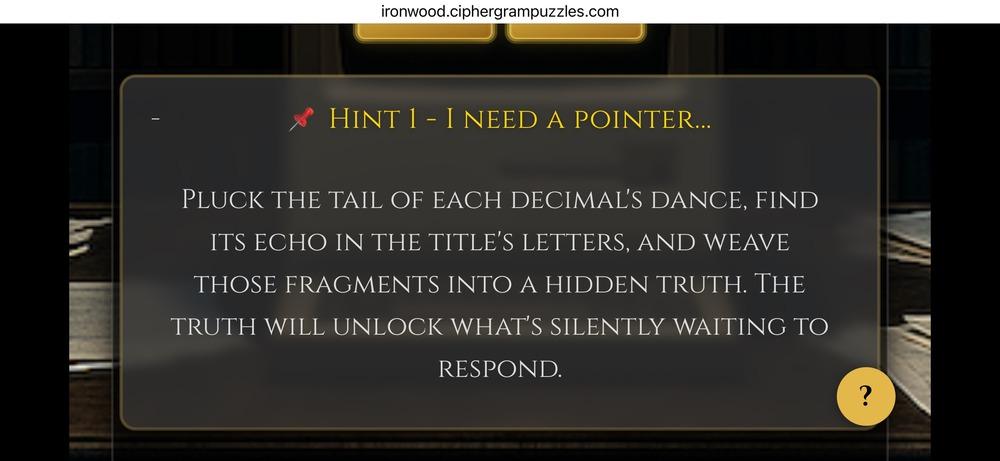
➕ / ➖ The game’s website served multiple purposes, including answer submission, hint system, and ambience. The interface looked clean and was easy to interact with. The site offered clearly labeled hints for each puzzle in a progressive fashion. However, AI-generated cutscenes between sections of the game contributed little to the experience, as they were too short and indistinct to convey story or setting meaningfully.
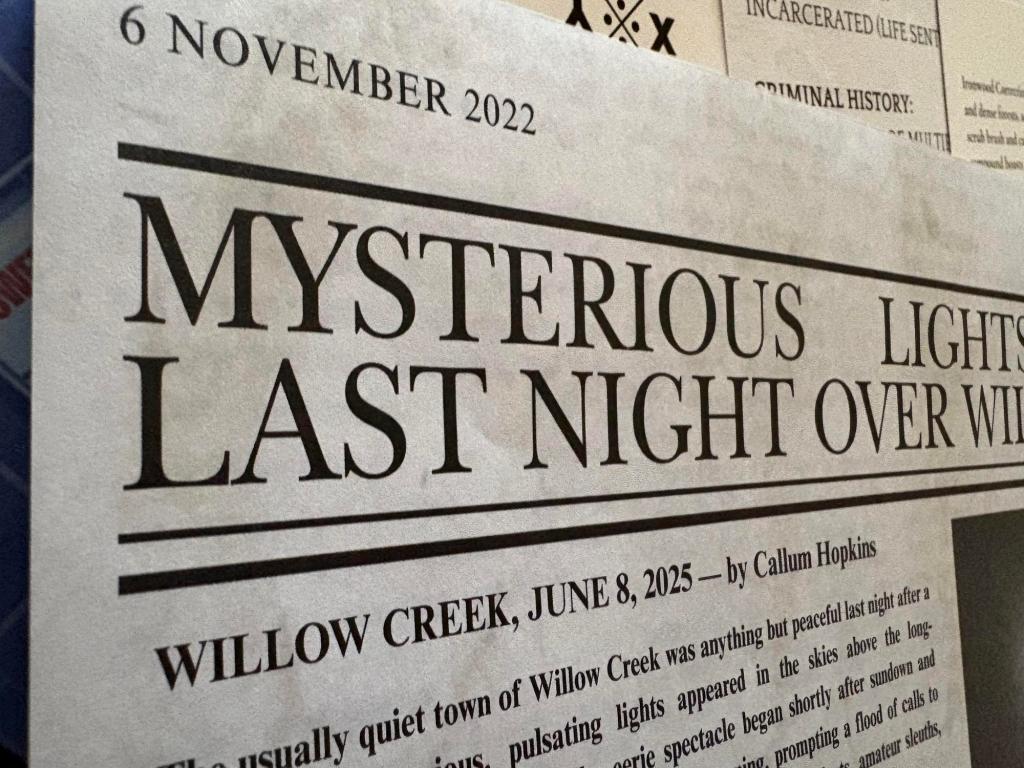
➖ Many materials felt underdeveloped and lacked review. For example, the newspaper’s publishing date was November 2022, but the article was authored in June 2025.
➖ Two puzzles were criminally under-clued. They called for leaps in logic and outside knowledge unsupported by any material outside the hint system. The pain of trying to solve these felt like a shiv to the side.
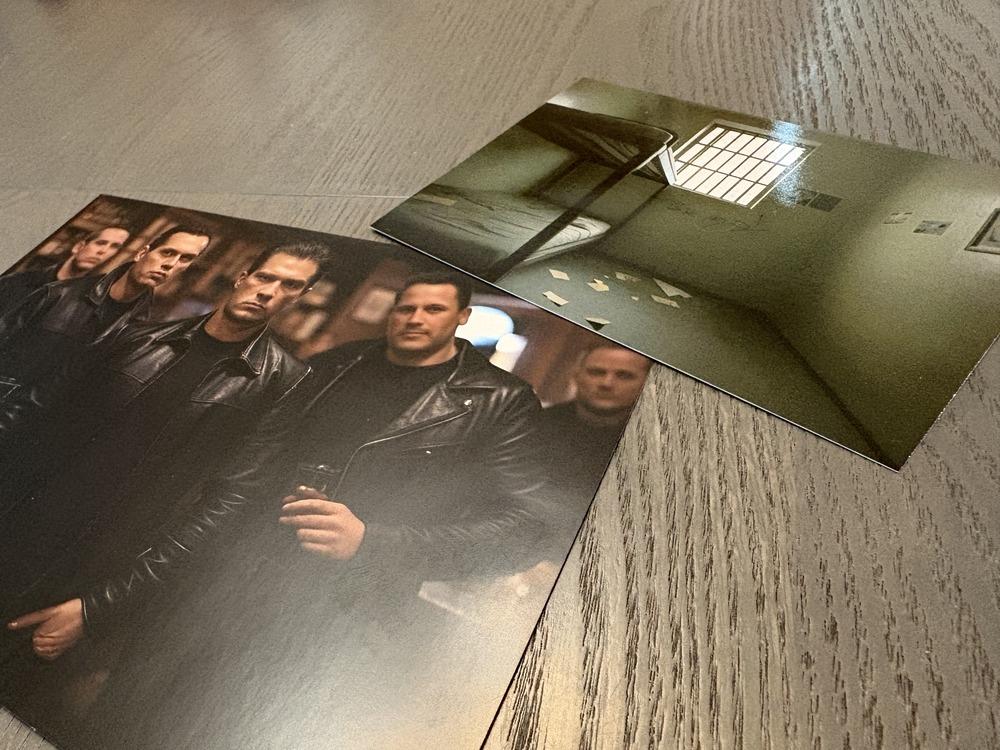
🤖 The pungent aroma of AI throughout the flavor text and images reeked worse than prison wine. A photo of a man with 6 fingers. A video of a clock missing the 5. A proliferation of emdashes like tally marks on the cell wall of a prisoner deep into their life sentence. (A note about punctuation from an English teacher: Emdashes — like any punctuation mark — are fine in moderation. However, overuse of any stylistic element cheapens it. ChatGPT and its ilk abuse the emdash, errantly assuming that more advanced punctuation is equivocal to elevated writing.)
➕ A few notable puzzles rose above the rest, allowing me to connect with what felt like clever, human-created challenges.
➖ It was unclear if materials from one part were necessary for subsequent parts. Materials present before the start of the game persisted throughout. The game didn’t provide a clear blueprint for how to clean up or reset. With 20+ items to sift through, it was unwieldy and awkward. Also, several materials required being written on, and one paper demanded physical manipulation. There are no files offered online or in the game’s envelope to allow someone else to play upon completion.
➖ The game’s story and central conceit lacked consistency. The game’s introduction established me as a detective receiving evidence from the prison’s warden, starting with materials collected from the prison cell of “The Ghost.” However, the introduction to the prison cell described me entering the cell and observing the materials myself. It’s as if the narrative double-crossed itself.
➕ My limited communication with one of the creators prior to playing their game was very positive. I believe that they mean well and want to provide a good product.
❓This game existed in a bizarre, liminal space in the escape room design realm. It’s not unplayable like certain games that utilized AI. Certain elements clearly had a human touch. It could be studied as an example of the limitations and pitfalls of unchecked AI in puzzle design.
Tips For Players
- Space Requirements: a modest section of table space
- Required Gear: pen/pencil; paper; a computer or phone with internet, sound, and email capabilities
Buy your copy of Ciphergram’s Escape from Ironwood, and tell them that the Room Escape Artist sent you.
Disclosure: Ciphergram provided a complimentary game.



Leave a Reply