
This is the second in a series of articles exploring the idea of escape rooms as a performer’s medium. The series examines the concept from the perspectives of players, performers, and owners.
Read Part 1, the player’s perspective.
Read Part 3, the owner’s perspective.
The world is full of performers and escape rooms are increasingly becoming an important outlet for some of them. Many of these performers are really good at what they do, and deserve more recognition.
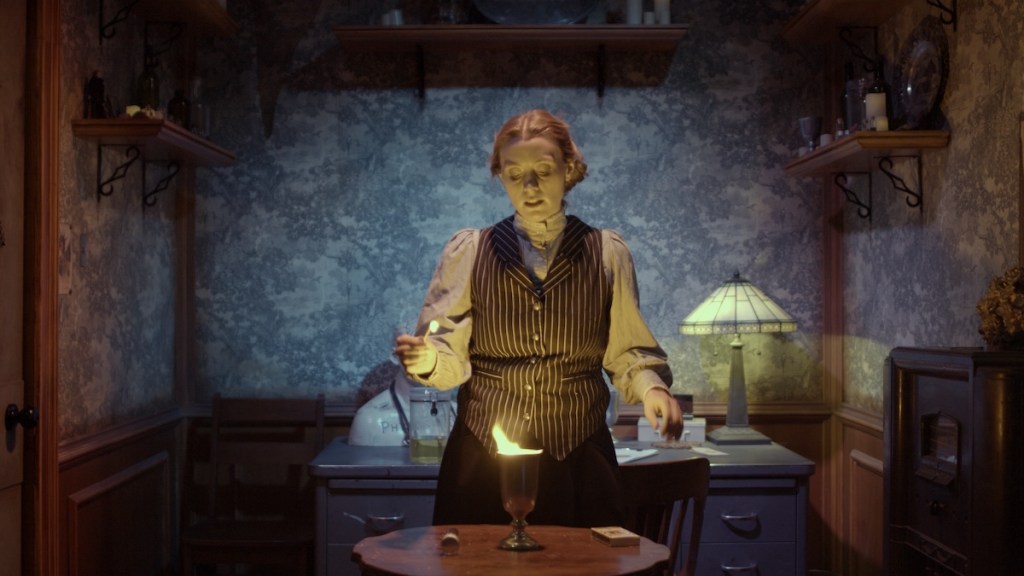
A Place For Performers
I want to put more emphasis on acknowledging escape room performers and appreciating them and what they bring to the experience. More companies are now embracing end credits and I’d love to believe in a future where, at least inside the industry itself, talented escape room performers are more widely known.
I’ve spent some time over the past few months interviewing a number of people about what live performers add to escape rooms, and maybe more importantly, what escape rooms offer to those who are looking to perform.
This post contains quotes and thoughts from a few of these people, both to help flesh out my ideas, but also to get them a bit more of the recognition they deserve. Let’s get to know and celebrate some of these talented individuals who add so much life into our favorite experiences.
People Want To Perform
As the escape room industry matures, it is proving to be a space that offers opportunities for a wide range of skill sets and of human interests, including the desire to perform. This is creating a win-win-win scenario for players, owners, and performers. I recently chatted with some of the people who have discovered their stage by acting in escape rooms.
Laurence Deslauriers is a performer and gamemaster at Escaparium: “I always enjoyed acting and performing arts, but never really went back to it after my drama classes in high school. Being able to do this for work is so fun, and I am so grateful to be able to have a job that never gets boring and allows me to do something I truly enjoy.”
Marc Welings former Scorcher at DarkPark, now with Escape Stories in Germany: “I acted for Darkpark in their Stay in the Dark experience and it has been life changing. It was everything I’ve ever wanted to do. When I played Stay in the Dark I just fell in love with it… So when I got the opportunity [to perform in it] I was beyond grateful that I got the job. Acting in an escape room is such an amazing outlet. There is nothing as exciting and fun as this job.”
Salwa Labeid is a performer and gamemaster at Escaparium: “Being able to perform is crucial; as someone who loves performing and creating, my job must include it. It’s actually the first job where I have the opportunity to do that.”
Audrey Pelicano is the Prop, Set, and Show Technician for Escape Artist Greenville: “The escape room industry seems to be growing in the direction of more immersive, actor-driven experiences. I’d definitely recommend it to people who are interested in performing…This particular medium of performing arts is so much better suited to me than the others I’ve dabbled in.”
The fact that there are individuals out there that are excited to bring a passion for drama and comedy, and everything in between, to escape games is something that bodes very well for the future. I trust the matchmaking between escape room companies and the people eager to play their characters will keep growing.
These performers are finding a home in the escape room industry. Owners are discovering a new supply of talent that improves their game quality and opens up new design ideas. Customers benefit from the rising tide that all of this creates as experiences become increasingly impressive.

Escape Room Performing As Art
Escape room performing is an art form in its own right. It is one part of the larger artistic game experience. Blending immersive theater, improvisation, and hint-giving into a role that adds value to the game experience is a real artistic endeavor. It is a responsibility that performers take seriously, something I sensed from many of the people I talked with.
Philip Stylianes is an actor and a gamemaster at No Exit Escape Rooms in Greece: “I do consider it a form of art, because we have drifted away from the basic gamemastering and minimum effort acting and you can tell that actors are now trying harder to impress their audience.”
Marc Welings: “It is not just a simple case of scaring people and running away. It entails a lot more…Acting in an escape room is a very unique way of performing…You should be an enhancement to the game and not an immovable object, because you are working with people who are experiencing an amazing story and it’s up to you to make sure they get the best experience possible.”
Venia Marinou is a hostess at No Exit Escape Rooms in Greece: “I would definitely consider it an art form for the actors, if you want to have a great room you cannot just rely on a great set and good mechanics and riddles, you need acting that’s realistic and interactive, and that can change with each team. As the years pass the rooms become more and more theatrical!”
Laurence Deslauriers: “You’re not only performing for them to watch, you’re part of the universe in which they’re immersed, you make or break the experience, you’re able to take it from good to phenomenal and truly make a difference.”
Salwa Labeid: “To be honest, when I first applied to be a gamemaster, I did not think my artistic side would be thriving. In the escape rooms I’d done, there wasn’t really any performance. My opinion has now completely changed.”
Jana Erbes is a performer, game designer, & media creator in Germany who cautions us to remember: “Within reason, understand that it is an act to serve the game and the players. So it’s a lot less about your moment on stage but a piece of someone else’s emotional rollercoaster. I think it’s a profession that is not quite defined yet. Now that these types of experiences are [improving], so does their refinement and artistic approach. Resulting in a far more professional performance. It needs a whole new creation of a job definition.”
Escape room acting as an artistic profession? Even as a part time gig, who would have thought it would be something we’d be contemplating, even just a few years ago?
Performers, artists in all reality, are looking to escape rooms as a legitimate employment opportunity that lets them express themselves while earning income.

Every Group Of Players Is Different
Escape room actors need to stay engaged throughout the experience. Repeating similar interactions multiple times a day might seem like an annoying, negative part of the job, but there are also many positive aspects of performing for a whole new team of players each time. The performers I chatted with were eager to talk about what it is like meeting a new group every game.
Philip Stylianes: “That can be really fun, but also really difficult sometimes, because you have to really adapt to each team and make jokes according to their humor! Of course it’s not always possible, but that is what makes this job interesting!”
Marc Welings: “Every time it is a different game and that is both the thrill and the difficulty with it. When a group enters you have no idea how the game is going to play out and that is so exciting!…you constantly have to be aware of how the group is experiencing the game and to adjust to that…A lot of “in the moment” decisions are made and it’s amazing to see the group afterwards and that you can tell the decisions you chose to make were the right ones and they loved the game.”
Jamie Schojan from The Exit Games FL: “It’s so fun to perform for all kinds of players. From first timers to enthusiasts across the world, every single group I serve is a brand new experience and very entertaining to watch and interact with!…We’re always listening and attentive to our guests’ needs and ready to step up or tone down when necessary to create the experience they’ve paid for.”
Laurence Deslauriers: “You discover throughout the game who they are as a group, and being a gamemaster requires good adaptation skills to ensure everything goes as smoothly as possible….It’s thrilling to see the variety of reactions our experiences can create in people, and it’s our guests who make my job not so repetitive, even if I’m running the same game all weekend. We influence their experience, but they influence ours as well, whether it be with their jokes, their motivation, or their involvement.”
Salwa Labeid: “Hearing their thoughts and seeing their reactions is what makes our job so special; you feel like you just lived a unique experience with a group that was excited to jump into your world.”
Many player groups don’t fully understand the amount of game customization and adaptation that is happening while they are playing certain escape rooms. Actors can get a read on customers during onboarding or with early interactions and then use that knowledge to make choices and modifications as the game goes along.
Audrey Pelicano: “It’s vital to get a good read on the group dynamic… It’s your mission as their actor to figure out how to give everyone the best and most meaningful experience possible…Sometimes it’s a player figuring out too soon that they can’t trust the character that was going to betray them at the end. The actor leans into the discovery. What good would it do to deny it? Now, the character and players are in an open battle of wits and every action feels more perilous and exciting.”
Constantly needing to perform for new batches of strangers is something that players seldom think about when we consider our own interactions with escape room actors. Hearing the viewpoints of performers themselves on the subject is important as we strive to understand and appreciate these actors and what they bring to our experiences.
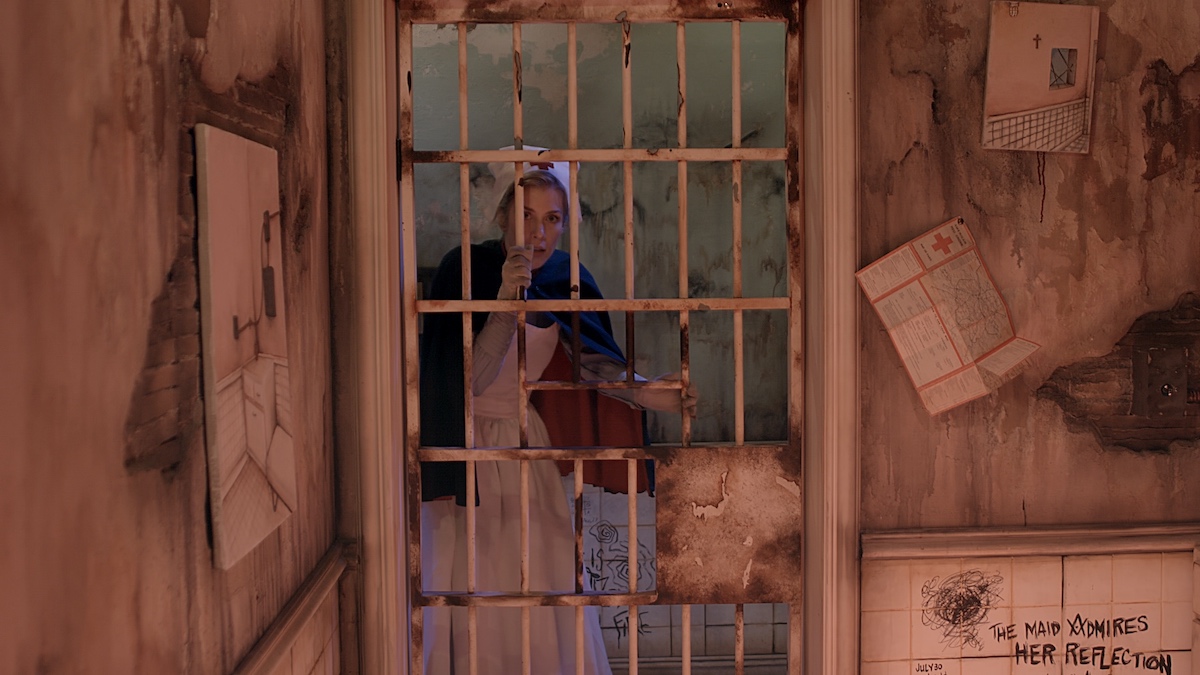
The Benefits Of Many Roles
Some performers flourish with the ability to embody multiple characters. Changing things up helps keep things fresh and allows actors to work on their craft. It seemed to be an important subject with the performers I interviewed.
Audrey Pelicano: “Being able to play multiple characters is good for actor morale, but it also helps you see how people respond to different character energies…Switch it up! No one ever wished they had less tools in their kit.”
Jamie Schojan: “I adore being able to play multiple characters! It’s so much fun to go from one extreme to another, to make people laugh in different ways, playing multiple silly or intense roles.”
Philip Stylianes: “I’ve been acting in a horror room for 3-4 years now, playing in a comedy room has been a new challenge for me to push and improve myself…Playing 6 characters in Wanted Dead or Alive is an absolute blast! It’s the reason this is my favorite room to perform in. The changing of each character’s voice, the way they talk, react, walk, everything. It’s an actor’s dream!”
Laurence Deslauriers: “Every time I come in, I get to play a variety of different characters and it makes the job so much more fun. I don’t dread coming into work, because I know that this shift won’t be the same as the previous one.”
Exercising their talents and improving their skills while keeping the job interesting, these seem to be the significant benefits of performers having the the opportunities to play multiple characters as part of their escape room employment.
From The Performer’s Perspective
Viewing escape rooms as a performer’s medium from the performer’s perspective really opened my eyes to the full relationship we as players have with them as performers. I more fully realize how important these games are for them, and how important we, the players, are to them. The desire to provide each and every player with the best possible experience emanates from the people I spoke with.
Marc Welings: “Acting in an escape room is way more than just being a person who scares players or gives an occasional hint. These experiences are like movies to the players and we are side characters who are there to help them have these movie moments, about which they will talk for a very long time, and those moments are linked to the actors forever.”
There is one more piece coming in this series. In the meantime, read more articles about escape room game design here.
![Studio Escape – For Queen & Country [Reaction]](https://roomescapeartist.com/wp-content/uploads/2026/01/studio-escape-for-queen-and-country.jpg)
![Pop Up Escape – Death & Taxes [Review]](https://roomescapeartist.com/wp-content/uploads/2026/02/death-taxes-death-taxes-3.jpg)
![Brain Games – Flynn’s Arcade [Review]](https://roomescapeartist.com/wp-content/uploads/2026/01/brain-games-flynns-arcade-1.jpg)
Leave a Reply